Skip to content

Canada's Business and Tech Newsroom

  • Professional Subscription
  • Partnerships & Advertising
  • Licensing & Syndication
Log In Subscribe
Welcome,
  • My Account
  • Log Out
  • Business
  • Tech
  • National
  • The Big Read
  • Briefings
  • Commentary
Search
Log In Subscribe
Welcome,
  • My Account
  • Log Out
News

League eyes global expansion fuelled by digital health partnerships forged in the pandemic

Health-benefits company League is looking to expand globally based on the strength of the digital health partnerships it’s forged during the pandemic. 

The Toronto-based firm announced a deal with Loblaw last month to launch a health app that offers people PC Optimum rewards for reaching personalized health milestones. CEO Mike Serbinis sees similar partnerships in other countries as key to League’s success.

News

League eyes global expansion fuelled by digital health partnerships forged in the pandemic

By Zane Schwartz
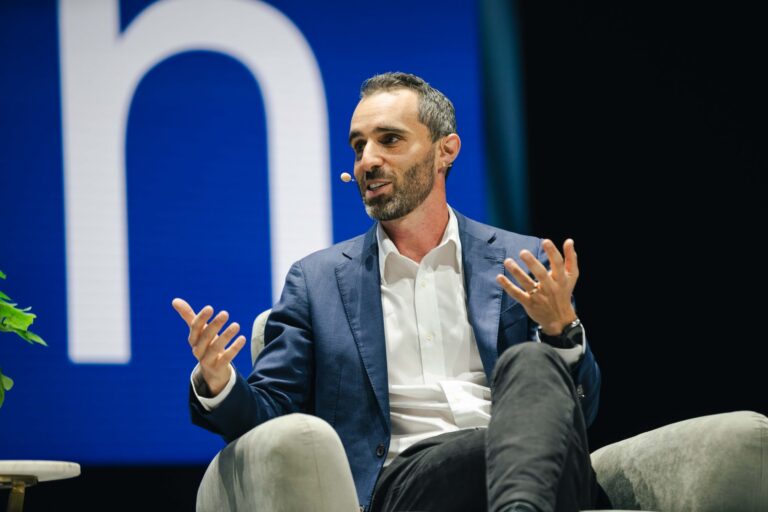
League CEO Mike Serbinis at the Toronto Region Board of Trade annual dinner in February. Photo: League
Nov 5, 2020
A A
A Small A Medium A Large
Share

Gift

Share

Health-benefits company League is looking to expand globally based on the strength of the digital health partnerships it’s forged during the pandemic. 

The Toronto-based firm announced a deal with Loblaw last month to launch a health app that offers people PC Optimum rewards for reaching personalized health milestones. CEO Mike Serbinis sees similar partnerships in other countries as key to League’s success.

Talking Point

League started as a wellness app that let users book appointments with nearby health professionals. In 2016, it pivoted to focusing on selling benefits plans to small businesses. The company abandoned that small-business focus in 2018, instead targeting firms with over 250 staff. While those enterprise sales are still a part of League’s business—one it expects to grow—its new emphasis is on providing a tech platform to major pharmacies, retailers, financial institutions and health systems.

“I see us continuing to sign up partnerships with the largest pharmacy retailers, the largest hospital systems in the U.S., the largest insurance companies. I see us in Europe and Asia,” Serbinis said in an interview with The Logic. “We started talking to the largest cloud provider in Asia about partnering up to reach countries like China, Japan.”

The focus on offering a digital health-benefits platform for large firms like Loblaw is the latest venture for League, which launched with much fanfare in 2015. It started as a wellness app that let users book appointments with nearby health professionals. In 2016, it pivoted to focusing on selling benefits plans to small businesses. The company abandoned that small-business focus in 2018, instead targeting firms with over 250 staff. While those enterprise sales are still a part of League’s business—one it expects to grow—its new emphasis is on providing a tech platform to major pharmacies, retailers, financial institutions and health systems. Its first partnership in that division is with Loblaw. 

The company raised money in 2018, closing a $62-million Series B led by Telus’s venture capital arm. That fell short of Serbinis’s publicly stated goal of US$100 million. League brought in an undisclosed sum in September 2019, and Serbinis said there’s been interest from investors more recently. 

“Every digital health investor out there is banging on doors like ours,” said Serbinis. “It’s possible that we could raise by the end of this year, or early in the new year, but there’s no rush for us.” 

The global digital health-care market is set to increase sixfold from 2019 to 2026 to reach US$639.4 billion, according to a June report from Delaware-based research firm Global Market Insights. Part of that growth comes from online health care increasingly being seen as a priority for executives, according to Sid Paquette, RBC’s head of technology and innovation banking and a League board member. 

“The purchasing discussions regarding the League platform have moved from the business units up to the boardrooms,” said Paquette. “There is a lot of interest in transforming the health-care direction of organizations, and that’s where League’s been playing into, and it’s been hugely successful for the company.”

Serbinis said the pandemic has created an opportunity for League to beat out the competition from hospital systems and insurance companies that are increasingly offering virtual care. 

“You can have infinite money, which they don’t. But you can’t have a time machine to go back in time to when you should have started working on this,” said Serbinis. 

To capitalize on the opportunity, League is looking to add 150 staff in the new year, Serbinis said. The company currently has about 270 full-time employees plus another 100 working full time via a contractor out of Manila. However, the planned staff increase is relatively less than what some other Canadian healthtech firms are doing. In May, for example, The Logic reported that Montreal-based telemedicine provider Dialogue had quadrupled its staff during the pandemic from 250 workers to almost 1,000. Serbinis said that whereas Dialogue hires medical staff to serve users, League’s focus on providing a digital platform lets the company compete with fewer staff. 

This isn’t League’s first international push. It first announced such plans in 2015, and Serbinis cited it as part of the company’s roadmap after closing the Series B in 2018, saying it would open offices in London. Though it now operates in the U.K. and Ireland, the company decided it didn’t yet need a permanent office space there, with its staff working remotely. The company is still considering one in London in the future.

League is Serbinis’s third major startup. He sold his cloud-based document-storage company DocSpace for US$568 million in 1999, and in 2011, sold the e-reading firm he co-founded, Kobo—which was majority-owned by Indigo—for US$315 million.

Gift the full article

However, he said he isn’t looking to sell League anytime soon, or to take it public in the near future. At least seven healthtech companies went public in the first nine months of 2020. But Serbinis has a warning for smaller firms that are looking to go public on exchanges like the TSX Venture Exchange.

“I’ve been through this, and I know what happens at the other end, once the market cools down,” Serbinis said. “Then you’re wondering why your stock is worth two cents—and then you get delisted.”

#healthtech #League #Michael Serbinis

Sponsored Content

How to shift your workforce from AI experimentation to adoption

By Jessica Aftimus Rosa

The real-world economic offshoots of sovereign AI

By Deborah Aarts
Illustration of a plane flying above a mailbox

Increasing healthcare access across Canada

By Deborah Aarts
Paid promotional content

Loading...

Thanks for sharing!

You have shared 5 articles this month and reached the maximum amount of shares available.

Close
This account has reached its share limit.

If you would like to purchase a sharing license please contact The Logic support at [email protected].

Close
Want to share this article?

Upgrade to all-access now

Close
Gift the full article!

You have gifted 0 article(s) this month and have 5 remaining.

Copy link and gift
Copy Link
Email to a friend
Send Email
Gift on Social Media

Recipients will be able to read the full text of the article after submitting their email address. They will not have access to other articles or subscriber benefits.

Photo: League

Most Popular This Week

Two individuals stand facing each other inside a lit-up installation inside a bust room. Both people are holding smartphones.
News

The Maple 8’s Canadian pledges may do little for startups and scaleups

By Catherine McIntyre
Close up of Mark Carney in a black suit against a black backdrop, looking over his shoulder with an eyebrow raised.
News

Ottawa tries to deliver on Carney’s promise to build faster

By David Reevely
News

Canada’s landmark ESG case heads to a final decision

By Anita Balakrishnan
Prime Minister Mark Carney, wearing a dark suit and tie, stands at a wooden podium in a dark room. The silhouettes of audience members are visible in the foreground. In the background, there is a backdrop depicting a cloudy sky and mountains.
News

Carney wants $1T to flow into Canada. Small projects are still struggling to get financing

By Chaimae Chouiekh

In-depth, agenda-setting reporting

Great journalism delivered straight to your inbox.

A shot of workers in a wide trench aligning light green-painted segments of pipe.
News

Feds give West Coast pipeline ‘national interest’ status despite Indigenous objections

By Meghan Potkins

Briefing

Weston retail empire in talks to buy iconic U.K. drugstore Boots for US$9B, reports say

By Anita Balakrishnan   |   Oct 1, 2026 | 3:33 PM ET

Grindr agrees to buy Calgary telehealth company PurposeMed for US$250M

By Catherine McIntyre   |   Oct 1, 2026 | 3:29 PM ET

Canada to seek ‘associated country’ status under EU artificial intelligence law

By Joanna Smith   |   Oct 1, 2026 | 3:27 PM ET

Best business newsletter in Canada

Get up to speed in minutes with insights and analysis on the most important stories of the day, every weekday.

Exclusive events

See the bigger picture with reporters and industry experts in subscriber-exclusive events.

Membership in The Logic Council

Membership provides access to our popular Slack channel, participation in subscriber surveys and invitations to exclusive events with our journalists and special guests.

Recent Popular Stories

The Big Read

Cameco’s high-stakes bid to be Canada’s next nuclear champion

By Joanna Smith   |   Sep 23, 2026
A shot looking down the length of a tunnel with conduits along its sides and railroad-style tracks on its floor. There are two workers in the distance wearing hardhats and headlights and walking toward the camera.
News

Ottawa tries to deliver on Carney’s promise to build faster

By David Reevely   |   Sep 28, 2026
Close up of Mark Carney in a black suit against a black backdrop, looking over his shoulder with an eyebrow raised.
News

The Maple 8’s Canadian pledges may do little for startups and scaleups

By Catherine McIntyre   |   Sep 29, 2026
Two individuals stand facing each other inside a lit-up installation inside a bust room. Both people are holding smartphones.
News

Canada’s landmark ESG case heads to a final decision

By Anita Balakrishnan   |   Sep 25, 2026
News

Canada dodged the money-laundering ‘grey list’—but banks remain a weak spot

By Claire Brownell   |   Sep 29, 2026
A silhouetted person walks amid a row of buildings.
News

Carney wants $1T to flow into Canada. Small projects are still struggling to get financing

By Chaimae Chouiekh   |   Sep 25, 2026
Prime Minister Mark Carney, wearing a dark suit and tie, stands at a wooden podium in a dark room. The silhouettes of audience members are visible in the foreground. In the background, there is a backdrop depicting a cloudy sky and mountains.

Canada's most influential executives and policymakers are reading The Logic

  • CPP Investments
  • Sun Life Financial
  • C100
  • Amazon
  • Telus
  • Mastercard
  • bdc
  • Shopify
  • Rogers
  • RBC
  • General Motors
  • MaRS
  • Government of Canada
  • Uber
  • Loblaw Companies Limited
logic-logo

Canada's Business and Tech Newsroom

100% human-crafted journalism

Newsroom

  • News Tips
  • AI Policy
  • Editorial Disclosures
  • Story Pitches

Company

  • About Us
  • Terms of Service
  • Privacy Statement
  • Corporate Information

Contact

  • Contact Us
  • Advertise
  • FAQs
  • Work at The Logic

© 2026 The Logic Inc. All Rights Reserved.

Trusted by leaders

Error

Account creation failed.

Please email us at [email protected].

Create Account

[wppb-register form_name=”cozmo-registration-form-for-modal”]

I do have an account
Login

The username or email you provided does not exist. Please try again.

or

[wppb-login]

I don’t have an account