King Charles’ throne speech touts Canadian pride and economic ambition
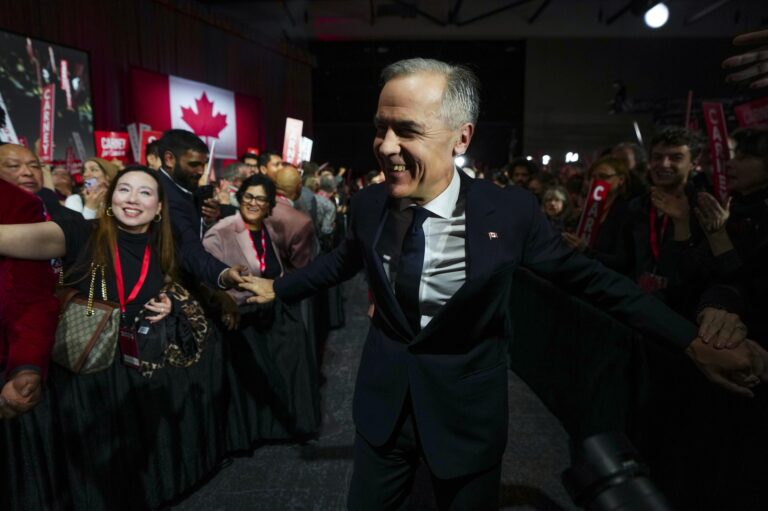
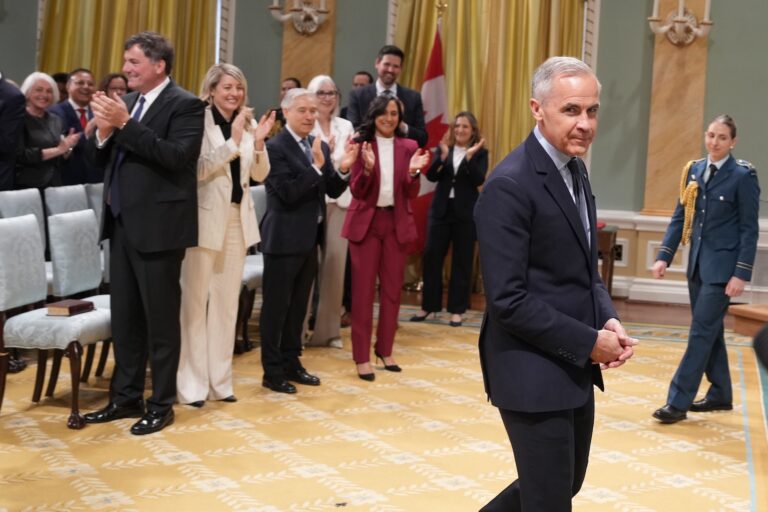
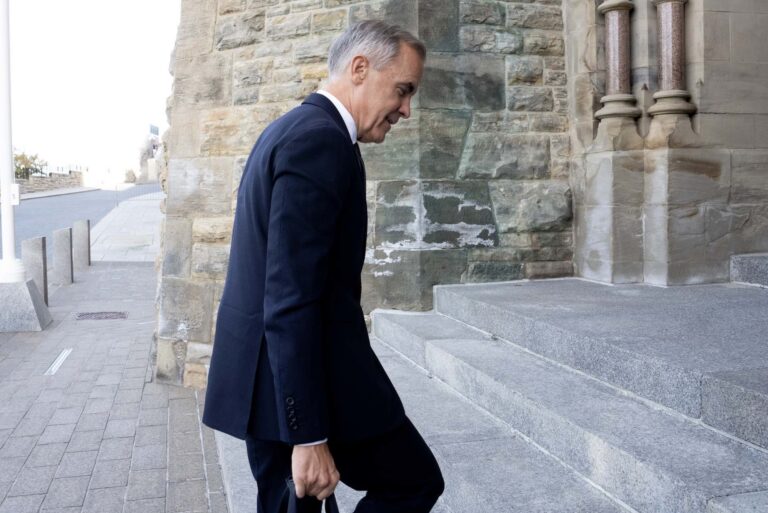
OTTAWA — King Charles III delivered the throne speech laying out the Liberal government’s agenda in the capital Tuesday morning. The oration, prepared for the monarch by Prime Minister Mark Carney’s team, emphasized economic growth and Canadian distinctiveness.
Here’s what you need to know.
News
King Charles’ throne speech touts Canadian pride and economic ambition
There were no direct jabs at Trump, but his trade war loomed over everything
King Charles III travels by Canada’s state landau to the Senate of Canada building in Ottawa to deliver the throne speech on Tuesday, May 27, 2025. Photo: The Canadian Press/Spencer Colby
OTTAWA — King Charles III delivered the throne speech laying out the Liberal government’s agenda in the capital Tuesday morning. The oration, prepared for the monarch by Prime Minister Mark Carney’s team, emphasized economic growth and Canadian distinctiveness.
Here’s what you need to know.
The sovereign on sovereignty: There was no explicit mention of U.S. President Donald Trump’s threats of annexation, but the speech nodded to the upheaval, anxiety, pride—and opportunity—sparked by his trade war. “A confident Canada … can seize this opportunity by recognizing that all Canadians can give themselves far more than any foreign power on any continent can ever take away. And that by staying true to Canadian values, Canada can build new alliances and a new economy that serves all Canadians,” the King said. The speech noted Carney and Trump are redefining the relationship to benefit “both sovereign nations.”
Talking Points
The Liberals’ throne speech pledged to make Canada’s economy the strongest in the G7 while making the country a superpower in both conventional and clean energy
Delivered by King Charles—the first time the monarch has opened Parliament since 1977—the speech emphasized Canadian history, national pride and resilience in the face of global threats, but took no overt jabs at the United States
Besides asserting sovereignty in the North and building up the Canadian military, the speech committed Canada to joining the European Union’s ReArm Europe program to boost the domestic defence industry.
Carney’s agenda: The speech left no doubt about how Carney wishes his prime ministership to be judged. “The government’s overarching goal—its core mission—is to build the strongest economy in the G7,” Charles said, amid a recitation of Liberal campaign promises, from building homes to spending less and investing more.
The first priority in that vein is internal trade, followed by national infrastructure. Eliminating the barriers Canada has set up for itself will see it not just survive trade wars but come out stronger, the speech said. Ultimately, it said, the government wants to “build Canada into the world’s leading hub for science and innovation.”
Carney had the King repeat pledges to make Canadian industry globally competitive while fighting climate change, and to make the country “the world’s leading energy superpower in both clean and conventional energy,” in keeping with Natural Resources Minister Tim Hodgson’s outreach to leaders in the Alberta oilpatch.
On the streets: The government’s plan to stir up national pride and a defiant Canadian spirit seemed to be having an effect, even before the King arrived at the Senate. The crowds spread along Wellington Street in front of Parliament Hill erupted in deep, booming boos when a small group of protesters arrived waving American and “Trump 2024” flags. Minutes later, those boos turned to cheers as Charles and Queen Camilla rode into view in a carriage guarded by 28 horses and their riders.
Tiffany Lepack had one of the best views of the royal spectacle. She and her two kids arrived at 6:30 a.m. to reserve their spot with a picnic blanket decorated with maple leaves. She found the symbolism of the King’s visit important amid the economic chaos of the trade war and Trump’s comments about Canada becoming the 51st state. “It shows strong ties with the Crown, but then also that we’re a sovereign nation,” said Lepack, whose bright pink fascinator matched her daughter’s.
Instant reaction: Conservative Leader Pierre Poilievre said he would have “written a different speech” if he had won the election. Poilievre, who doesn’t have a seat in Parliament, listened to the King’s remarks at the back of the Senate chamber on a TV screen above his head. He liked the sentiments, but said the speech was light on details. His party plans to offer an amendment that would add a number of proposals from his campaign to the package put before Parliament.
Interim NDP leader Don Davies said the speech was missing any reference to how the government plans to support workers impacted by the trade war. The NDP didn’t elect enough MPs to hold official party status, but can still decide the outcome of votes in the House. Davies said the speech betrayed a right-leaning bent in the new iteration of the Liberal party. “This is a very conservative throne speech, and I think this is going to be a very conservative government,” he said.
How (and when) it all gets done: With a wreath-laying at the National War Memorial, the ceremonies, congratulations and meet-and-greets that attend the formation of a new government came to a close.
In the House of Commons, Finance Minister François-Philippe Champagne kicked off Carney’s legislative agenda by tabling a suite of tax reforms aimed at lowering income taxes, eliminating the GST on new homes for first-time buyers and repealing the consumer carbon tax from existing legislation.
The House is scheduled to sit for just four weeks before breaking until September. That’s not much time to pass the tax cuts and internal-trade measures Carney has promised by Canada Day. The Commons hasn’t organized committees to scrutinize anything, and the Liberals also need to pass supply bills that fund ordinary government operations. If every single member of Parliament agrees, they can whip things through almost instantly; any opposition can slow the works considerably. The House could vote to sit into the summer, but the government hasn’t publicly raised the idea.
Meanwhile, Carney has called a first ministers’ meeting in Saskatoon next week, his first face-to-face session (after a virtual meeting in early May) with a group that talked often with his predecessor after Trump began threatening a trade war last fall.
To the extent a rookie prime minister heading a minority government in a crisis gets a honeymoon, that interlude is over.
Recipients will be able to read the full text of the article after submitting their email address. They will not have access to other articles or subscriber benefits.
Great journalism delivered straight to your inbox.
News
Canada’s landmark ESG case heads to a final decision
By
Anita Balakrishnan
Briefing
Matthew Proud-led SPAC threatens to pull out of merger with UniUni
By Catherine McIntyre |
Ottawa awards Mitacs $162M to create AI-focused work placements
By Murad Hemmadi |
Ontario puts $30M into Vector Institute for AI adoption
By Murad Hemmadi |
Best business newsletter in Canada
Get up to speed in minutes with insights and analysis on the most important stories of the day, every weekday.
Exclusive events
See the bigger picture with reporters and industry experts in subscriber-exclusive events.
Membership in The Logic Council
Membership provides access to our popular Slack channel, participation in subscriber surveys and invitations to exclusive events with our journalists and special guests.