Listen Now
0:00
OTTAWA — The federal agency in charge of drawing direct investment from abroad is proposing a “high-impact deals hub” for investments that need special attention, and a “Canada Dealbook” that would be a catalogue of projects foreign investors might be interested in.
But if Canada actually wants to attract $500 billion in private capital, federal departments will have to stop pursuing incompatible goals, says Invest in Canada in a written plan that The Logic obtained through an access-to-information filing.
Talking Points
- Canada’s new internal framework for attracting foreign direct investment says a soup of departments and agencies have different objectives and performance measurements, and work at cross-purposes
- Invest in Canada and International Trade Minister Maninder Sidhu dodged questions about the document, but it calls for a new co-ordinating committee akin to the Major Projects Office and a “Canada Dealbook” to serve as a shopping catalogue for foreign money
Foreign direct investment, or FDI, is when a person, firm or government entity buys a meaningful stake in an enterprise in another country or creates a new one itself.
In raw dollars, Canada has already been doing pretty well at pulling such investment in, as foreign buyers have recently snapped up Canadian companies, but Prime Minister Mark Carney wants more.
He’s planning to hold what he calls a Canada Investment Summit in Toronto in mid-September, convening global investors to pitch Canadian nation-building projects as targets for their capital. Canadian pension funds are to co-host, though they’ve long shied away from many Canadian investments themselves.
Related Articles
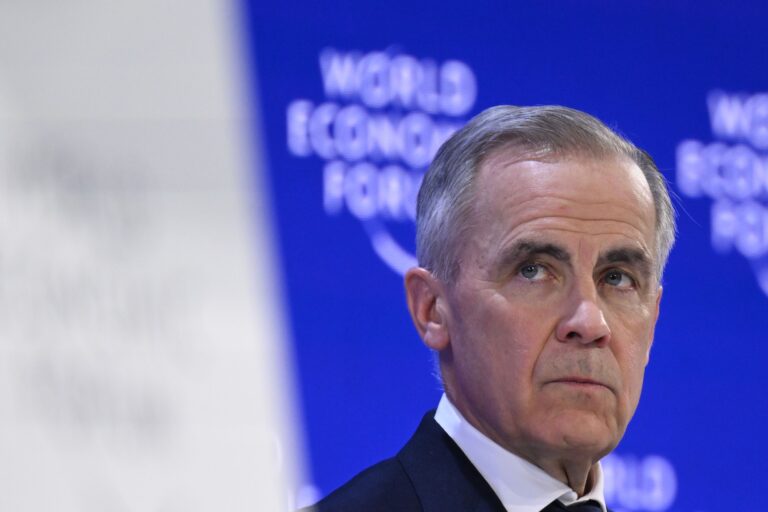

In the meantime, Carney has talked up Canadian investments to numerous international leaders. In January, he and Tamim bin Hamad Al Thani, the emir of Qatar, announced that his country would invest in Canadian nation-building projects. In May, Carney beat the drum to major asset managers in New York City. More recently, he pitched Canadian investments to Saudi Arabia’s authoritarian Crown Prince Mohammed bin Salman.
Invest in Canada’s FDI framework is meant to support that effort. The Logic requested the document after seeing a reference to it in another one—a briefing note preparing the deputy minister of agriculture for a call with other deputy ministers in 2025.
“The framework indicates that Canada’s brand is strong, but not top-of-mind for business decision-makers,” that document said.
Invest in Canada and International Trade Minister Maninder Sidhu would give The Logic few details about it.
A spokesperson declined a request for an interview with Invest in Canada’s CEO Laurel Broten, asking for written questions instead. The Logic sent a detailed list, including about whether the high-impact deals hub is in place and whether her agency has created a list of potential investments.
Broten responded with several paragraphs about the importance of foreign direct investment that did not directly address the hub or dealbook.
“We work in close collaboration with partners across the federal government, as well as co-ordinating at the provincial, territorial and local levels,” Broten’s response said. “Many departments and agencies are involved in this effort and there is daily co-ordination across the federal government to advance projects in the investment pipeline and provide investors with the clarity they need to make decisions.”
Mujtaba Hussain, a spokesperson for Sidhu, said he could add nothing to Broten’s response.
But the other documents The Logic obtained shed more light on what the government has been up to.
The Invest in Canada framework warns that different parts of the government often work at cross-purposes because they have different targets and performance measures. That “prevents joint planning, goal-setting, incentivizes different behaviours, results in competing priorities and undermines cohesion.”
The federal players alone include Industry Canada and the National Research Council, Natural Resources, Agriculture, National Defence, Transport and Infrastructure; plus financing agencies like the Business Development Bank of Canada, Export Development Canada, the Canada Infrastructure Bank and the Canada Growth Fund. Regulators like Environment Canada, Fisheries and Oceans, and the Impact Assessment Agency are involved, too.
“While many departments contribute to making Canada a good place to do business, clarity is required for each organization to be effective and accountable,” the document says. The goal should be “seamless investor experiences across all federal touchpoints.”
Different parts of the government pursuing their own priorities “results in competing priorities and undermines cohesion,” the document says.
Invest in Canada would be the maestro of this orchestra, with protocols requiring everyone—even ministers’ offices—to inform it of upcoming meetings with foreign multinationals, to report on those meetings afterward, and to refer those potential investors to Invest in Canada for any follow-ups.
A separate access-to-information request for the “Canada Dealbook” yielded two versions of a booklet of about 15 Canadian critical minerals projects. Those include mines from the Yukon to Quebec, and even an early-stage venture to dig up neodymium and praseodymium—rare earth metals—in the Northwest Territories.
One says on its cover that it was prepared for the 2026 edition of the Future Minerals Forum, an annual conference in Saudi Arabia. Claude Guay, a Liberal MP and parliamentary secretary to Natural Resources Minister Tim Hodgson, attended that conference and pitched the Canadian mining sector hard to potential Saudi investors.
The other version of the booklet has its venue redacted, on the grounds that revealing that would “reasonably be expected to interfere with contractual or other negotiations of a third party.” It also fixes an apparent error in the booklet prepared for Riyadh, which mashed together descriptions of Foran Mining’s McIlvenna Bay copper project in Saskatchewan and Trekor (formerly Taseko) Mines’ Yellowhead copper project in British Columbia.
The framework specifies where the Canadian government would prefer to attract money from.
“While investment will be encouraged from most markets, including the United States, target countries include Japan, Korea, the U.K., Singapore, the EU (primarily France, Germany, Belgium, Nordics, Switzerland) and may be expanded to include specific Gulf investment funds,” the Invest in Canada document says.
It acknowledges the risks that particular investors might pose to national security and strategic interests, including Canadian intellectual property. “There is a need to develop a clear process for assessing the fit of potential sources of capital, both by specific investor and by market,” the document says.
In general, though, the critical minerals dealbooks, such as the one for the Riyadh conference, indicated that foreign money is welcome money. An introduction from Broten invited investors to help build the supply chains for the economy of the future, to take advantage of Canada’s newly streamlined approvals processes (and its many government-sponsored support programs) and Invest in Canada’s concierge service.
“Our team is here to answer your questions, remove obstacles and provide the information you need,” Broten wrote.