Listen Now
0:00
OTTAWA — When hundreds of business leaders joined a Team Canada trade mission to Mexico last month, one of the stories they heard of strengthened commercial ties between the countries was about a potential gold mine in northern Quebec.
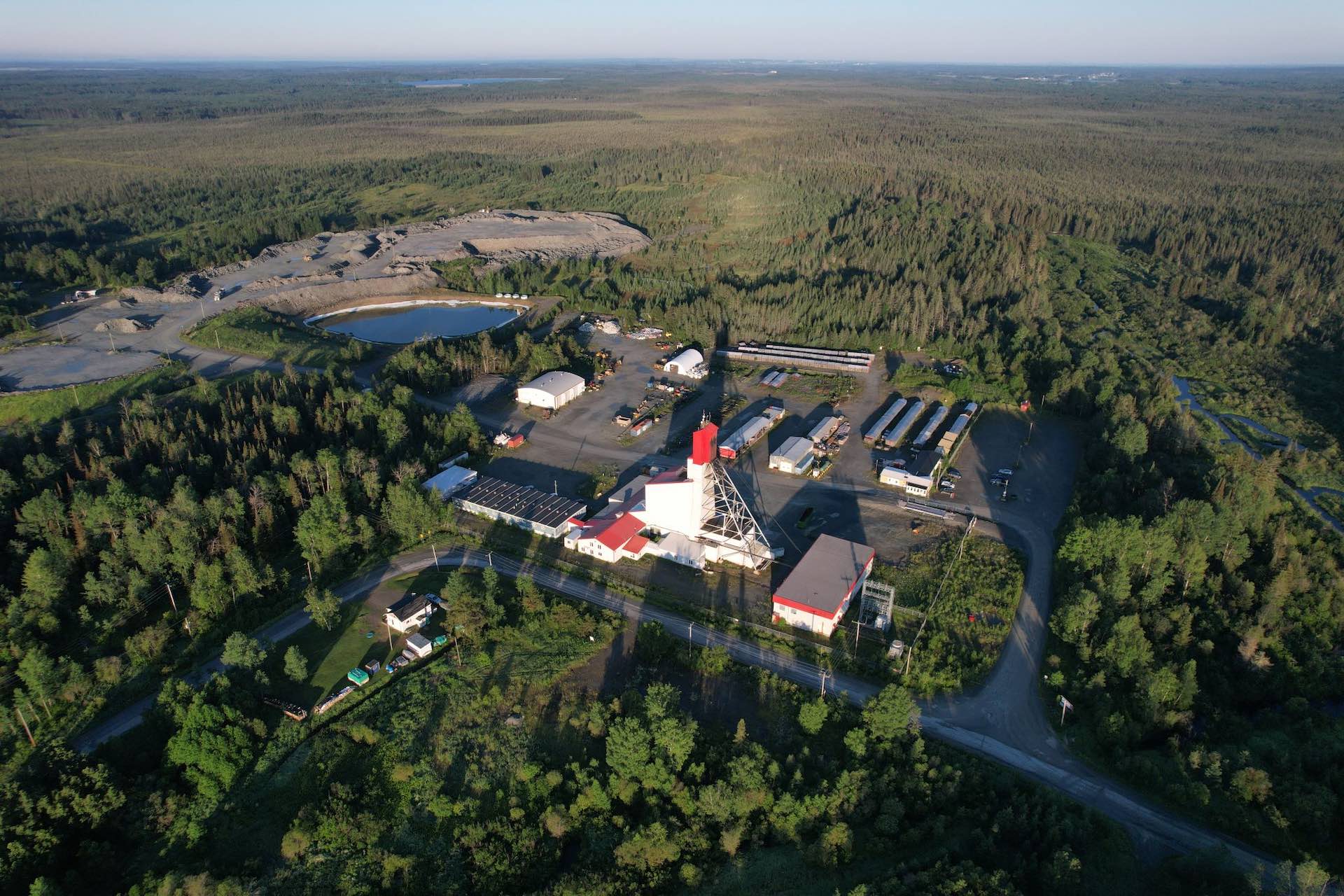
In January, Mexican mining giant Fresnillo completed its $770 million all-cash acquisition of Toronto-based Probe Gold. The purchase included the Novador Gold Project near Val-d’Or, Que., as part of an 1,800-square kilometre exploration ground in the province.
Talking Points
- Canada took in $96.8 billion worth of foreign direct investment in 2025—its highest annual inflow since 2007, but nearly 45 per cent stems from mergers and acquisitions that experts caution do not always create long-term economic benefits
- Mexican mining giant Fresnillo cited Canada’s political stability as a factor in its acquisition of Canada’s Probe Gold, but it was not the only reason
“These new agreements reflect the strength, diversity and innovation in Canada’s bilateral trade and investment relationship with Mexico, and span key sectors where Canadians excel,” Global Affairs Canada wrote in its list of tangible outcomes of stronger Canada-Mexico relations.
Prime Minister Mark Carney has promised to double Canada’s non-U.S. exports by 2035 to help reduce reliance on the United States. His government is also striving to attract about $500 billion in private investment over five years—including an unspecified amount of foreign capital.
Maria Solovieva, an economist at TD, said that foreign investment levels, rather than trade in goods and services, are the best way to assess Canada’s goal of long-term economic integration with other parts of the world. Direct investment, she wrote in a note last month, “is where the diplomatic handshakes either show up in the data or don’t.”
Related Articles

There are limits to what one can decipher from the early numbers, but something is happening. Canada took in $96.8 billion worth of foreign direct investment in 2025—an increase of nearly 12 per cent over the previous year. That was the highest level of annual inflow since 2007. But about 45 per cent of that direct investment, or $43.6 billion, stemmed from merger and acquisition activities, which do not necessarily benefit Canada.
The story behind the Fresnillo deal offers some clues as to what’s going on.
Michael Partridge, a partner at Toronto-based Goodmans, the law firm that acted for Fresnillo in the acquisition of Probe Gold, said the Mexican company had been eyeing Canada for some time as it sought to diversify its portfolio from Latin America to mitigate political risk.
“The Probe Gold one happened to tick all the right boxes in terms of the kind of project Fresnillo was interested in,” Partridge said. The interest predated Carney becoming prime minister, never mind his work to mend ties with Mexico’s President Claudia Sheinbaum. “It was really from a business perspective that the deal came together,” Partridge said, “rather than having any particular imperative in the most recent trade relationship between the two countries.”
The fact that the assets were in Canada, which is viewed as a stable jurisdiction for mining companies, “certainly didn’t hurt,” Partridge said. The 2025 Kearney FDI Confidence Index, an annual survey that ranks countries most likely to attract foreign investment, placed Canada second behind the U.S. for the third year in a row. “Novador is situated in a politically stable and low-cost mining environment,” Fresnillo wrote Oct. 31 when it announced the deal.
The Liberal government is chasing investment overseas partly because it can help unlock economic opportunities that domestic capital is unable, or unwilling, to back. Sasa Jarvis, a capital markets and securities lawyer in the Vancouver office of McMillan, said the Canadian mining sector has thousands of junior exploration companies. Many lack the capital needed to sustain years-long exploration and permitting. Some projects get abandoned, but those with potential can become acquisition targets for major producers. Jarvis said the growing need for critical minerals is creating a “robust economic environment for mining” that could lead to other deals.
She cited a range of reasons for companies to look to Canada, including the federal government’s $2 billion Critical Minerals Sovereign Fund, its $1.5 billion First and Last Mile Fund and the push to accelerate approvals for major projects. “All of these things signal to the market that this is a stable and good jurisdiction to invest in,” she said. “I think we’re going to have to look back on it over the course of several years to find out whether this has been successful.”
The sky-high price of gold in recent months—now falling amid the Iran war—has played a role. Not only does the higher value of gold on their balance sheets give global mining firms more money to play with, it ups the value of potential acquisition targets. “When gold doubles in price, projects that weren’t feasible before suddenly might be,” said Greg McNab, a partner at Dentons and Canada’s co-chair of the firm’s mining group.
The analysis by TD Economics flagged a higher level of foreign direct investment in Canada from the United Kingdom—12 per cent of the total for 2025. Much of it involved acquisitions of Canadian software firms. This suggests “U.K. investors see Canadian tech as both promising and a natural gateway to North American markets,” Solovieva wrote.
Whether foreign direct investment is a good or a bad thing for Canada depends on a range of factors, Solovieva said in an interview, especially when it comes to mergers and acquisitions. “When dividends or any type of income from this company is then transferred back to the owner company, it’s an outflow,” she said. Still, such an investment could also help Canadian companies build capacity and enter new markets. “Then it could potentially actually be beneficial.”
Claire Wilson, a researcher and policy analyst at the Council of Canadian Innovators (CCI), said the federal government should think carefully about the kind of foreign direct investment it is seeking. Citing a recent paper by the Centre for Economic Policy Research (CEPR), a European think tank, she said global supply chains, especially in digital services, can lead to foreign investment taking more than it gives to the host country, especially in acquisitions.
“They want to drive investment in the country. Of course, it makes sense,” Wilson said. “It’s really just being discerning about where we are slotting into value chains in the long term.”