MONTREAL — Hypertec is experimenting with the way it builds and runs data centres and fills them with hardware as it launches a large-scale build-out of AI infrastructure to capitalize on surging demand for compute capacity.
Skip to content

News
Hypertec hopes a new Quebec testing ground will help it win the AI infrastructure race
The firm is developing new hardware to power plans for a major data centre spree
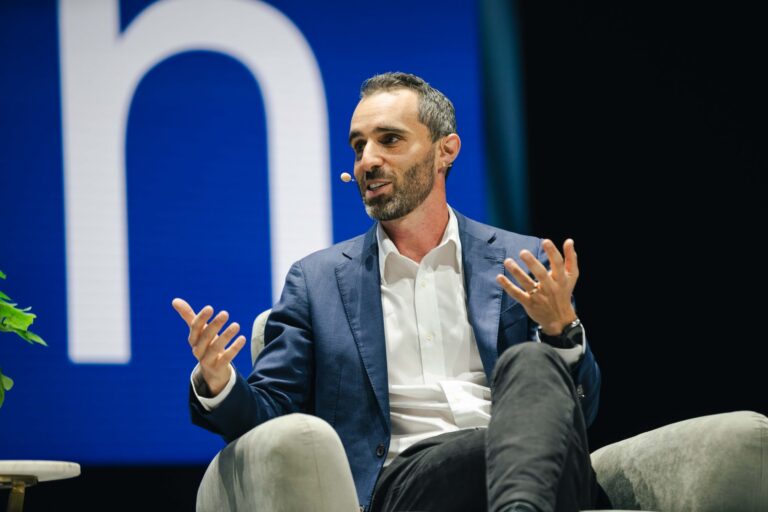
Hypertec CEO Simon Ahdoot speaks at the All In conference in Montreal in September 2025. Photo: All In/Handout
MONTREAL — Hypertec is experimenting with the way it builds and runs data centres and fills them with hardware as it launches a large-scale build-out of AI infrastructure to capitalize on surging demand for compute capacity.
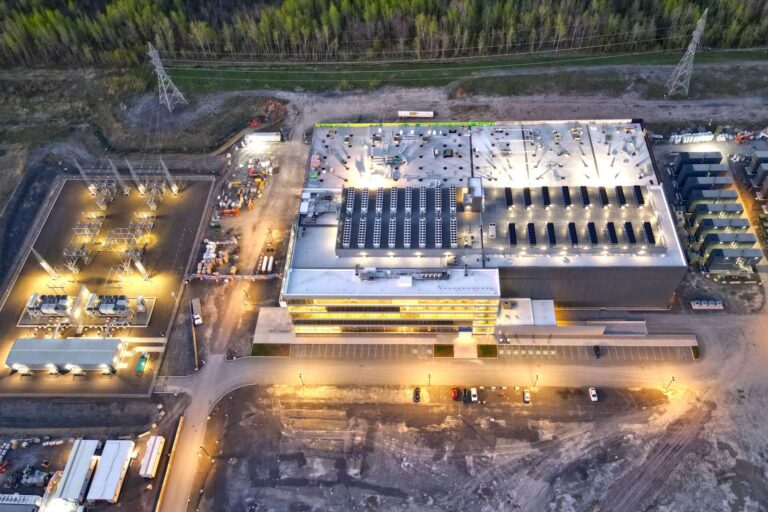
Last month, the Montreal-based firm announced plans for a new campus in LaSalle, Que. that will serve as its headquarters, and as a testing ground for the equipment it develops. Hypertec and its data centre arm 5C Group will install up to three megawatts of compute capacity at the site. It estimates building, powering and equipping the facility will cost it $250 million.
Technical staff at the Montreal AI institute Mila will use the infrastructure to find ways to make AI processing more efficient, and develop new compute designs. Hypertec will also open the facility to researchers and startups developing new AI models and tools.
Talking Points
- Hypertec and its data centre unit 5C Group are setting up a new campus in LaSalle, Que. to serve as a testing ground for new AI infrastructure designs and equipment. Researchers at AI institute Mila will use the compute capacity to find ways to make AI processing more efficient.
- The AI infrastructure firms are planning an ambitious build-out of data centres in North America and Europe
In return, the firm will get to see how different combinations of its servers, cooling systems, energy-recovery technology and other hardware products perform when running real applications. And it will try out chips from major providers like Nvidia, AMD and Intel, as well as newer players like Cerebras, FuriosaAI, Groq and SambaNova.
“Trying to do this in a customer project without having tried them first internally is very difficult,” Hypertec CEO Simon Ahdoot said, in an interview on the sidelines of the All In conference in Montreal. The firm plans to use the LaSalle facility as “a reference” for the kind of compute infrastructure and data centres it can build for potential clients, he said.
Compute “is le subject du jour,” Mila CEO Valérie Pisano said at last month’s announcement. The institute will work with Hypertec to figure out “how we can do AI differently on modern, frontier infrastructure,” she said, citing the potential for improvements in productivity, sustainability and performance.
Related Articles

Mila is not paying Hypertec for access to the LaSalle campus, said Ludovic Soucisse, the institute’s senior director of communications. Its initial project will test how different chips and hardware configurations perform and how much power they consume when running AI systems.
Hypertec has an ambitious rollout on the books. “There’s a scarcity in data centre capacity across North America,” said Jonathan Ahdoot, CEO of 5C, which Hypertec acquired for an undisclosed sum in April for 5C’s portfolio of U.S. power contracts. (The Ahdoots are brothers; their father Robert co-founded Hypertec in 1984, and is now executive chair.)
The new unit already runs four U.S. facilities with a combined 140 megawatts of compute capacity. It leases to AI developers and so-called neoclouds, startups that sell processing power and compete against giants like Amazon Web Services and Microsoft Azure.
Last September, Hypertec announced plans to install up to 100,000 graphics processing units (GPUs), the advanced chips powering the AI boom, in the U.S. and Canada by the end of June 2025. The firm is about half way to its target, Simon Ahdoot said, citing the integration of 5C with Hypertec’s cloud unit as a factor in the delay. Now that’s done, the firms can tackle “much larger-scale projects than we’ve had before.”
Hypertec had initially planned to open data centres in Quebec, Ontario and Alberta as well as in several U.S. states. But while it has built up capacity quickly south of the border, the firm’s Canadian rollout has been slower because of weaker demand.
To justify spending hundreds of millions on new data centres, the Ahdoots say, Hypertec and 5C need customers to sign big, long-term compute contracts, and few Canadian companies are developing or adopting AI at that scale right now. “The industry hasn’t been activated,” said Jonathan Ahdoot.
Hypertec is also expanding across the Atlantic. In June, the firm and 5C announced a deal with neocloud Together AI to build data centres with up to two gigawatts of capacity in Europe, starting with sites in France, Italy, Portugal and the U.K.
To achieve its plans, Hypertec and its partners will need to spend many billions of dollars. In July, 5C announced it had secured US$835 million in new financing by selling a stake to Brookfield Asset Management and borrowing from Deutsche Bank. The data centre company is raising an even larger round this quarter, Jonathan Adhoot said. “You do need a lot of capital.”
Hypertec and 5C are competing in a crowded field that includes the cloud arms of Big Tech firms, as well as upstarts like CoreWeave, Crusoe and OVHCloud that build and run their own data centres or lease them to compute providers and big businesses. In Canada, telecom giants Bell and Telus have also started selling AI infrastructure.
5C can put up data centres and fill them with chips faster than most of its rivals because it has access to the equipment Hypertec sells and pre-fabricates parts of its facilities, Jonathan Ahdoot claimed. “We understand how to build fast.”
Correction: This article has been updated to correct the name of Hypertec’s co-founder.



Loading...
Thanks for sharing!
You have shared 5 articles this month and reached the maximum amount of shares available.
CloseThis account has reached its share limit.
If you would like to purchase a sharing license please contact The Logic support at [email protected].
CloseGift the full article!
You have gifted 0 article(s) this month and have 5 remaining.
Recipients will be able to read the full text of the article after submitting their email address. They will not have access to other articles or subscriber benefits.
Photo: All In/Handout
Most Popular This Week




In-depth, agenda-setting reporting
Great journalism delivered straight to your inbox.
News
Ottawa is softening its ban on stablecoin yield
Briefing
Rio Tinto gets nearly $165M in additional federal funds for Quebec aluminum
U.S. to lift tariffs on some Canadian products crucial to Maine: Collins
Carney warns of tech dependence after Starlink disruptions in Ukraine
Best business newsletter in Canada
Get up to speed in minutes with insights and analysis on the most important stories of the day, every weekday.
Exclusive events
See the bigger picture with reporters and industry experts in subscriber-exclusive events.
Membership in The Logic Council
Membership provides access to our popular Slack channel, participation in subscriber surveys and invitations to exclusive events with our journalists and special guests.






