QScale is planning to build a multi-billion-dollar AI data centre in the Greater Toronto Area, the company’s president and co-founder, Martin Bouchard, has told The Logic. The company has an engagement with an Ontario-based construction firm and has received a preliminary validation from Hydro One to power the proposed site, Bouchard said.
Skip to content

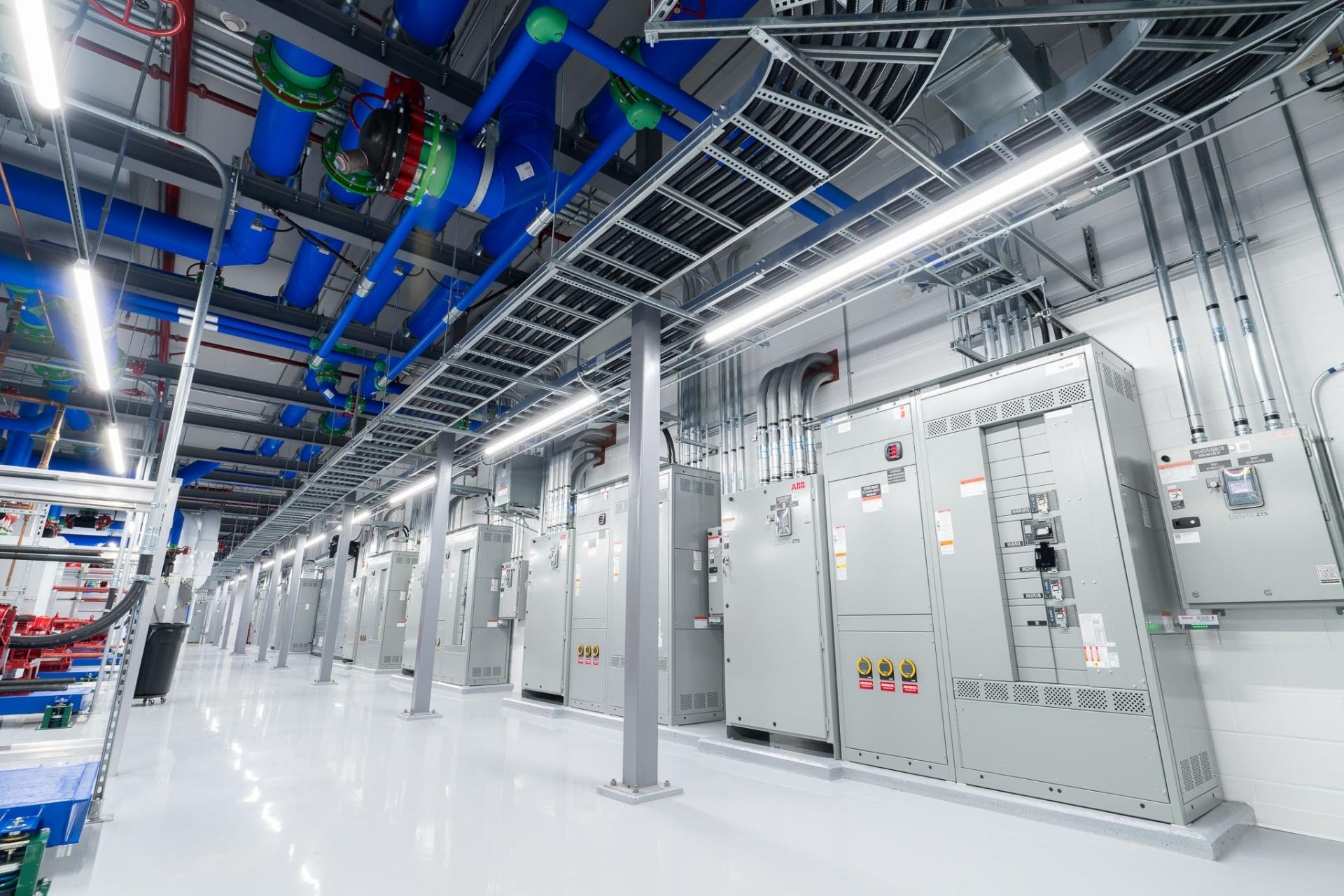 Q01 runs on hydroelectricity from Hydro‑Québec, giving it access to some of the lowest industrial electricity rates in North America. Photo: QScale/Handout
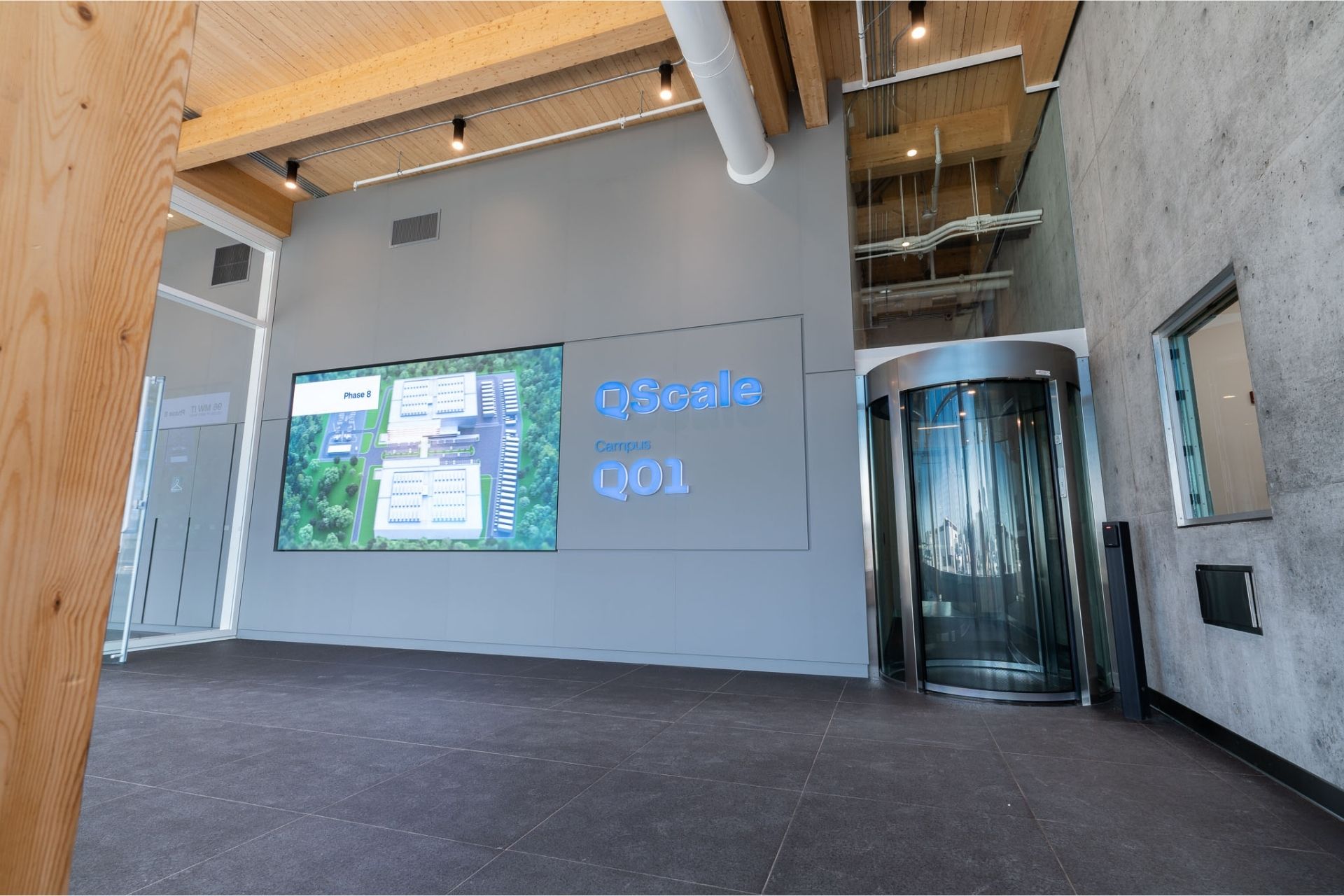 QScale’s Q01 data centre is the North American base for Hewlett Packard Enterprises’ AI cloud. Montreal-based Micrologic also uses the facility to host the second-largest sovereign cloud in Canada. Photo: QScale/Handout

Exclusive
QScale wants to build a multi-billion-dollar AI data centre near Toronto
The minimum investment in the project could be as high as $4 billion, the company’s president told The Logic
QScale’s Q01 facility in Lévis, Que. Approval of a new AI data centre in Ontario would be a boon for the firm. Photo: QScale/Handout
QScale is planning to build a multi-billion-dollar AI data centre in the Greater Toronto Area, the company’s president and co-founder, Martin Bouchard, has told The Logic. The company has an engagement with an Ontario-based construction firm and has received a preliminary validation from Hydro One to power the proposed site, Bouchard said.
If approved, the AI data centre would be one of the biggest in Canada. Bouchard said QScale hopes to obtain formal authorization from Hydro One by the fall and that the minimum investment in the project would be between $2.5 billion and $4 billion.
Talking Points
- QScale president Martin Bouchard told The Logic that the company hopes to have formal approval from Hydro One to provide power for the project by this fall.
- If approved, the AI data centre would be one of the biggest in Canada. The company is currently finishing construction on the third phase of Q01, its $1.2-billion, 142-megawatt AI data centre in Lévis, Que.
The company is currently in the process of selecting a specific location near Toronto, Bouchard said. “We’ve been putting a lot of energy into finding the right sites,” he added.
QScale, which is based in Lévis, Que., was founded in 2018 and builds infrastructure to power AI and high-performance computing. The company is currently finishing construction on the third phase of Q01, its $1.2-billion, 142-megawatt AI data centre in Lévis.
Approval of an even bigger AI data centre in Ontario would be a boon for QScale as it looks to cash in on surging demand from the tech industry and a desire by the federal government to build more AI infrastructure in Canada.
Related Articles


The firm’s Q01 facility, started in 2021, could offer a blueprint for the site in Ontario—both in terms of how it’s powered and who pays to use it. The facility was the first in Canada to be purpose-built for AI colocation—which allows businesses to rent space, power and cooling for their servers—predating both major telecom-backed initiatives and sovereign compute programs.
QScale wouldn’t share a detailed list of customers for Q01, but Bouchard confirmed that the facility is the North American base for Hewlett Packard Enterprises’ AI cloud. Micrologic, a Montreal-based cloud computing and security company, uses the facility to host its Canadian sovereign cloud service.
Q01 also runs on hydroelectricity from Hydro‑Québec, giving it access to some of the lowest industrial electricity rates in North America. The facility currently has 110 megawatts of power for servers across the facility—enough for thousands of AI workloads—with backup power to keep servers operational if the main grid fails.
Quebec’s relative wealth of clean, cheap energy could give it a major advantage in the AI gold rush. AI workloads, especially for training large language models, use huge amounts of power to run and cool graphics processing units (GPUs). According to a 2024 report from McKinsey & Company, average power densities—the energy consumption of servers in data centres—more than doubled in two years, from eight kilowatts per rack to 17 kilowatts. That figure could hit 30 kilowatts by 2027 as AI workloads increase.
The AI boom is putting a huge strain on energy grids, with tech giants like Meta, Microsoft and Google signing deals for nuclear power access to preserve momentum with their growing AI mandates and their appetite for power.
In March, Nvidia announced that its next-generation Rubin Ultra NVL576 GPUs will require racks supporting 600 kilowatts of power by 2027, meaning that a single rack the size of a domestic refrigerator would use as much power as a 500-home subdivision. An AI data centre with 100 of these racks, more than half of Q01’s finished facility, could devour up to 60 megawatts, the equivalent energy consumption of around 50,000 homes.
Q01 is already prepared for Nvidia’s Rubin Ultra, Bouchard said, with the cooling and infrastructure designed to scale to 600 kilowatts per rack. The facility makes use of Quebec’s climate, utilizing free cooling for up to 80 per cent of the year. Heat from the facility will also be reused to grow fruit at a planned 12-hectare greenhouse complex one kilometre away.
Bouchard said QScale bought the land for the greenhouse when it purchased the site for the Q01 project and completed the sale to a developer in May. The City of Lévis issued a building permit for the first greenhouse in June. “Very conservatively, 95 per cent of the computer’s heat is being transported and reused by the greenhouses,” Bouchard claimed.
Pierre Samson, the company’s executive vice-president of sales and marketing, said part of the reason for the planned expansion into Ontario was tighter controls and longer wait times for grid access in Quebec. Projects over five megawatts now require approval from the provincial government. MEI, a Montreal-based think tank, projects that Quebec will be heading toward an electricity shortage by 2027.
“Right now in Quebec, because of the power scarcity, there’s no more competition,” Samson told The Logic. “If you want to start something in Quebec, it’s impossible.” QScale’s Q01 already has an agreement in place for 142 megawatts, and the facility also has its own high-voltage substation, shielding it from future allocation uncertainty. “Ontario will be very competitive at some point because you cannot go to Quebec,” Samson argued.
Data Center Map, which provides market intelligence for the industry, estimates that there are 280 data centres in Canada. Toronto dominates the market with 86 data centres, followed by Montreal with 57. Mordor Intelligence, a global market intelligence firm based in India, estimates Canada’s data centre market could grow from 1,370 megawatts in 2025 to over 2,000 megawatts by 2030.
The Ontario government said more than 6,500 megawatts worth of proposed data centres, the equivalent of around 60 Q01s, have applied for access to Ontario’s grid. Combined, these AI and cloud computing facilities are expected to account for 13 per cent of new electricity demand in the province by 2035—or the equivalent of about 2.5 million homes. A lot of those applications are speculative, early-stage or dependent on regulatory approval.
Elsewhere in Canada, demand for data centres is outpacing grid supply.
The Alberta Electric System Operator said the volume of grid connection requests in the province is unprecedented, with the organization currently evaluating 29 proposed projects representing more than 16 gigawatts of energy demand.
BC Hydro hasn’t provided details on data centre demand, but the Pembina Institute, a clean energy think tank, estimates demand for electricity in the province to increase between 22 and 41 per cent by 2040.
Jas Jaaj, managing partner of AI and data at Deloitte, argued that the federal and provincial governments, especially those in Ontario and Quebec, will “need to play an active role” to find the necessary power to help meet the energy demand of AI data centres. “AI workloads are going to be disproportionately in these provinces,” he added.
In June, the Ontario government proposed legislation overriding existing laws requiring utilities to connect all data centres indiscriminately, and instead giving the government power to prioritize data centres that it perceives as creating economic benefits. The law, which critics argue could foster a culture of backroom deals and political influence over energy access, is not expected to pass until after the legislature returns in the fall.
“I think eventually, in Ontario, we’ll have the same issues that we face in Quebec in terms of energy shortage,” Bouchard said. But he believes that QScale’s use of hydro power and heat reuse in greenhouses makes its data centres a more attractive investment. In its legislation, the Ontario government said it will prioritize data centres that benefit local communities and align with the province’s economic goals.
Bouchard said he also expects QScale to benefit from the sudden desire for sovereign AI infrastructure in Canada. In June, AI Minister Evan Solomon told The Logic that the government is keen to support the country’s sovereign AI assets, which include data centres. To that end, Ottawa recently committed $2 billion to grow Canada’s AI compute capacity and is actively seeking investment from other countries, including Saudi Arabia and the United Arab Emirates, to support Canadian sovereign AI data centres and companies.
While the first two phases of Q01 are mostly occupied by U.S.-based companies, Bouchard reckons domestic interest will spike as Canadian companies pivot from U.S.-owned data centres operating in Canada to all-Canadian operations. “Canadian companies are starting to understand why it’s important for them to have their own capacity,” Bouchard said.



Loading...
Thanks for sharing!
You have shared 5 articles this month and reached the maximum amount of shares available.
CloseThis account has reached its share limit.
If you would like to purchase a sharing license please contact The Logic support at [email protected].
CloseGift the full article!
You have gifted 0 article(s) this month and have 5 remaining.
Recipients will be able to read the full text of the article after submitting their email address. They will not have access to other articles or subscriber benefits.
Photo: QScale/Handout
Q01 runs on hydroelectricity from Hydro‑Québec, giving it access to some of the lowest industrial electricity rates in North America.
QScale’s Q01 data centre is the North American base for Hewlett Packard Enterprises’ AI cloud. Montreal-based Micrologic also uses the facility to host the second-largest sovereign cloud in Canada.
Most Popular This Week




In-depth, agenda-setting reporting
Great journalism delivered straight to your inbox.
News
Panel decries Canada’s chaotic way of funding world-class science
Briefing
AI is pushing insurers to become asset managers, Canadian CEOs say
Trump administration faces lawsuit over 50% tariffs on Canadian goods
Canada-U.S. trade war to reduce real GDP by 1.4% over 2024 levels after five years: PBO
Best business newsletter in Canada
Get up to speed in minutes with insights and analysis on the most important stories of the day, every weekday.
Exclusive events
See the bigger picture with reporters and industry experts in subscriber-exclusive events.
Membership in The Logic Council
Membership provides access to our popular Slack channel, participation in subscriber surveys and invitations to exclusive events with our journalists and special guests.





