Listen Now
0:00
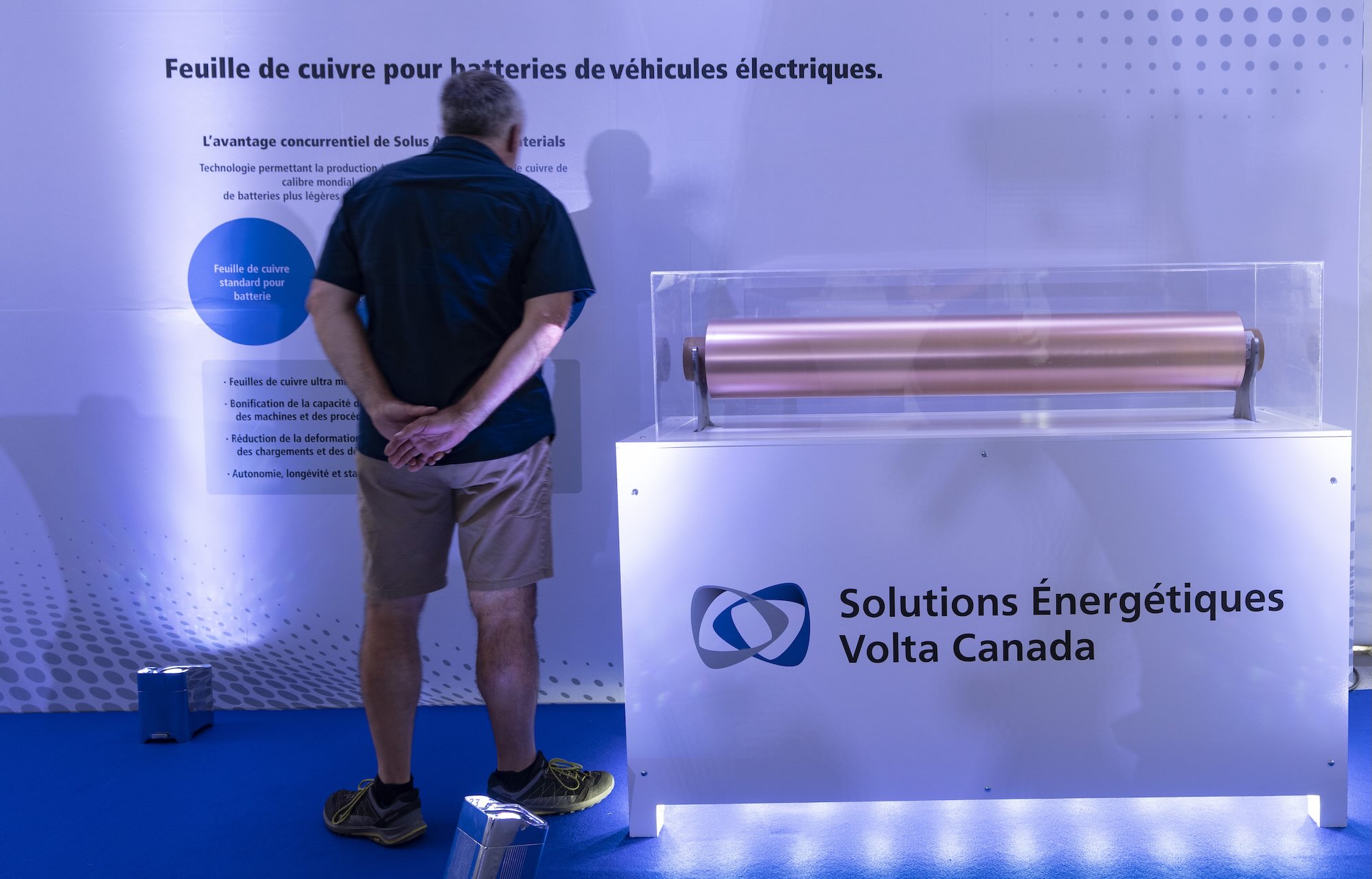
OTTAWA — The federal government has agreed to contribute $70 million toward Volta Energy Solutions’ copper foil plant in Granby, Que., after nearly three years of negotiations, The Logic has learned.
In 2023, at the height of Canada’s push to build an electric vehicle supply chain, then-innovation minister François-Philippe Champagne announced that Ottawa would chip in for the $750-million plant, a first of its kind in Canada, with a contribution from the Strategic Innovation Fund. But he didn’t say at the time how much it planned to spend.
Talking Points
- The federal government plans to make a $70 million contribution to Volta Energy Solutions’ plant in Granby, Que.
- The $750-million plant will make copper foil, a key component of EV batteries; it is the first of its kind in Canada
- Innovation, Science and Economic Development Canada would not say whether the contribution, which has yet to be officially announced, will need to be repaid
The company, a subsidiary of South Korea’s Solus Advanced Materials, plans to finish the construction later this year and begin producing copper foil, a crucial component of lithium batteries for electric vehicles, by March 2027.
Innovation, Science and Economic Development Canada would not say whether Volta Energy Solutions will have to pay the contribution back. The details of the negotiations and the structure of the government’s financial contribution are confidential, spokesperson Hans Parmar said in a statement.
Neither the company nor Industry Minister Mélanie Joly immediately responded to a request for comment.
Volta previously said it expects to produce up to 57,000 tonnes of copper foil per year once it’s running at full capacity, enough for about 2.5 million electric vehicle batteries, and support 260 jobs.
Related Articles
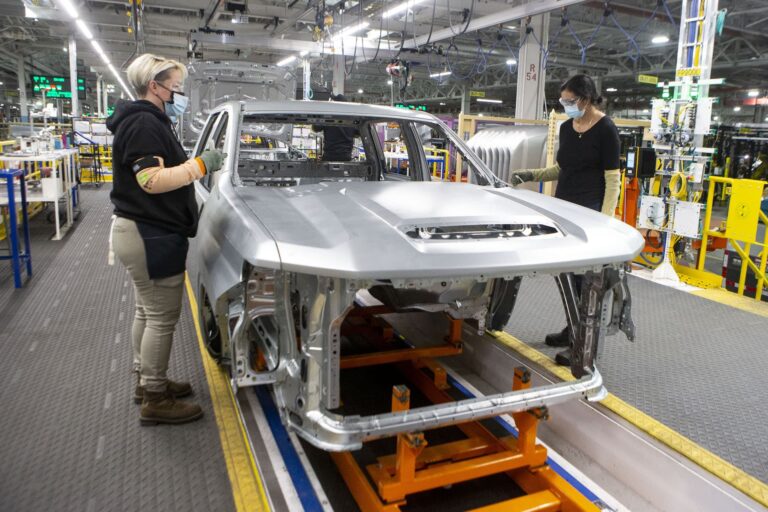
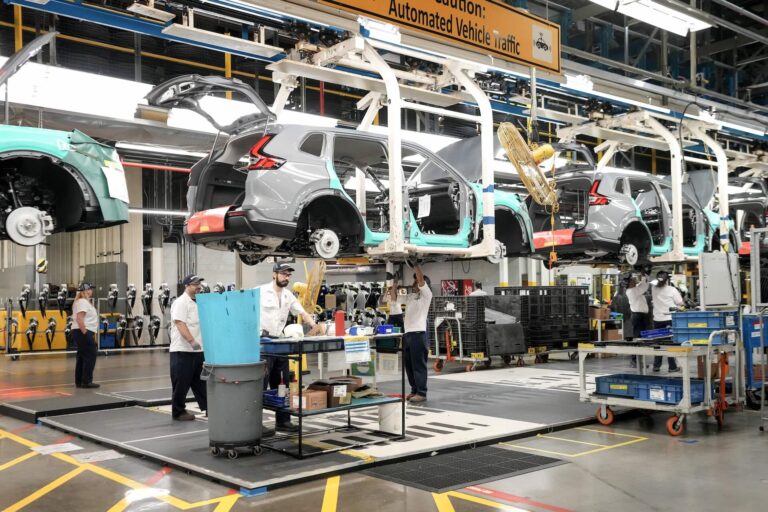
Since Canada first announced plans to support the project, however, the EV landscape in North America changed. Canada’s spending on EV supply chains was mainly driven by Biden-era policies like the United States’s Inflation Reduction Act (IRA), which sparked intense competition for EV investments in both countries.
That changed when Donald Trump, who promised to rescind unspent money committed under the IRA, won a second term in the White House. Canada shifted its focus from the subsidy war for EV investments to the trade war.
Trump’s tariffs raised auto prices and shut down Canadian factories. In a bid to rescue the industry, Prime Minister Mark Carney repealed Canada’s EV sales mandate and dedicated $3 billion to help firms respond to trade disruptions and retool their plants.
Last week, The Logic reported that Ottawa was backing Ford’s move away from EV manufacturing in Ontario with $464.5 million in financing to help overhaul the firm’s Oakville, Ont., plant to make gas- and diesel-powered trucks. The money is coming from what used to be the Strategic Innovation Fund, which the government has renamed the Strategic Response Fund and expanded to help industries hit by trade disruption.
Still, even as it scrapped the EV sales mandate, the government moved to juice sluggish EV adoption rates by reintroducing a consumer rebate.
The Quebec government has already contributed a $150 million loan to the copper foil plant in Granby. As part of the agreement, the province is willing to forgive part of the loan if certain conditions are met.
The company announced in December that it would also receive $194 million from South Korea’s Supply Chain Resilience Fund, a government program focused on supply chain risks, and said it has already received combined financing of $416 million from the Export-Import Bank of Korea, Korea Development Bank, Korea Trade Insurance Corporation and Export Development Canada.













