VANCOUVER — B.C. billionaire Frank Giustra has settled his defamation lawsuit against Twitter, which he had filed over tweets on the platform that linked him to a violent false conspiracy theory and threatened his life.
Skip to content
Exclusive
B.C. billionaire Frank Giustra settles defamation suit against Twitter
Giustra had sued over tweets he said were defamatory, some of which Twitter did not remove
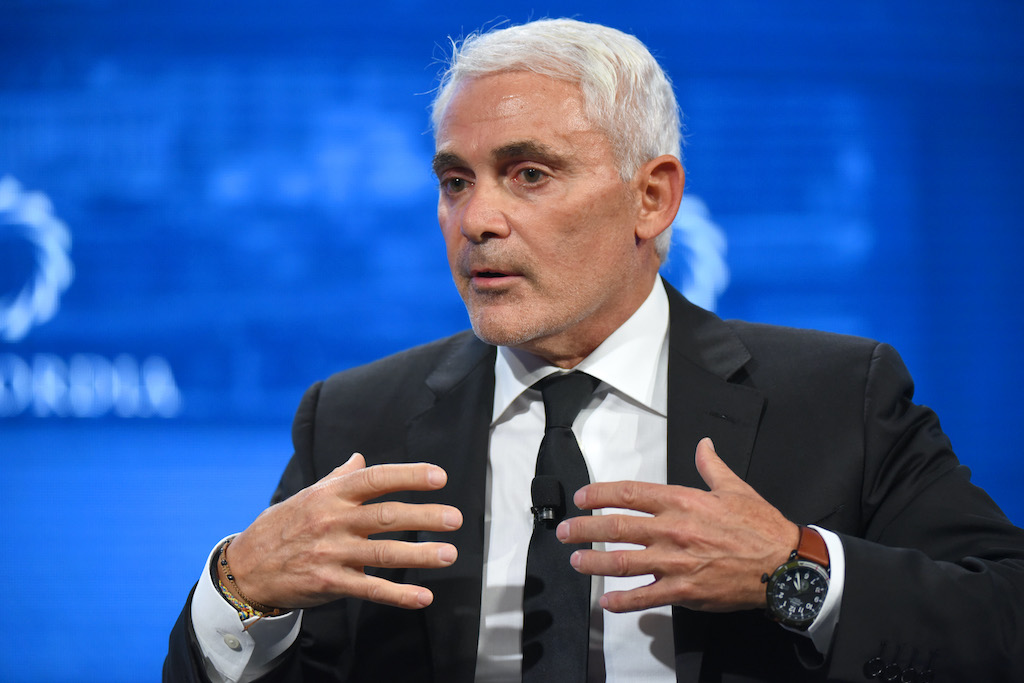
Frank Giustra in New York City in September 2018. Photo: Riccardo Savi/Getty Images
VANCOUVER — B.C. billionaire Frank Giustra has settled his defamation lawsuit against Twitter, which he had filed over tweets on the platform that linked him to a violent false conspiracy theory and threatened his life.
Giustra’s claim was dismissed by mutual consent, according to an order issued by the Supreme Court of British Columbia dated Jan. 6. The resolution comes after an application by Giustra, and both parties will pay their own legal costs.
Talking Points
- Frank Giustra, the founder of Lionsgate Entertainment, had sued over tweets that linked him to conspiracy theories and threatened his life
- The settlement follows Elon Musk’s headline-grabbing purchase of Twitter, which has stirred debate over the appropriate limits of expression on the platform
“Ultimately, the parties agreed to resolve this action,” wrote Fred Kozak, Guistra’s counsel from Reynolds Mirth Richards & Farmer, in an email to The Logic.
The terms of the settlement were not disclosed. Some of the tweets identified in Giustra’s claim have since been marked on the platform as “withheld in Canada in response to a legal demand,” The Logic found after searching for them, though it is unclear when. One tweet was marked as having violated Twitter’s rules, and others came from accounts that have since been suspended or pages that no longer exist. Still others remain published.
Twitter’s counsel, David Wotherspoon, a partner at Dentons’s litigation and dispute-resolution group in Vancouver, did not respond to questions. “We are unable to comment on client matters,” wrote Austina Turczyn, a spokesperson for the firm, in an email to The Logic.
Giustra, who founded the film and TV production company Lionsgate Entertainment and is now CEO of the Fiore Group, filed the lawsuit in 2019 alleging that Twitter published defamatory tweets about him, not all of which it removed. The tweets in question included ones linking him to the false Pizzagate conspiracy theory and threatening his life. “Giustra started this action because he wanted to hold Twitter accountable in circumstances where it knew about defamatory, hateful and threatening tweets made on its platform by anonymous users but refused to remove them,” wrote Kozak.
Related Articles


Twitter argued that B.C. courts did not have jurisdiction over the case, and that Giustra’s claim should be heard in California, where the company is based. Giustra’s legal team, however, said he “would have no meaningful claim against Twitter” in the state because of constitutional protections and federal statutes around free speech in the United States that “immunize social media companies from liability for defamatory content posted on their website.”
A B.C. Supreme Court judge ruled in January 2021 in Giustra’s favour. Twitter appealed that decision, and after a lengthy legal battle, the Court of Appeal upheld the judge’s decision.
Twitter provided a glimpse of its position in a statement of defence filed March 2022, which argued it was not a publisher. Any defamation action, it said, should be directed instead at the Twitter users who posted the offending material. Twitter also denied the tweets were defamatory, suggested Giustra’s agreement to its terms of service limited its liability, and argued it does not have to remove content before a judge rules it defamatory, among other points.
None of the allegations were proven in court before the parties reached their settlement.
The settlement follows Elon Musk’s headline-grabbing Twitter takeover, which has stirred debate over the appropriate limits of expression on the platform. In early April, the billionaire and longtime Twitter critic disclosed a 9.2 per cent stake in Twitter, which made him its largest shareholder. Soon after, Musk offered to buy the company for US$43 billion. It didn’t go smoothly; Musk got cold feet before finally agreeing to stand by his offer in the face of court action. The deal closed Oct. 28, with Musk tweeting, “The bird is freed.”
Musk, who identifies as a “free-speech absolutist,” has often criticized Twitter’s content-moderation policies. He has said he believes Twitter should not regulate speech beyond what’s required by law in the countries where it operates. Meanwhile, his critics have worried the takeover would result in more hate speech and misinformation on an already troubled platform.
The ownership change brought chaos to the company. Musk became the sole board director and appointed himself CEO. In early November, he enacted mass layoffs, reportedly planning to let go of half of its global workforce of 7,500 people at the time. That proportion then rose to nearly 75 per cent. Layoffs have included contract content moderators, as well as members of the trust and safety team and a hate-speech and harassment unit. Twitter also disbanded its Trust and Safety Council, a volunteer group of independent organizations formed in 2016 to help address content-moderation issues.
Meanwhile, the company reinstated previously banned users, including former U.S. president Donald Trump and Kanye West (who was later suspended again after posting antisemitic content). At the same time, Musk banned several journalists, including ones from The New York Times and CNN, who have written about him. He attributed the bans to violating a doxxing policy, or revealing his location at any given time.
In December, Musk tweeted a poll asking users if he should step down as CEO. After a majority voted yes, he responded that he’d look for “someone foolish enough to take the job,” but that he’d still have a hand in its operations. Twitter did not respond to The Logic’s request for comment.



Loading...
Thanks for sharing!
You have shared 5 articles this month and reached the maximum amount of shares available.
CloseThis account has reached its share limit.
If you would like to purchase a sharing license please contact The Logic support at [email protected].
CloseGift the full article!
You have gifted 0 article(s) this month and have 5 remaining.
Recipients will be able to read the full text of the article after submitting their email address. They will not have access to other articles or subscriber benefits.
Photo: Riccardo Savi/Getty Images
Most Popular This Week




In-depth, agenda-setting reporting
Great journalism delivered straight to your inbox.
Commentary
Carmichael: Being boxed in will help Canada focus on what matters
Briefing
Rio Tinto gets nearly $165M in additional federal funds for Quebec aluminum
U.S. to lift tariffs on some Canadian products crucial to Maine: Collins
Carney warns of tech dependence after Starlink disruptions in Ukraine
Best business newsletter in Canada
Get up to speed in minutes with insights and analysis on the most important stories of the day, every weekday.
Exclusive events
See the bigger picture with reporters and industry experts in subscriber-exclusive events.
Membership in The Logic Council
Membership provides access to our popular Slack channel, participation in subscriber surveys and invitations to exclusive events with our journalists and special guests.






