Skip to content

Exclusive
AI institutes pushed Ottawa for a $434M renewal of AI strategy
Amii, Mila, Vector Institute and CIFAR called on Ottawa to renew programs for research and commercialization as the tech talent wars heated up, according to documents seen by The Logic
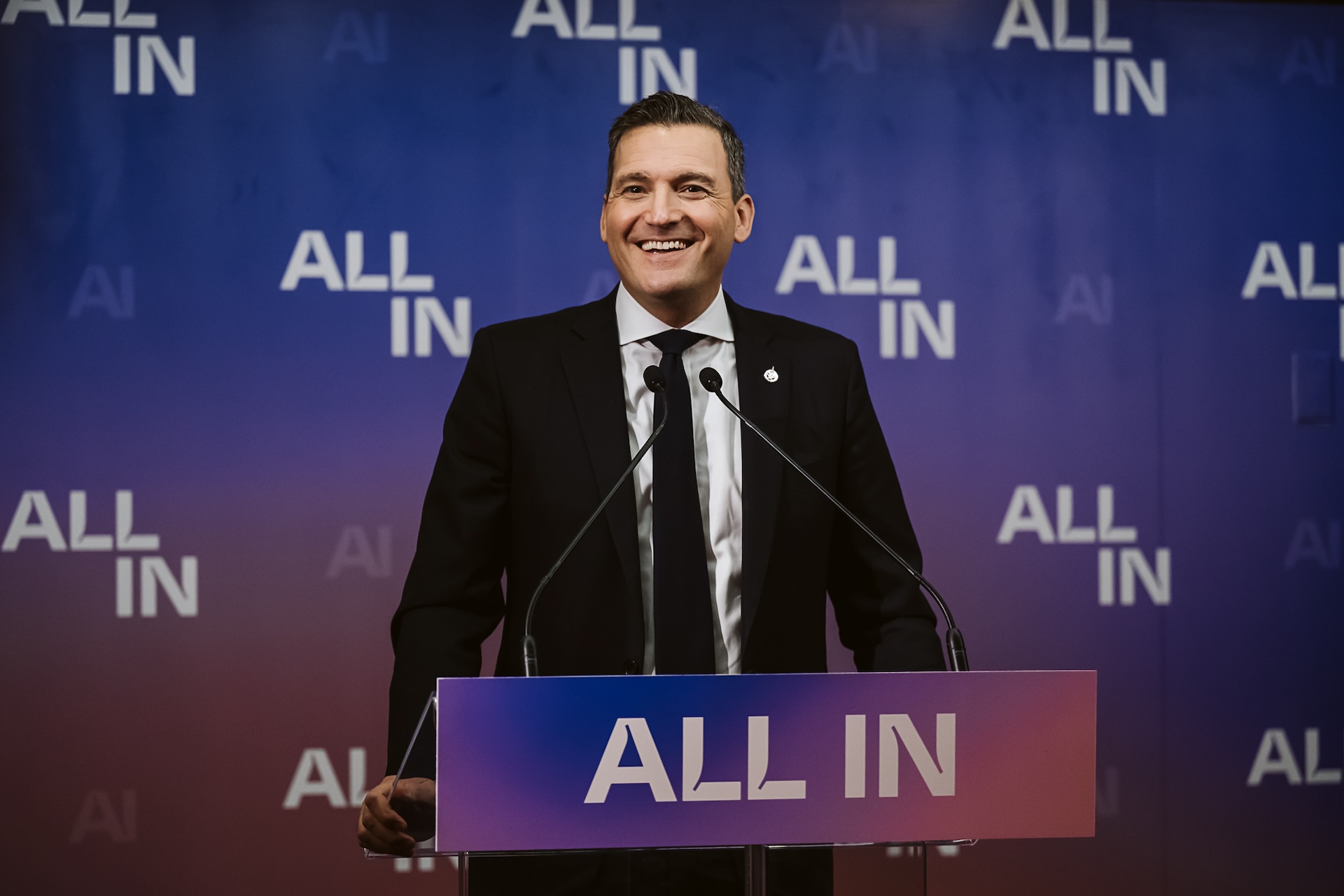
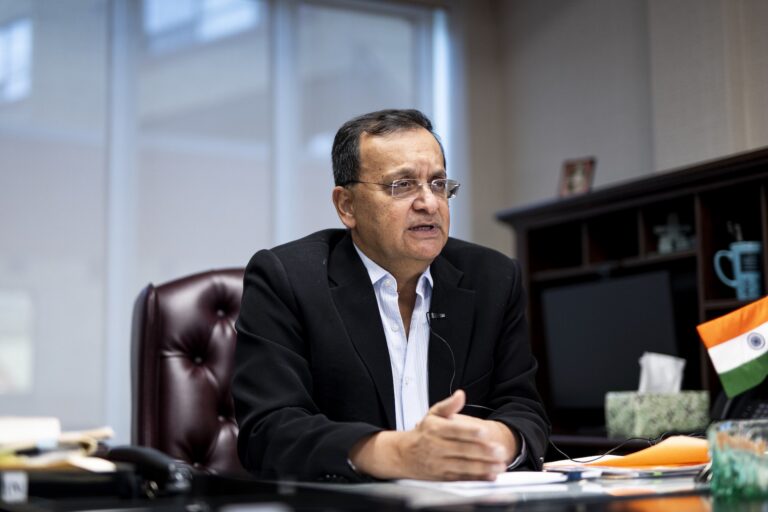
AI Minister Evan Solomon is expected to announce more details about Ottawa’s updated AI strategy sometime this quarter. Photo: Handout, All In
TORONTO — Canada’s major AI institutes called for $434 million in new federal funding to help recruit and retain top researchers, and turn their breakthroughs into business opportunities according to documents reviewed by The Logic.
Edmonton-based Amii, Montreal-based Mila and the Toronto-based Vector Institute as well as the research non-profit CIFAR made the proposal to AI Minister Evan Solomon in July 2025, ahead of the fall budget. International competition for talent and commercialization shortcomings had led “invaluable AI assets—our researchers, their ideas, and potential ventures—to migrate abroad,” they warned, adding that further support was “critically needed” to secure Canada’s AI sovereignty. The Logic obtained the proposal via an access to information request.
Talking Points
- Canada’s three major AI institutes and CIFAR have asked the federal government to put another $434 million into the national AI strategy, arguing Canada needs to act quickly to shore up its talent pool and capitalize on the technology
- Ottawa says it is considering decisions about research chairs and other initiatives as part of its update to the program, due this quarter
The Liberal government did not implement the institutes’ recommendations in November’s budget, the first under Prime Minister Mark Carney. It is instead working on overhauling the national AI strategy, fielding suggestions from a task force of researchers, investors and founders as well as from a public consultation. Solomon has said the government is moving two years ahead of the scheduled program renewal.
Ottawa first established the AI strategy in March 2017, pledging $125 million and tapping CIFAR to run it. The program originally backed the three AI institutes to work with universities to recruit and retain top AI researchers via newly endowed chair positions. The April 2021 federal budget renewed the strategy with an additional $443.8 million, including $162.2 million over a decade for academic talent, as well as $185 million over five years for commercialization programs.
Related Articles


Despite that funding, the institutes claim that as of the end of this March, Canada will “effectively have no instrument in place for additional AI talent recruitment.” Academics typically start looking for new gigs up to a year in advance, they said.
The institutes’ proposal called for another $186 million to extend the chairs program through 2036, amid what it described as an “unprecedented global war for AI talent.” It cited reports of tech giants offering huge pay packages for star engineers and scientists—and of them acqui-hiring top talent from promising startups. Big U.S. firms and foreign academic institutions are recruiting in Canada, it claimed, citing professors who have left Canadian schools for roles at Elon Musk’s xAI, ETH Zurich in Switzerland and MIT in Cambridge, Mass.
The institutes said that Ottawa should expand the chairs program to send a strong signal to researchers that they should come to or remain in Canada, and to “give them pause in considering aggressive international offers.”
Amii, CIFAR, Mila and Vector declined to comment on the proposal. Sofia Ouslis, a spokesperson for Solomon, said Ottawa is considering decisions about renewing or extending initiatives like the chairs program as part of work to update the AI strategy, more details of which are expected to be announced this quarter. The government is “focused on strengthening Canada’s AI research ecosystem and ensuring the country continues to attract and retain top talent,” she said.
Beyond talent, the AI institutes’ proposal also called for measures to support startups and help businesses use the technology. It recommended Ottawa put up $75 million for a new scientist venture fund, which would back firms spun out of research labs.
The program would provide “direct, patient, and flexible equity investments to scientist-led companies at the pre-seed and seed stages,” the proposal said. The AI institutes, advised by a committee of investors, would choose which startups to back, and partner VC firms could follow on in later rounds.
The proposal suggested Ottawa take the money for the new fund out of its Venture Capital Catalyst Initiative, which it renewed with $1 billion in new funding in December 2024. It claimed the federal program currently backs mostly later-stage investors, who aren’t incentivized to work with research-driven AI startups that are “extremely early, highly technical and capital intensive.”
While Ottawa has yet to commit, Mila has seemingly forged ahead. On Wednesday it announced the launch of its own Venture Scientist Fund with Montreal-headquartered Inovia Capital. The two organizations aim to raise US$100 million to back more than 55 startups working on foundational AI, deep tech, and compute infrastructure.
The AI institutes’ proposal also called for $108 million to renew programs that support commercialization and adoption of the technology. They cited Canada’s longstanding challenge with turning research breakthroughs into new companies and productivity gains. New funding would let the AI institutes work with more small businesses and large firms to provide AI expertise, teach them how to use the technology and connect them with potential recruits.
Federal funding for the AI institutes’ commercialization programs—up to $20 million each—is currently due to expire in March 2026, alongside several other innovation initiatives. The proposal says the programs have exceeded their targets, with 1,856 firms participating and putting up $37 million of their own money, with three-quarters reporting they’d seen productivity gains, cost savings or other operational benefits as a result.
The proposal from the AI institutes and CIFAR includes $65 million to pay for the administration and operations of the strategy.
Ottawa has a number of other proposals to consider as it updates the AI strategy. Task force members have recommended measures including carve-outs to capital gains taxes, launching “moonshot” efforts to solve big societal problems, and expanding funding for the AI institutes.



Loading...
Thanks for sharing!
You have shared 5 articles this month and reached the maximum amount of shares available.
CloseThis account has reached its share limit.
If you would like to purchase a sharing license please contact The Logic support at [email protected].
CloseGift the full article!
You have gifted 0 article(s) this month and have 5 remaining.
Recipients will be able to read the full text of the article after submitting their email address. They will not have access to other articles or subscriber benefits.
Photo: Handout, All In
Most Popular This Week


In-depth, agenda-setting reporting
Great journalism delivered straight to your inbox.
News
Canada’s landmark ESG case heads to a final decision
Briefing
Matthew Proud-led SPAC threatens to pull out of merger with UniUni
Ottawa awards Mitacs $162M to create AI-focused work placements
Ontario puts $30M into Vector Institute for AI adoption
Best business newsletter in Canada
Get up to speed in minutes with insights and analysis on the most important stories of the day, every weekday.
Exclusive events
See the bigger picture with reporters and industry experts in subscriber-exclusive events.
Membership in The Logic Council
Membership provides access to our popular Slack channel, participation in subscriber surveys and invitations to exclusive events with our journalists and special guests.