OTTAWA — Peter Moon’s company pays enough in digital services taxes each month that it could hire another employee with that money, he figures. Which is exasperating for someone who doesn’t provide digital services.
Skip to content

News
Who pays the DST when you buy on Amazon Marketplace? Not Amazon
U.S. tech giant passes cost of digital services tax to small Canadian businesses
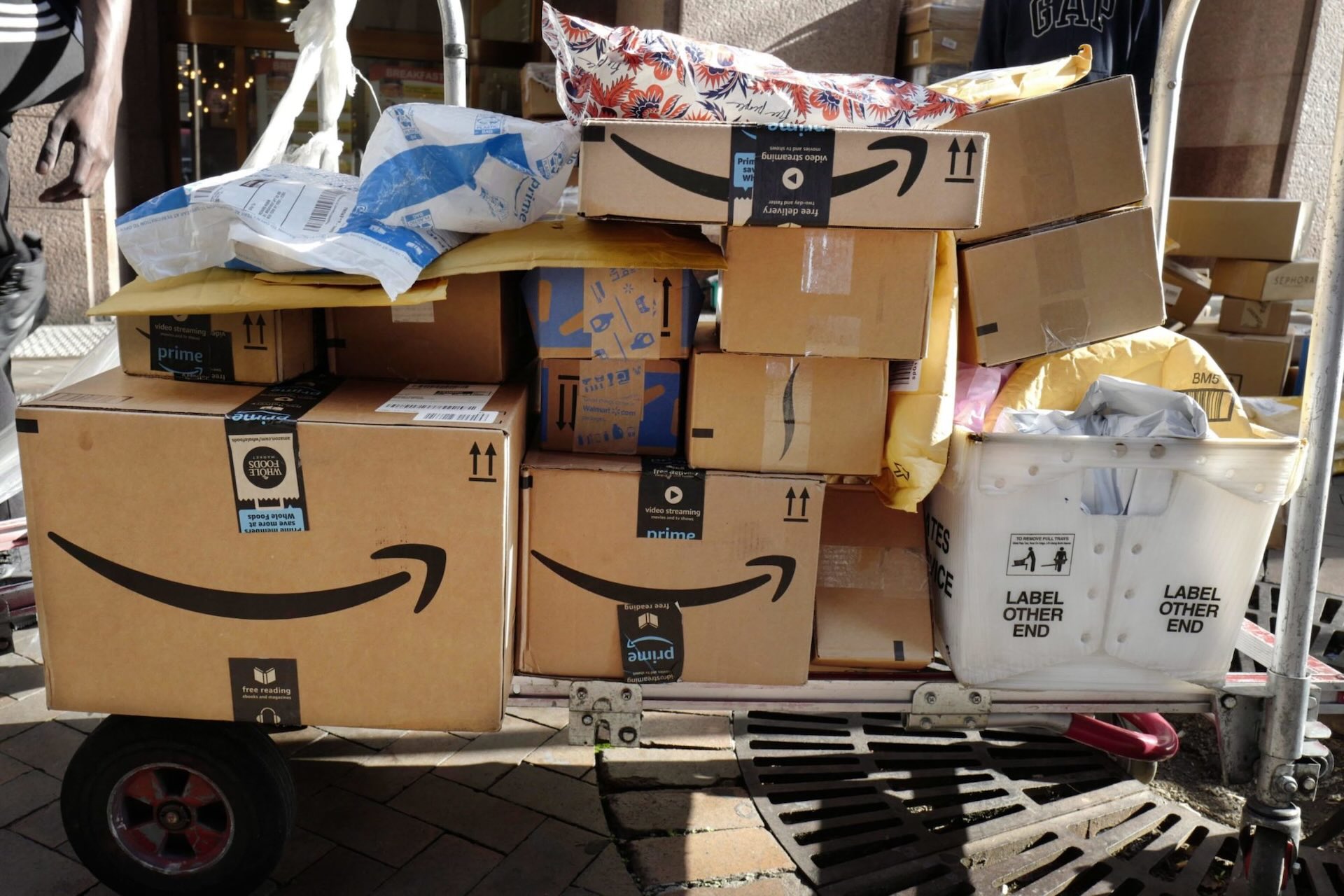
Canadian vendors selling on Amazon Marketplace must pay the tech giant a transaction surcharge to offset Canada's digital services tax. Photo: AP Photo/Mark Lennihan
OTTAWA — Peter Moon’s company pays enough in digital services taxes each month that it could hire another employee with that money, he figures. Which is exasperating for someone who doesn’t provide digital services.
“They created this tax and it’s just small Canadian businesses like mine that’s footing the bill,” he said in an interview.
Talking Points
- By adding a three per cent fee on Marketplace sales in Canada, Amazon has passed the new federal digital services tax on to small sellers that use its online service
- The tax is meant to capture some of the value that mostly U.S.-based digital platforms get from the Canadian market, but in practice both Amazon and Google are making Canadians pay it
Moon’s Herba Health supplements business is one of thousands of vendors on Amazon Marketplace that have found themselves paying a three per cent surcharge on their sales since October to cover Canada’s digital services tax, or DST.
Modelled on similar taxes in Europe—and in theory a stopgap until a global tax agreement supplants it—the DST targets companies with annual global revenue over €750 million and Canadian revenue over $20 million.
Given those thresholds, it applies mainly to U.S.-based tech giants. The Biden administration opposed it and new President Donald Trump has signalled that he’ll make it a bigger issue. The American giants are actively lobbying the Trump administration to do so.
Meanwhile, as Google did with online ad sales in Canada, Amazon notified vendors who use its Marketplace to sell their goods that it would start passing the DST on to them. It’s done similar things in other jurisdictions with similar taxes.
Related Articles

“To provide predictability for our sellers, Amazon introduced a fixed digital services fee based only on the seller’s location and the store in which they sell,” Amazon spokesperson Julia Lawless confirmed to The Logic.
As a result, third-party sellers using Amazon’s market pay an extra charge that Amazon, when it uses its own digital platform to sell goods itself, does not.
“Amazon’s direct sales of products to Canadian consumers are exempt from DSTs, just like other companies’ product sales,” Lawless wrote in an email.
Trade Minister Mary Ng’s office referred questions about the effects of the DST to Finance Minister Dominic LeBlanc. His staff referred them to non-political Finance Department officials.
The point of the DST is “to protect the interests of Canadians,” spokesperson Marie-France Faucher wrote in an email. “The DST is imposed directly on corporations on the basis of their annual financial results.”
“It’s a good chunk of money that’s just coming out of our pocket.”
On the ground, Amazon adds the three per cent DST surcharge to its 15 per cent cut of Herba Health’s Marketplace sales, essentially raising Moon’s Marketplace cost to 15.45 per cent.
“It’s a good chunk of money that’s just coming out of our pocket,” said Moon, because Herba Health hasn’t raised prices to compensate.
The federal government has made the tax retroactive to 2022, but Amazon began applying the charge only late last year, meaning it’s eating nearly three years’ worth of the costs. On the flip side, it’s only required to pay the tax later this year, and can invest the fees it’s collected until then.
Lawless wouldn’t say how much Amazon has collected in DST charges in Canada so far.
In 2024, Canada’s Amazon Marketplace was the company’s second-biggest, behind the United States and ahead of the United Kingdom, according to market research firm Jungle Scout. It has tens of thousands of vendors, though many of those are virtual storefronts for businesses that aren’t based in Canada.
Herba Health is headquartered on Yonge Street in Toronto and although it sources ingredients abroad, Moon said it’s otherwise a fully domestic operation.
“Everything’s made in Canada,” he said. “All Canadian manufacturing, all Canadian employees that’s helping out with everything, including warehousing. Third-party testing—they’re all done in Canada.”
When it started in 2003, Herba sold through traditional retail stores; around 2019 the company moved into online sales via eBay, Amazon and Walmart, Moon said. “Given the volume that Amazon was generating for us, that’s really been our top focus,” he said.
Those other online marketplace operators haven’t passed DST charges on, Moon said, but they’re not as important to Herba’s business.
“It’s a pretty competitive landscape. Everyone’s running with very thin margins here,” Moon said. The weaker Canadian dollar has already increased costs, he said, “and now we have this on top that’s just going to squeeze more into small-business profits like mine.”



Loading...
Thanks for sharing!
You have shared 5 articles this month and reached the maximum amount of shares available.
CloseThis account has reached its share limit.
If you would like to purchase a sharing license please contact The Logic support at [email protected].
CloseGift the full article!
You have gifted 0 article(s) this month and have 5 remaining.
Recipients will be able to read the full text of the article after submitting their email address. They will not have access to other articles or subscriber benefits.
Photo: AP Photo/Mark Lennihan
Most Popular This Week




In-depth, agenda-setting reporting
Great journalism delivered straight to your inbox.
News
Adam Waterous proposes massive crude exports to Asia by rail through northern B.C.
Briefing
Rio Tinto gets nearly $165M in additional federal funds for Quebec aluminum
U.S. to lift tariffs on some Canadian products crucial to Maine: Collins
Carney warns of tech dependence after Starlink disruptions in Ukraine
Best business newsletter in Canada
Get up to speed in minutes with insights and analysis on the most important stories of the day, every weekday.
Exclusive events
See the bigger picture with reporters and industry experts in subscriber-exclusive events.
Membership in The Logic Council
Membership provides access to our popular Slack channel, participation in subscriber surveys and invitations to exclusive events with our journalists and special guests.






