OTTAWA — With one of the executive orders he signed just after returning to the U.S. presidency, Donald Trump began preparing for the “big fight” that Joe Biden’s ambassador warned Canada it faced over its digital services tax.
Skip to content

News
Canada’s digital services tax is right in Trump’s crosshairs
An executive order looks set to trigger the long-promised ‘big fight’ over the tax on U.S. tech platforms’ Canadian income
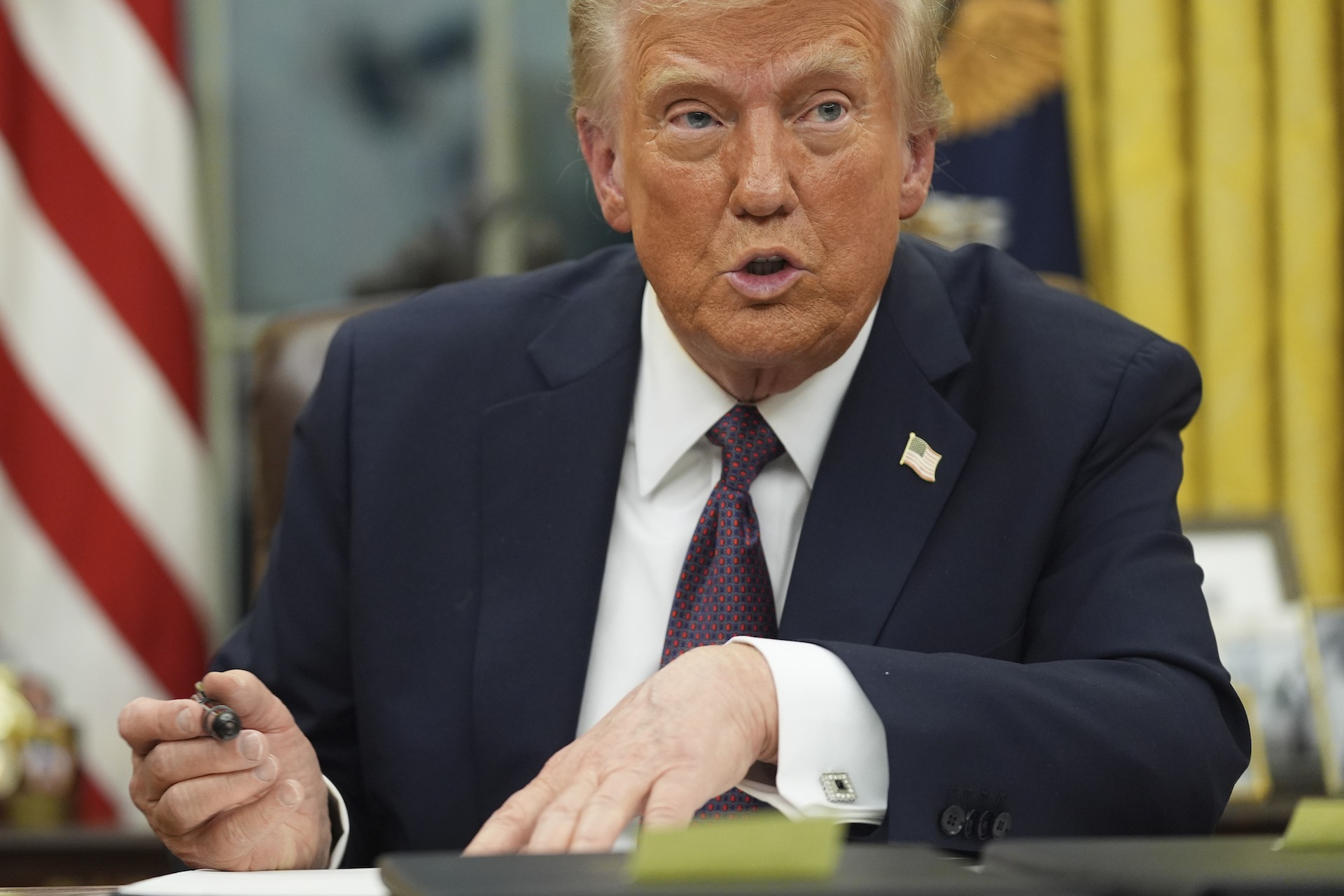
Canada introduced its three per cent DST in 2024, with first payments due later this year. Photo: AP Photo/Evan Vucci
OTTAWA — With one of the executive orders he signed just after returning to the U.S. presidency, Donald Trump began preparing for the “big fight” that Joe Biden’s ambassador warned Canada it faced over its digital services tax.
Digital services taxes, or DSTs, have been an irritant for the U.S. since the previous Trump administration. They target money made by large digital platforms in the countries that levy them, regardless of where those platforms’ owners or headquarters are. In practice, they primarily hit U.S.-based companies like Amazon and Netflix.
Talking Points
- Donald Trump has ordered officials to investigate countries that levy “extraterritorial” taxes on U.S. firms, which could include Canada’s new levy on foreign digital platforms
- Joe Biden’s ambassador to Canada warned of a big fight over the digital services tax, which has irritated the U.S. since the last Trump administration
Canada’s DST could be the site of a battle in the brewing trade war with its southern neighbour.
Trump’s executive order told his treasury secretary and his trade representative to investigate whether other countries’ levy “extraterritorial” taxes or disproportionately target American companies. They’re to report back by March 21, with options for “protective measures or other actions” for Trump to consider in response.
Canada’s digital services tax fits the bill. Nineteen countries have such taxes, according to the U.S. Congressional Research Service.
Canada enacted its three per cent DST in 2024, with first payments due later this year, but it’s retroactive to 2022. In October, Google started levying a 2.5 per cent surcharge on ad sales in Canada to help cover it.
The Parliamentary Budget Office projected that Canada’s DST will raise well over $1 billion a year for the federal treasury.
Related Articles


Asked in a news conference Tuesday whether he’d be prepared to discuss the tax with the U.S. government now, in the context of Trump’s tariff threats and complaints about other irritants, Prime Minister Justin Trudeau said that he wouldn’t negotiate in public.
He did not categorically rule out bargaining on the issue in private, however: “We’re always ready to work constructively with our American partners, while defending Canadian interests, Canadian values, Canadian sovereignty, and Canadian arts and culture,” Trudeau said.
That’s a little different from the Liberal government’s message in late November 2024, when then-finance minister Chrystia Freeland said that Canada would not treat the tax as a bargaining chip in trade talks.
These dedicated taxes on digital platforms are theoretically temporary, until a multinational agreement on corporate taxes driven by the Organisation for Economic Co-operation and Development comes into force. It’s supposed to tackle the modern challenge of companies that make money in countries without having traditionally taxable operations in those places, and avoid a global race to the bottom and would replace countries’ individual digital taxes in the bargain.
Canada’s DST is only kicking in now because the government held off on enacting it, waiting in hope that the bigger agreement would take effect.
Trump’s executive order has made clear that he opposes that deal. He called the agreement discriminatory and wrote that it gives other countries claims on “American income,” while limiting the U.S.’s freedom to set its own tax policy.
The Canadian government has pushed ahead with its digital tax despite objections from U.S. politicians, industry and trade officials. In 2023, the Canadian Chamber of Commerce sent an open letter to Freeland objecting to the DST, including a warning that it could lead to retaliation against Canadian businesses.
Trump’s new order proves the chamber was right, said Jessica Brandon-Jepp, its senior director of fiscal and financial services, in a statement. “Canada’s DST is a severe trade risk that will both hurt our relationship with our largest trading partner, while at the same time increasing costs for Canadians and making it harder to start or grow a business in Canada,” Brandon-Jepp said.
The Canadian government should work on improving its relationship with the U.S., rather than adding irritants, she added.



Loading...
Thanks for sharing!
You have shared 5 articles this month and reached the maximum amount of shares available.
CloseThis account has reached its share limit.
If you would like to purchase a sharing license please contact The Logic support at [email protected].
CloseGift the full article!
You have gifted 0 article(s) this month and have 5 remaining.
Recipients will be able to read the full text of the article after submitting their email address. They will not have access to other articles or subscriber benefits.
Photo: AP Photo/Evan Vucci
Most Popular This Week




In-depth, agenda-setting reporting
Great journalism delivered straight to your inbox.
News
Panel decries Canada’s chaotic way of funding world-class science
Briefing
AI is pushing insurers to become asset managers, Canadian CEOs say
Trump administration faces lawsuit over 50% tariffs on Canadian goods
Canada-U.S. trade war to reduce real GDP by 1.4% over 2024 levels after five years: PBO
Best business newsletter in Canada
Get up to speed in minutes with insights and analysis on the most important stories of the day, every weekday.
Exclusive events
See the bigger picture with reporters and industry experts in subscriber-exclusive events.
Membership in The Logic Council
Membership provides access to our popular Slack channel, participation in subscriber surveys and invitations to exclusive events with our journalists and special guests.





