Skip to content

News
The controversial ‘corridor’ concept behind Carney’s major projects push
The idea of shared routes for railways, power lines and other infrastructure has long tantalized Canadian politicians. Critics say it’s not a silver bullet.
Power lines and oil-tanker rail cars in Manitoba; corridors that can accommodate multiple types of infrastructure have become a key element of Canada's major projects push. Photo: The Canadian Press/John Woods
When Prime Minister Mark Carney designated a handful of new projects in the national interest earlier this month, one proposal stuck out from the bunch.
Thrown in with the nickel mine, hydro dam, liquefied natural gas plant and other projects now set for fast-tracked permitting was a proposal called the Northwest Critical Conservation Corridor (NCCC) in British Columbia. Conceptually, the NCCC would act as a kind of superhighway for the development of power lines, pipelines and railways across northern B.C. and Yukon, in turn providing the region’s mines and gas fields with critical access to electricity and transportation capacity. The corridor, according to the federal government, “sits atop vast deposits of critical minerals” and includes a “conservation area the size of Greece.”
Unlike the other projects that made the list, the NCCC isn’t an official project with established engineering designs or private-sector involvement. Indeed, the “critical conservation corridor” appears little more than the federal government’s alliterative name for a thing not yet fully conceived.
Talking Points
- Prime Minister Mark Carney has centred his major projects policy around the concept of economic corridors, including plans for a new right-of-way through northern British Columbia
- The idea of economic corridors is far from new, and has enticed policymakers for decades
Yet the northwest corridor is in keeping with a concept that has tantalized Canadian elected officials for decades. With economic or energy corridors, the thinking goes, governments could establish pre-approved rights-of-way that take the guesswork out of major projects, helping proponents secure capital and plan big investments. Disputes over land rights on long and complicated projects like pipelines—especially those affecting B.C. First Nations—have repeatedly ground past proposals to a halt, leading policymakers to seek a solution.
“By concentrating transportation on the same parcel of land, the overall planning, development, and organization of projects can be streamlined, while land-use disturbance can be minimized,” a Montreal Economic Institute study said of energy corridors in 2023.
Carney has already made corridors a key part of his plan to encourage project development that, the government hopes, will juice the Canadian economy and diversify trade away from the United States. The federal Major Projects Office has defined three corridors under its strategy, leading to coastal waters in B.C., Nunavut and Manitoba.
Related Articles
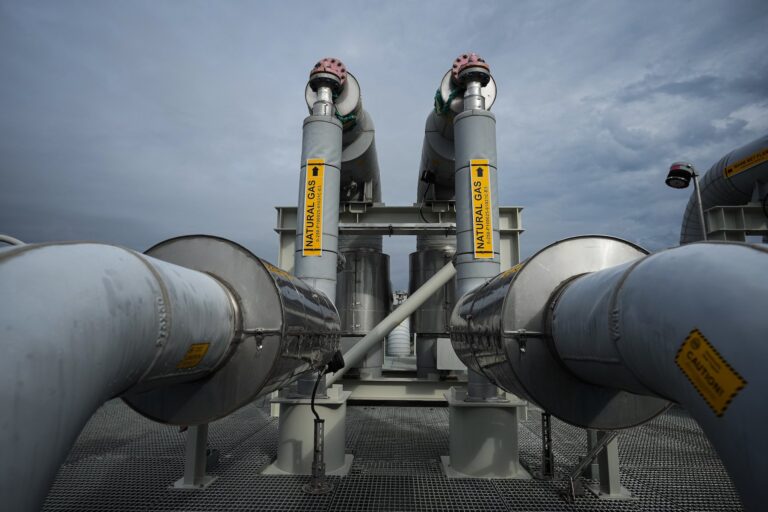

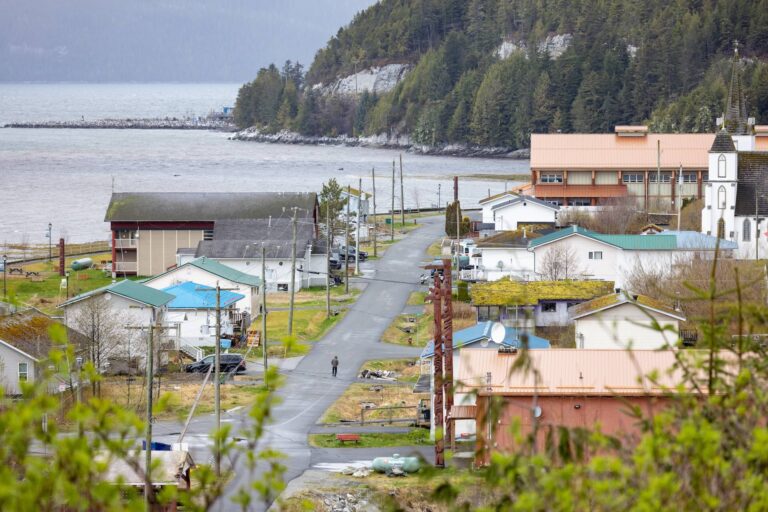
Those include the “Port of Churchill Plus” corridor, which, according to the federal government, involves expanding the Manitoba town’s port as well as building a new road, an upgraded rail line and a pipeline. The other is the Arctic Economic and Security Corridor, which would see a new national defence hub proposed around the remote northern outpost of Grays Bay, and would entail construction of a 900-kilometre road connecting it to Yellowknife. (The Logic detailed the defence corridor in an on-the-ground report earlier this year).
The NCCC, meanwhile, includes the development of BC Hydro’s $6-billion North Coast Transmission Line, which would deliver electricity to various mines, export facilities and other industrial projects in the province’s north. Expansion of the Red Chris copper and gold mine in northern B.C., led by Newmont Mining and Vancouver’s Imperial Metals, is connected to the Northwest Critical Conservation Corridor, according to the federal government. (Red Chris was among the Major Projects Office’s first proposals added to its list).
That power line is “extremely important” for project developers in the region, said Rebecca Scott, spokesperson for Houston-based Western LNG, the company leading the proposed Ksi Lisims LNG project on B.C.’s northern coast. The Ksi Lisims liquefaction facility, which the federal government also added to its project list earlier this month, is currently designed to run on electricity, according to Scott. Without access to it, the consortium would have to temporarily run the floating facility on natural gas generators. “That’s not our preference,” she said.
What “conservation” refers to in the NCCC is unclear. Neither the Prime Minister’s Office nor the Major Projects Office responded to The Logic’s questions about the proposal—among them, what specific area the corridor and conservation zone would occupy, and whether Ottawa has started consultations to establish its parameters.
Suffice to say, the concept of economic corridors is not new. Conservative Leader Pierre Poilievre promised his own version of an energy corridor in the last election campaign, while Andrew Scheer pitched a coast-to-coast natural resources corridor in 2019 during his own stint as Tory leader. The Senate banking committee recommended building a “northern corridor” in 2017 to help ease internal trade barriers, while a group of seven oil and gas executives outlined plans in 2021 for the Western Energy Corridor—including a proposed pipeline to Churchill.
The most exhaustive study of the concept was likely in 1967, when Gen. Richard Rohmer, a Second World War hero who later became a lawyer specializing in land use and transportation, laid out a corridor strategy designed to form the foundation for agriculture, energy, mining and other sectors.
While they have their advantages, corridors are no silver bullet. Heather Exner-Pirot, an energy expert and senior fellow at the Macdonald-Laurier Institute, said such strategies are often better in theory than in practice. Project developers’ plans tend to differ widely, and wouldn’t all fit within the confines of a specific corridor; nor would they change the nature of Indigenous legal claims, she said.
“That sounds superficially very satisfying, but in the real world, there isn’t usually a ton of overlap of these different kinds of linear infrastructure,” she said. “When you get down to the nuts and bolts of the technicalities of it, it isn’t as smooth as you might have hoped.”
Another issue is cost. Had Canada established economic corridors back in the 1960s on its path to becoming a “giant among the productive nations,” as Rohmer had suggested, it would have cost up to $5 billion over about 20 years, or roughly $45 billion in today’s dollars.
That’s a sizeable taxpayer expense, but arguably less than the cumulative costs of repeated project delays and lost capital investment that have occurred in its absence. In 2018, Ottawa purchased and then expanded the Trans Mountain pipeline after Kinder Morgan, its private-sector proponent, threatened to abandon the development. The project cost taxpayers a whopping $34 billion.



Loading...
Thanks for sharing!
You have shared 5 articles this month and reached the maximum amount of shares available.
CloseThis account has reached its share limit.
If you would like to purchase a sharing license please contact The Logic support at [email protected].
CloseGift the full article!
You have gifted 0 article(s) this month and have 5 remaining.
Recipients will be able to read the full text of the article after submitting their email address. They will not have access to other articles or subscriber benefits.
Photo: The Canadian Press/John Woods
Most Popular This Week




In-depth, agenda-setting reporting
Great journalism delivered straight to your inbox.
Commentary
Carmichael: Being boxed in will help Canada focus on what matters
Briefing
Rio Tinto gets nearly $165M in additional federal funds for Quebec aluminum
U.S. to lift tariffs on some Canadian products crucial to Maine: Collins
Carney warns of tech dependence after Starlink disruptions in Ukraine
Best business newsletter in Canada
Get up to speed in minutes with insights and analysis on the most important stories of the day, every weekday.
Exclusive events
See the bigger picture with reporters and industry experts in subscriber-exclusive events.
Membership in The Logic Council
Membership provides access to our popular Slack channel, participation in subscriber surveys and invitations to exclusive events with our journalists and special guests.






