Listen Now
0:00
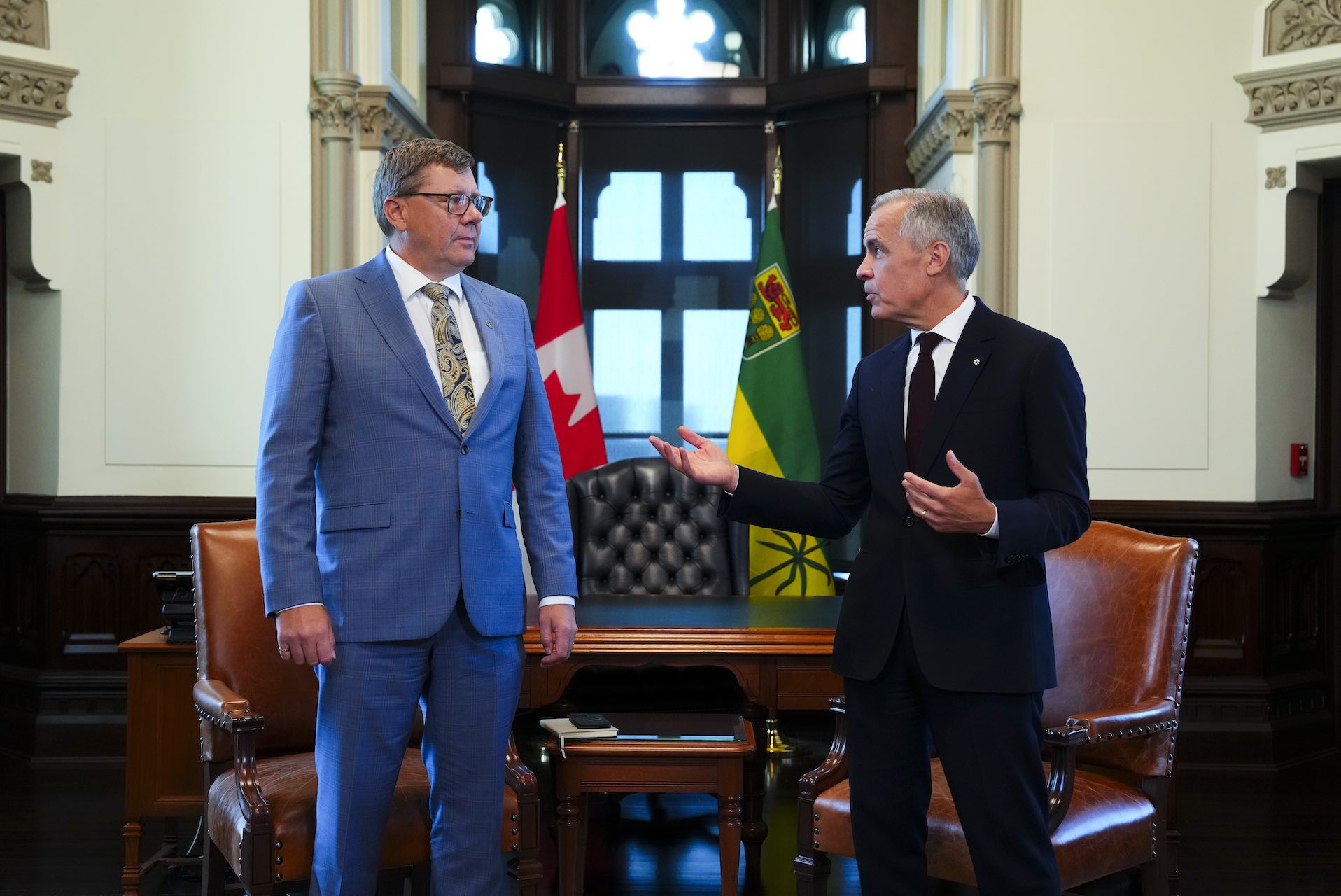
Alberta’s industrial carbon price deal with the federal government will be only a starting point for negotiations to reinstate a carbon price in Saskatchewan, Premier Scott Moe told The Logic.
Earlier this month, Prime Minister Mark Carney and Alberta Premier Danielle Smith announced an accord to reform the industrial carbon price system in that province. It would see the projected headline price of emissions reach $140 per tonne by 2040, a less onerous benchmark than the previous target of $170 per tonne by 2030.
Talking Points
- Saskatchewan Premier Scott Moe says the industrial carbon price benchmarks Prime Minister Mark Carney set with Alberta will only be a starting point in negotiations to reinstate carbon pricing in his province
- Moe set Saskatchewan’s industrial carbon price to zero last year, and while he said he’s comfortable with the status quo, he’s also open to negotiating a new scheme with Ottawa that would increase oil production in the province
The same day, Ottawa changed the benchmarks for all carbon price systems in Canada to align with Alberta’s new targets. But in an interview Wednesday with The Logic, Moe made clear he does not see the policy as binding on his province.
“The MOU that’s signed with Alberta is not Saskatchewan’s MOU,” he said.
Moe, who set his province’s carbon price to zero last year in response to trade aggression from the U.S., said he’s open to talks, but stressed Saskatchewan won’t adopt the same terms as Alberta.
“If we can find a true Canadian space that works not only for the federal government, works for the provinces, but most importantly allows our industry to attract investments,” he said, “then we would take a serious look at moving forward in that space.”
Related Articles

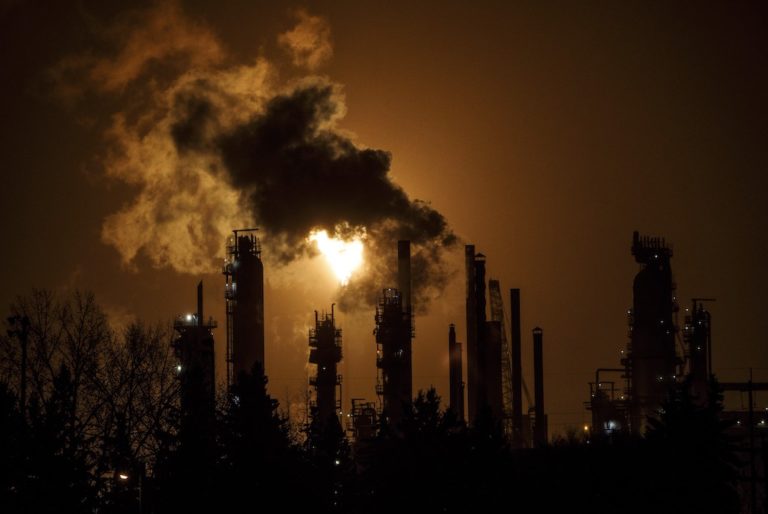
Alberta has by far the highest emissions of all provinces in Canada thanks to its oil and gas sector, according to the most recent federal statistics. Though Saskatchewan has fewer overall emissions than Alberta, Ontario and Quebec, it typically ranks first or second on a per capita basis.
Moe said his government’s main objective is keeping Saskatchewan’s industries globally competitive, which has been an ongoing concern for the oil and gas industry. The key is to make sure the money can be quickly reinvested to boost production, he said.
Provinces are allowed to set their own carbon price systems, but if they don’t meet federal standards then Ottawa can impose a backstop. The federal government has not, however, penalized Alberta or Saskatchewan for eschewing the federal benchmarks last year by imposing its own system in those provinces.
Last week, B.C. Premier David Eby called out the prime minister for negotiating exclusively with Alberta to set carbon price benchmarks that will apply across the country. “At the end of the day, national policies need to be engaged at the table with all the premiers of the provinces and territories, full stop,” he said.
Moe didn’t say if he’s received specific assurances from Ottawa that the federal government will let him keep Saskatchewan’s industrial carbon price at zero until after the negotiations on his province’s carbon price are complete. But he would be surprised if the prime minister or his team started enforcing the new benchmarks without notice, he said.
Moe said he’s already begun discussions with Carney and Natural Resources Minister Tim Hodgson, and though he doesn’t have a timeline, he expects the talks will pick up soon.
These kinds of negotiations have previously exposed rifts between Ottawa and Prairie provinces, but Moe said they’ve been more collaborative since Carney’s election.
“We’ve always been open to discussing what’s workable for industry, what’s workable for the people of the province, the provincial government and what could be workable for the federal government. The previous fellow wouldn’t engage,” he said, in reference to former prime minister Justin Trudeau. “I am thankful that I have someone as a prime minister that is finally open to doing just that.”
In another mark of change in Ottawa, former Liberal environment minister Steven Guilbeault, who helped implement the federal industrial carbon price program, announced Wednesday he will resign his seat in Parliament, after weeks of criticizing the prime minister’s environmental policies and the deal Carney struck with Alberta.
Julie Dabrusin, the current environment minister, said this week that the federal carbon tax system is working, and that the changes Carney made as part of Ottawa’s pact with Alberta is “another enhancement.”