CALGARY — When Claude Létourneau started seeking funding to build a $165-million manufacturing plant near Vancouver three years ago, his company didn’t have a single customer for the carbon filters the facility will produce.
Skip to content

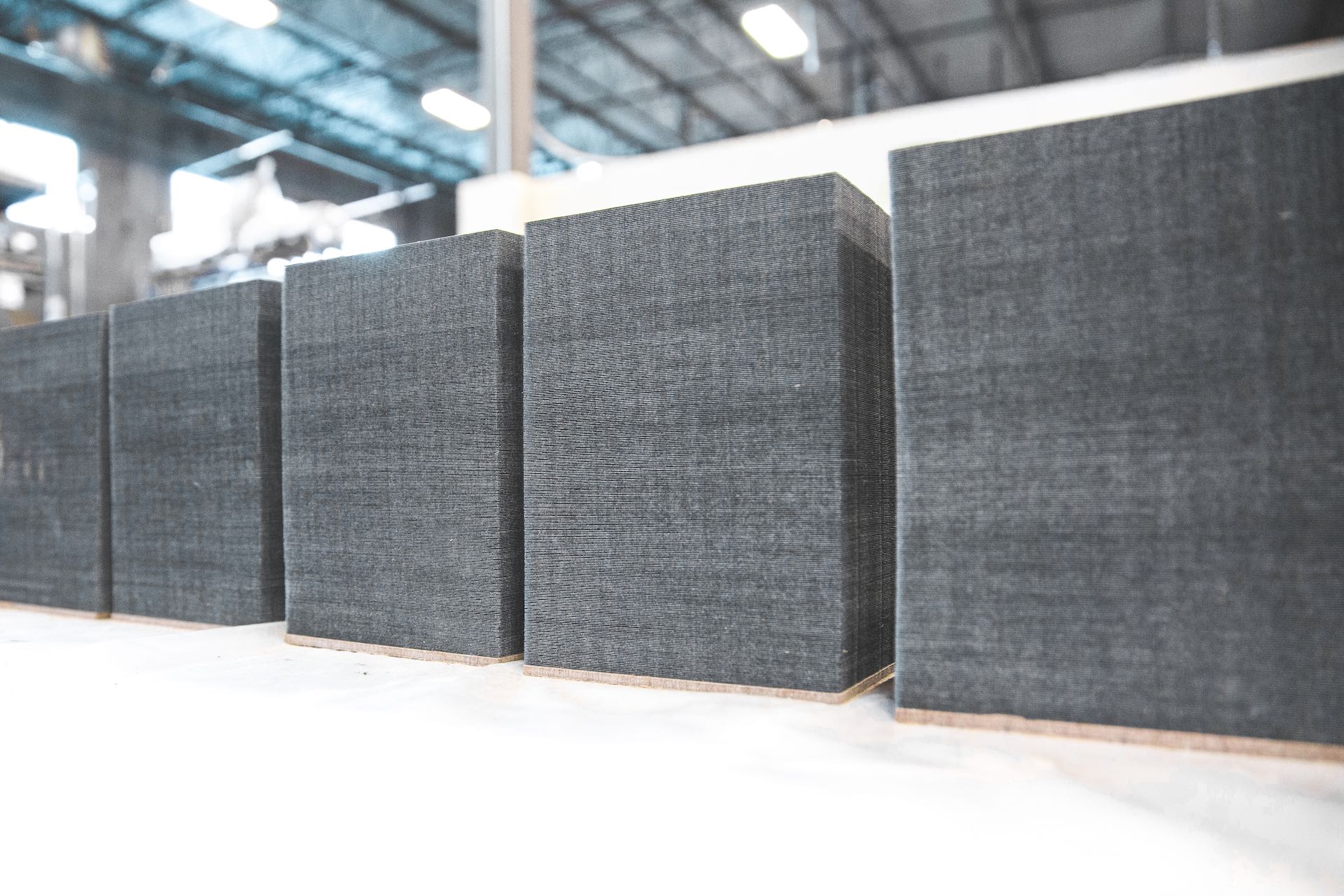 A row of Svante filters at the company’s Burnaby, B.C., headquarters in January 2020. Photo: Svante/Handout

News
As carbon-capture industry struggles to scale up, Svante charges ahead with filter manufacturing plant
B.C. company’s $165-million facility a major step in advancing controversial decarbonization tech, CEO says
Claude Létourneau at Svante's headquarters in Burnaby, B.C., in July 2024. Photo: Svante/Handout
CALGARY — When Claude Létourneau started seeking funding to build a $165-million manufacturing plant near Vancouver three years ago, his company didn’t have a single customer for the carbon filters the facility will produce.
Within a few years, Létourneau, the CEO of Burnaby, B.C.-based Svante, had convinced major players including Chevron, 3M and Singaporean sovereign wealth fund Temasek to back the first-of-its-kind facility as part of Svante’s $318-million Series E funding announced at the end of 2022.
Talking Points
- Svante, a Burnaby, B.C.-based carbon-capture company, is building a $165-million plant on the Lower Mainland to manufacture carbon filters at a scale not yet achieved in Canada
- CEO Claude Létourneau said his commercialization push is critical to advancing the carbon-capture industry, and meeting ambitious net-zero climate targets
Expected to come online in the first half of next year, the plant represents a critical piece of the carbon capture and storage (CCS) industry’s efforts to reach commercial viability.
CCS, the process of collecting carbon dioxide from industrial exhaust or the atmosphere and storing it deep underground, is already successfully operating at more than 40 sites around the world. For it to provide the massive emissions cuts needed to meet global net-zero goals, though, developers will have to rapidly scale up the technology. A facility like Svante’s—which would manufacture the key filtration parts for CCS in greater quantities—marks a major step toward that goal, Létourneau said.
“We’re all in,” he told The Logic in an interview. “We live or die with carbon capture. If it works, we’re a champion, if it doesn’t take off, we’re dead.”
Svante’s technology uses nanomaterials that separate carbon dioxide from other gases. The nanomaterial is injected into wafer-thin membranes that are packed tightly together and slotted into a rotating platform. Those platforms are installed on industrial facilities to gather the CO2 that passes through—either from the exhaust systems of large complexes like concrete plants, or, in the case of direct air-capture facilities, straight from the atmosphere.
Related Articles


Svante’s is a solid-state technology, which distinguishes it from the majority of CCS methods in operation. Most use a liquid solvent that clings to carbon dioxide molecules so they can be separated.
Létourneau claims Svante’s process is cheaper than alternatives, and ready for commercial-scale installations. U.S. oil giant Chevron, concrete maker Lafarge and Husky, now owned by Calgary-based oilsands producer Cenovus, have all installed Svante’s carbon filters at their facilities for testing.
“The technology has been cracked,” he said. “We know how it works.”
Despite having a system that departs from the current industry standard, the company has gotten a foothold in its sector. When Létourneau took over Svante eight years ago, the company was a startup with 25 employees that was burning through cash as it sprinted from one fundraise to the next. Today, it has more than 300 employees, has raised US$685 million and is one of the country’s most prominent carbon-capture and technology providers.
In August, the federal Canada Growth Fund, a $15-billion pool to advance decarbonization tech, awarded Svante up to US$100 million to support various projects.
Cenovus and fellow oilsands giant Suncor are Svante backers, as are numerous venture capital funds, including the VC arm of United Airlines.
In the short term, Létourneau said, Svante is targeting direct air-capture projects rather than heavy-emitting facilities like refineries or oilsands plants. While industrial CCS is much cheaper—around $100 to $150 per tonne compared with up to $500 for air-capture, Létourneau said—deep-pocketed tech companies like Shopify and Microsoft have favoured direct air-capture developments because they aren’t connected to the fossil-fuel sector.
Switzerland’s Climeworks is using Svante’s CO2 filters as it looks to build one of the world’s largest air-capture facilities in Louisiana.
Meanwhile, heavy emitters like oil and gas companies have made slower progress, due to delays introducing promised subsidies intended to encourage industrial carbon-capture—policies that industry groups say are critical to make such development feasible.
The federal government’s investment tax credit for CCS, finalized earlier this year—more than three years after it was first promised—has been a “game changer” for the sector, Létourneau said. But heavy emitters continue to delay major CCS investments as they await the results of the federal election, which could dramatically shift policy.
“If there’s a new government and they decide to slash everything, then we’re going to go back to uncertainty,” he said.
Svante’s manufacturing plant will initially produce a just small number of filters—roughly 10 million tonnes per year worth, or about the capacity of Canadian Natural Resources’s Quest carbon-capture plant near Edmonton.
The carbon-capture sector as whole must grow exponentially to play the part some hope it will in bringing global emissions to net-zero by 2050.
The world emits about 40 billion tonnes of carbon dioxide every year, about 20 billion of which wind up in the atmosphere. World Economic Forum estimates suggest CCS technology would need to sequester 10 billion tonnes of that annually to meet global targets. That would require about 10,000 plants the size of the Quest project.
By Létourneau’s math, that would mean commissioning two million-tonne CCS facilities every week for the next 30 years.
“Now you see the size of the industry,” he said.



Loading...
Thanks for sharing!
You have shared 5 articles this month and reached the maximum amount of shares available.
CloseThis account has reached its share limit.
If you would like to purchase a sharing license please contact The Logic support at [email protected].
CloseGift the full article!
You have gifted 0 article(s) this month and have 5 remaining.
Recipients will be able to read the full text of the article after submitting their email address. They will not have access to other articles or subscriber benefits.
Photo: Svante/Handout
A row of Svante filters at the company’s Burnaby, B.C., headquarters in January 2020.
Most Popular This Week




In-depth, agenda-setting reporting
Great journalism delivered straight to your inbox.
Commentary
Carmichael: Canadian ignorance about India is a strategic weakness
Briefing
Aritzia shares pop after earnings rise 204%
First Nation in Alberta goes to court over fast-tracked oil pipeline
Chinese EV maker Geely Auto Group to launch in Canadian market in 2027
Best business newsletter in Canada
Get up to speed in minutes with insights and analysis on the most important stories of the day, every weekday.
Exclusive events
See the bigger picture with reporters and industry experts in subscriber-exclusive events.
Membership in The Logic Council
Membership provides access to our popular Slack channel, participation in subscriber surveys and invitations to exclusive events with our journalists and special guests.





