OTTAWA — Prime Minister Mark Carney’s pledge to revitalize Canada’s military should mean billions in work and investment for Canadian companies—if all that money can find its way through an often slow government system the auditor general says is poorly run.
Skip to content

News
Defence contractors have promised to invest billions in Canada. Industry is still waiting
Ottawa is promising a raft of big-ticket military deals, but the system for ensuring contractors do business in Canada is broken
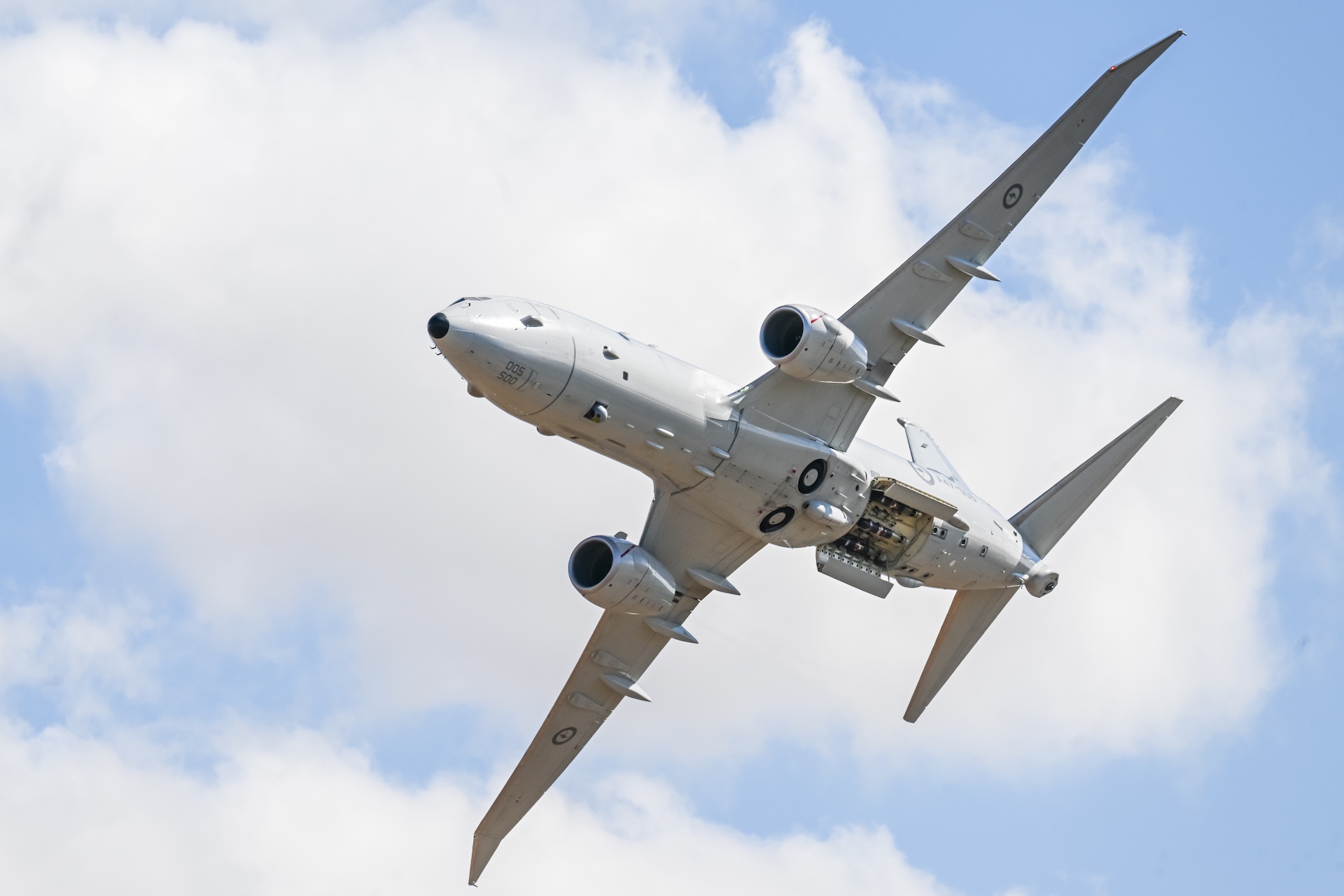
An Australian Air Force Poseidon P-8A similar to aircraft Canada has ordered from Boeing. Military suppliers are obliged to do business that benefits Canadian industry as part of their deals. Photo: Sopa/Lightrocket via Getty Images/Alexander Bogatyrev
OTTAWA — Prime Minister Mark Carney’s pledge to revitalize Canada’s military should mean billions in work and investment for Canadian companies—if all that money can find its way through an often slow government system the auditor general says is poorly run.
“It’s whatever the opposite of dynamic is. Sclerotic,” said Michael Smith, chief operating officer of One9, which makes venture investments in defence tech companies.
Talking Points
- Canada’s big defence procurements are supposed to benefit Canadian industry, no matter what supplier the federal government chooses
- But the auditor general has slagged the government’s handling of the industrial benefits policy, and some entrepreneurs tell tales of being held hostage by bureaucracy; they say it needs an overhaul before billions in promised defence spending start going out the door
Canada’s glacial military procurements can keep both main contractors—often large multinationals—and their smaller Canadian partners waiting. Specific deals can wait longer for sign-offs from Innovation, Science and Economic Development Canada (ISED).
The issue has new urgency now that Carney has promised Canada will spend five per cent of its gross domestic product on defence.
Under federal policy that long predates Carney’s government, companies that land big-dollar defence deals in Canada have to do business here equal to the value of those contracts. These industrial and technological benefits agreements, or “ITBs,” say that firms that use production lines, workers or suppliers elsewhere have to find ways to spend offsetting amounts within Canada.
Related Articles

So when South Korean’s Hanwha pitches its submarines for the Canadian navy, it also talks about starting to make tanks, rockets, howitzers and resupply vehicles here.
Certain investments that are supposed to have bigger spinoffs—supplying a Canadian entity with cash for research and development, for instance—can get credit for up to nine times their raw dollar values.
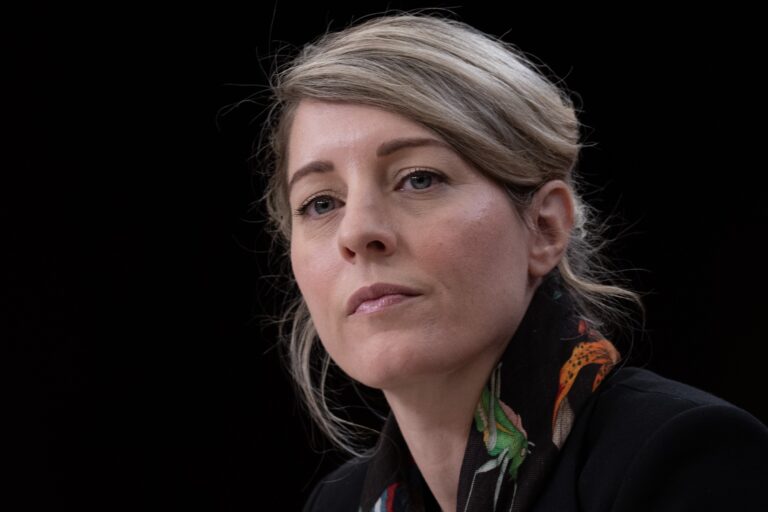
Carney has promised a new defence industrial strategy soon, and Industry Minister Mélanie Joly told The Logic in an interview that that’s where to look for reforms.
“We’re looking overall at a bigger defence industrial strategy, because we’re the only Five Eyes country that doesn’t have one,” she said. “We haven’t used defence procurement to really reap the industrial benefits, and we have to.”
Joly cited large aircraft and space companies Bombardier, De Havilland and MDA as potential beneficiaries of the rethink.
Billions of dollars have flowed to Canadian recipient companies and institutions through ITBs over the years, but more than $15.3 billion in ITB obligations owed by dozens of contractors were looking for uses as of January 2024. That’s the last time ISED compiled figures.
In a sign of how troubled the system is, though, those figures might be wrong. Late in 2024, auditor general Karen Hogan reported on the department’s performance overseeing the policy; she warned that even ISED’s records of what contractors were supposed to spend and how they were doing at it—just the paperwork—were unreliable.
The audit team found the department lacked “clear rules and guidance on how to apply the ITB policy and good tracking of contract obligations, economic benefits and job creation.” ISED’s minister at the time, François-Philippe Champagne, promised to tighten things up.
According to the ISED tally, though, Boeing has more outstanding ITB obligations than any contractor, having recently taken on more than US$4 billion of them when it sold Canada 14 to 16 Poseidon P-8A reconnaissance planes.
About US$1.2 billion of that ITB money had been allocated—not actually spent, but pledged to ISED’s satisfaction—as of the end of 2024, with more than US$2.8 billion still to go.
“It got to a point where we realized we couldn’t depend on ITBs in any real way.”
Some of it has gone to Newfoundland’s Solace Power, long a Boeing supplier, which is getting $10.3 million of Boeing’s P-8A money. The company’s technology transmits energy wirelessly, reducing the need for metal connections that can corrode and for gaps in surfaces of glass or concrete. It has uses in telecom, vehicles, building automation—and aircraft. Boeing and Lockheed Martin have both invested.
“We were dual-use before dual-use was cool,” said Colin Ryan, Solace’s chief operating and financial officer.
The $10.3 million is just the latest investment in a string of Solace’s defence-industry benefits agreements.
“The ITB policy has been transformative for the company,” Ryan said. “It’s dramatically accelerated the development of the technology [and] positioned us as a global leader now in powering harsh environments.”
Boeing declined an interview about how it sees the ITB policy, but spokesperson Cynthia Waldmeier said in an email that Boeing’s ITB spending is “part of a strategic, long‑term partnership to grow Canadian aerospace capability.”
Ryan said the ITB policy’s importance has only grown over the past year, as Canada struggles with redefining its economy and protecting its sovereignty.
The waits can be hell for a startup, said Sheldon Fernandez, former chief executive of DarwinAI in Waterloo, Ont. It specialized in artificial intelligence tools for visual inspections—to check new circuit boards for defects, for instance. Fernandez described one good experience with an ITB deal and one bad one.
Early in the COVID-19 pandemic, Lockheed Martin—which was a DarwinAI investor—gave the company US$750,000 to further develop a way of diagnosing COVID by applying its tool to chest X-rays. Lockheed said the deal would help meet its obligations under a 2010 maintenance contract for Royal Canadian Air Force transport planes.
“There’s anecdotal but consistent evidence that the process is Byzantine, labyrinthine and Kafkaesque.”
Approval from the federal government took about two months, Fernandez said: “We were able to back-channel on the ISED side, given it was the pandemic, to approve this as quickly as they could.”
A couple of years later, with the federal government back to more normal operations, came the bad experience. Lockheed Martin was seeking a new contract that would have meant several million ITB dollars for Darwin AI. But it couldn’t say when it might close the deal.
For a young company counting down the months until it ran out of cash, the wait was impossible. “It got to a point where we just realized we couldn’t depend on ITBs in any real way,” Fernandez said.
That’s pretty typical, said Smith, the defence venture capitalist. “You could expect it to be no less than 12 months—and it’s probably around 18—if you are to even jump through all the hoops,” he said.
One9’s venture operation has become a unit of Toronto-based Kensington Capital Partners since a buyout earlier this year; it has a separate advisory service called One9 Capability Labs that gives its people insight into companies beyond One9’s investment portfolio, Smith said.
“The evidence is anecdotal but consistent that the process is Byzantine, labyrinthine, Kafkaesque. It seems almost to be designed not to deliver on its promise,” Smith said.
He points to an additional problem: although venture investments are eligible to be counted as ITBs, they can only account for five per cent of a contractor’s obligations, and they get credit at five times their dollar value.
Together, those severely limit the potential: a $500-million contract could yield a maximum of $5 million in actual venture investments.
Firms like One9 would benefit from higher limits, to be sure, as operators of venture funds, but Smith said a shortage of seed funding is a longstanding problem for Canadian startups (and it’s been getting worse).
“Here are companies with money who could also participate in that early-stage venture,” he said. “To have a system where they’re not enabled to do so is like leaving money on the table.”
With files from Murad Hemmadi
Correction: Solace Power’s technology is used in aircraft. This story has been updated.



Loading...
Thanks for sharing!
You have shared 5 articles this month and reached the maximum amount of shares available.
CloseThis account has reached its share limit.
If you would like to purchase a sharing license please contact The Logic support at [email protected].
CloseGift the full article!
You have gifted 0 article(s) this month and have 5 remaining.
Recipients will be able to read the full text of the article after submitting their email address. They will not have access to other articles or subscriber benefits.
Photo: Sopa/Lightrocket via Getty Images/Alexander Bogatyrev
Most Popular This Week




In-depth, agenda-setting reporting
Great journalism delivered straight to your inbox.
News
Panel decries Canada’s chaotic way of funding world-class science
Briefing
AI is pushing insurers to become asset managers, Canadian CEOs say
Trump administration faces lawsuit over 50% tariffs on Canadian goods
Canada-U.S. trade war to reduce real GDP by 1.4% over 2024 levels after five years: PBO
Best business newsletter in Canada
Get up to speed in minutes with insights and analysis on the most important stories of the day, every weekday.
Exclusive events
See the bigger picture with reporters and industry experts in subscriber-exclusive events.
Membership in The Logic Council
Membership provides access to our popular Slack channel, participation in subscriber surveys and invitations to exclusive events with our journalists and special guests.





