Skip to content

Canada's Business and Tech Newsroom

  • Professional Subscription
  • Partnerships & Advertising
  • Licensing & Syndication
Log In Subscribe
Welcome,
  • My Account
  • Log Out
  • Business
  • Tech
  • National
  • The Big Read
  • Briefings
  • Commentary
Search
Log In Subscribe
Welcome,
  • My Account
  • Log Out
News

The climate crisis is getting costly for Canada’s ski resorts

Skiers at Kelly Sinclair’s cross-country resort, Highlands Nordic, used to rely on natural snow to cover 30 kilometres of tree-speckled trails. Now they’re skiing in circles.

“We kind of feel like hamsters on a wheel, sometimes going around an 800 metre loop,” Sinclair said. But it’s all the resort can afford to make snow for, the 35-year old resort manager added

Warmer winters have reduced the number of days the resort in Duntroon, Ont.—15 minutes from the province’s largest ski town in Collingwood—can accommodate. 

News

The climate crisis is getting costly for Canada’s ski resorts

Warmer temperatures mean snowmaking is in high gear, as insurance prices rise due to more catastrophic events

By Aimée Look
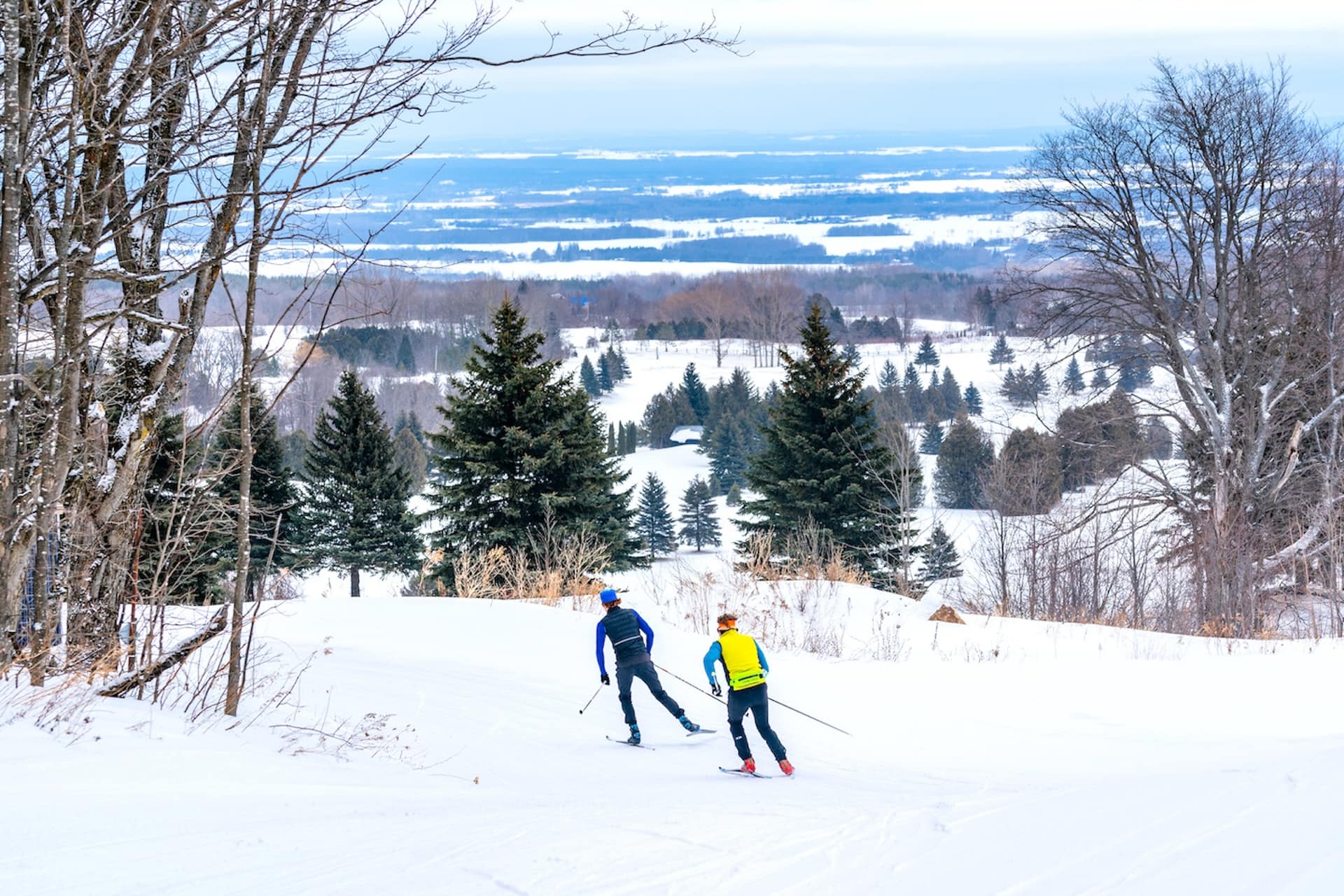
Two cross-country skiers wearing dark blue and yellow move through white snow. Trees and a blue sky can be seen in the background.
Ontario cross-country ski resort Highlands Nordic is still getting snow, but it’s not the same amount as before, said resort manager Kelly Sinclair. Photo: Screen grab from X/@BestNordicSki
Jan 2, 2025
A A
A Small A Medium A Large
Share

Gift

Share

Skiers at Kelly Sinclair’s cross-country resort, Highlands Nordic, used to rely on natural snow to cover 30 kilometres of tree-speckled trails. Now they’re skiing in circles.

“We kind of feel like hamsters on a wheel, sometimes going around an 800 metre loop,” Sinclair said. But it’s all the resort can afford to make snow for, the 35-year old resort manager added

Warmer winters have reduced the number of days the resort in Duntroon, Ont.—15 minutes from the province’s largest ski town in Collingwood—can accommodate. 

Talking Points

  • Canadian ski resorts, especially east of the Rockies, have been hit with an onslaught of new costs associated with climate change 
  • Insurance costs are increasing as the frequency and severity of catastrophic events increase, while warmer temperatures mean snowmaking is in high gear

Muddy slopes have replaced ski days, putting pressure on revenue. Catastrophic events are occurring more frequently and forcefully, pushing up insurance premiums. And there’s an onslaught of costs related to increased snowmaking.

Highlands Nordic isn’t the only small Canadian ski resort that’s felt climate change cut into its bottom line, but being a cross-country resort instead of a downhill destination hits the business harder. Cross-country skiing is especially difficult to make and maintain snow for, as the trails are thinner, longer and weave through trees. So when the resort does make snow, it usually only has the budget to cover a small portion of its trails, Sinclair said.

Most ski resorts east of the Rockies struggled to open by Christmas last year, Daniel Scott, a professor at the University of Waterloo, said. This year, it’s looking up with almost every resort in Canada open by time of publication. But not everything is fully open—Collingwood’s Blue Mountain was operating 23 out of its 43 trails on Dec. 23, and that’s with snowmaking in gear. Mont Tremblant in Quebec was faring similarly: 51 of its 102 trails were open.  

Related Articles

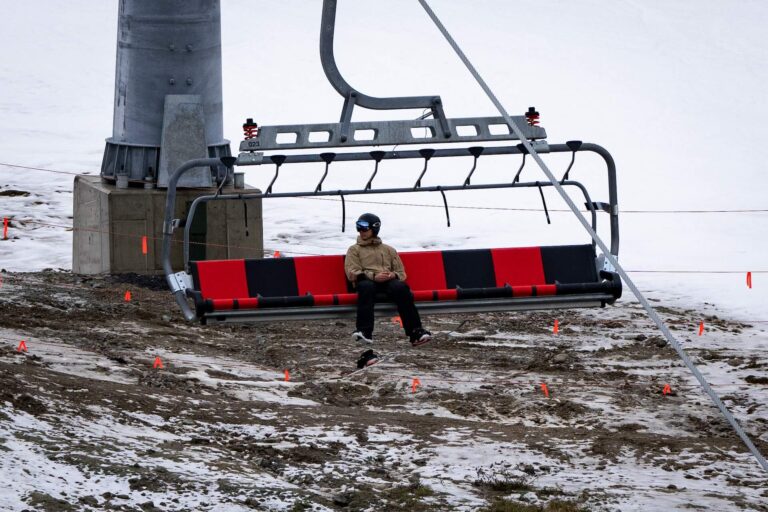
Person seated on a stationary ski lift chair above a rocky, snow-dusted terrain.

Mild winters are melting the rental property market in Canada’s ski towns

By Aimée Look
A forest filled with smoke and trees.

As wildfire risk grows, Canadian businesses offer new lines of defence

By Jesse Snyder
Aerial view of a large combine harvester and a tractor driving through a vast golden field during harvest, creating parallel tracks.

A family farm in Alberta challenges agriculture’s reliance on carbon-intensive fertilizer

By Jesse Snyder

“That’s a huge revenue point for most ski areas—some 20, 25, 30 per cent of their annual revenue can come in that week or two weeks,” Scott said. 

Hundreds of millions of dollars invested in snowmaking counteracted warming temperatures and extended ski seasons during the 1980s to 2000s, according to Scott’s research on the U.S. ski industry. But by the 2020s the average season length began to decline “despite the extensive snowmaking capacity available,” Scott wrote in an email. Trends in Canada are similar, but there isn’t enough data to back it up, he added.

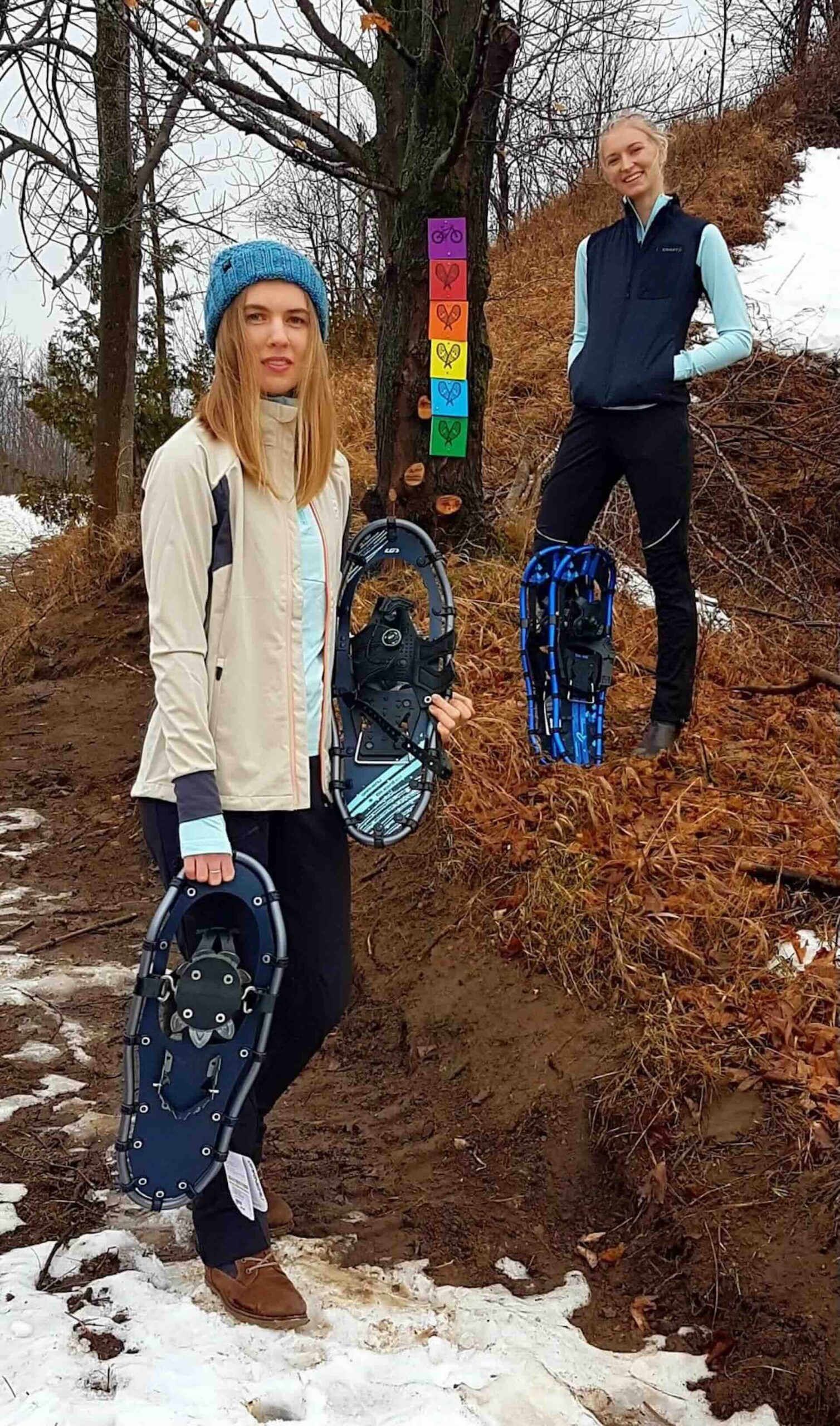
Two women stand on a hill of brown grass, holding snow shoes. Some snow can be seen on the ground.
Family members of Highlands Nordic staff at the ski resort. The Ontario venue has been grappling with higher insurance expenses over the past several years. Photo: Handout/Highlands Nordic

Even with more advanced snowmaking capacity, climate change cost the U.S. ski industry US$5 billion in revenues from 2000 to 2020, according to Scott.

Ski areas have always had to deal with seasonal variabilities in weather, but this shift is different, said Paul Pinchbeck, president and CEO of the Canadian Ski Council.

“There’s no doubt that some of the smaller ski areas in Canada have had greater challenges,” Pinchbeck said. Some ski resorts in the northern areas of Ontario and  Quebec were closed for the whole season, or had “very reduced number of days,” Pinchbeck added.

The last two years have been particularly challenging, Sinclair said. Though Highlands Nordic is still getting snow, it’s not the same amount as before. The pessimism is also trickling into other aspects of its business. Even at the resort’s Pro Shop, which serves the community too, sales are down.

“Unless there’s snow, people are not in the mood to even consider getting their skis tuned up for the season, getting their skis waxed.”


“Unless there’s snow, people are not in the mood to even consider getting their skis tuned up for the season, getting their skis waxed,” Sinclair said. It’s also difficult to figure out how much inventory to order for the year ahead, when the amount of snow is uncertain.

That unpredictable customer demand, coupled with rising fixed costs—like insurance—is squeezing margins.

Insurance expenses for Highlands Nordic have been steadily rising over the past several years, Sinclair said. While it rose only five per cent this year, between 2020 and 2025 the ski resort’s premiums have doubled.

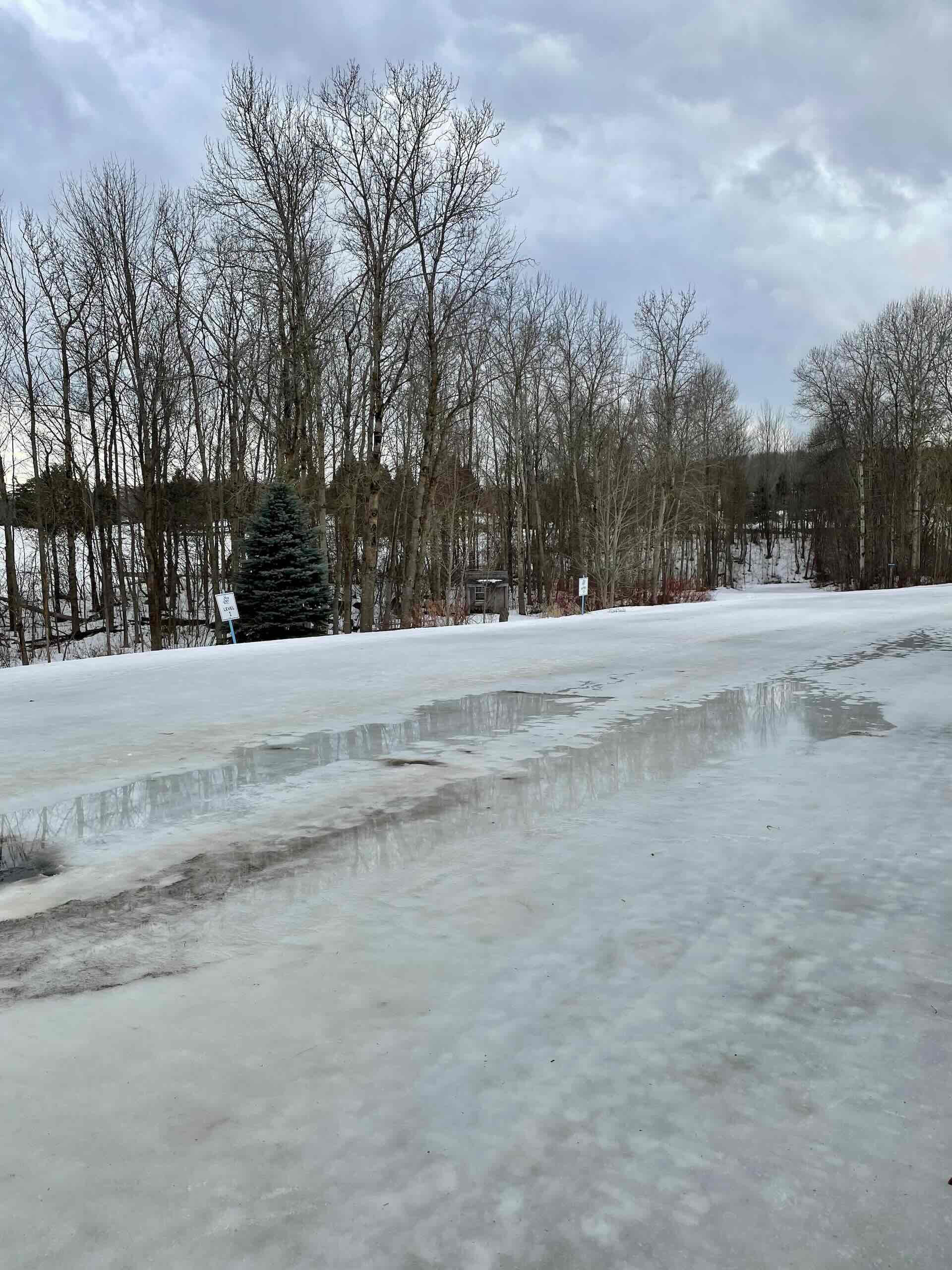
Snow on a cross-country ski trail is melting. Bare trees are seen in the background.
With warmer temperatures, muddy slopes have replaced ski days, putting pressure on Canadian ski resorts’ revenues. Photo: Handout/Highlands Nordic

Cross-country skiing is typically less risky than downhill skiing in terms of injuries, and the resort hasn’t faced any liability claims—so Highlands Nordic’s insurance costs haven’t been “as bad as others in the industry,” according to Sinclair. Property insurance has been the main driver, she added.

Ski resorts typically get insurance to guard against injury liability claims, property damage, or other threats like cyberattacks, said Brian Edwards, president and CEO of Edwards Insurance.

But climate change is putting “upwards pressure on property insurance premiums” across the country, Edwards wrote in an email. There’s been an increase in claims related to catastrophic weather events like flooding and wildfires, he added.

“The once-in-100-year events are happening much more often,” Edwards wrote.

“The once-in-100-year events are happening much more often.” 


Still, Nick Holmes-Smith, who owns cat skiing resort Mustang Powder, said the Monashee Mountains operations near Revelstoke, B.C., might actually benefit from warmer temperatures.

Mustang Powder’s track record of deep snow means they’ve been pretty resilient to milder weather. Holmes-Smith said when temperatures are warmer elsewhere and there isn’t enough snow, it drives skiers to visit notoriously cold interior B.C.

“Because we get so much snow—if you get slightly less, it’s really not that different,” Holmes-Smith said.

Gift the full article

And in Ontario, resorts and ski industry representatives remain hopeful that the resurgence in snow for some parts of the province so far this season will be a welcome reprieve to struggling resorts.

“We recognize the challenge—or the perceived demise of skiing,” Kevin Nichol, president of Ontario Snow Resorts Association, said. “We might have tighter windows of opportunity.”
#climate #insurance

Loading...

Thanks for sharing!

You have shared 5 articles this month and reached the maximum amount of shares available.

Close
This account has reached its share limit.

If you would like to purchase a sharing license please contact The Logic support at [email protected].

Close
Want to share this article?

Upgrade to all-access now

Close
Gift the full article!

You have gifted 0 article(s) this month and have 5 remaining.

Copy link and gift
Copy Link
Email to a friend
Send Email
Gift on Social Media

Recipients will be able to read the full text of the article after submitting their email address. They will not have access to other articles or subscriber benefits.

Two cross-country skiers wearing dark blue and yellow move through white snow. Trees and a blue sky can be seen in the background.

Photo: Screen grab from X/@BestNordicSki

Two women stand on a hill of brown grass, holding snow shoes. Some snow can be seen on the ground.

Family members of Highlands Nordic staff at the ski resort. The Ontario venue has been grappling with higher insurance expenses over the past several years.

Snow on a cross-country ski trail is melting. Bare trees are seen in the background.

With warmer temperatures, muddy slopes have replaced ski days, putting pressure on Canadian ski resorts’ revenues.

Most Popular This Week

A shot of a small rocket sitting on a launch pad attached to its launch equipment. The backdrop is open sea and a light blue sky.
News

Canada’s submarine decision just paid off for Nova Scotia’s spaceport

By David Reevely
An aerial photo of Kearny mine, a mine surrounded by dense forest, with terraced rock walls that surround a deep blue body of water.
News

Canada bets on graphite as allies scramble for critical minerals

By Anita Balakrishnan
News

Feds move to help small firms with new Buy Canadian rules

By Laura Osman and Chaimae Chouiekh
A cityscape featuring two tall buildings; the right one has a large orange "Q" logo and a Quebec flag atop. The sky is clear and blue.
Commentary: Quebec Ink

Quebec’s era of endless, cheap electricity is coming to an end

By Martin Patriquin

In-depth, agenda-setting reporting

Great journalism delivered straight to your inbox.

A view of oil extraction equipment consisting of pipes, catwalks and cylindrical tanks; there are three company representatives in the foreground wearing white hard hats and blue coveralls with yellow reflective striping.
News

Governments, oilsands giants reach deal to push ahead with carbon capture project

By Meghan Potkins

Briefing

CPP Investments backs German defence startup Helsing’s US$1.8B funding round

By Catherine McIntyre   |   Jul 13, 2026 | 3:43 PM ET

Ford and Unifor reach tentative deal

By Anita Balakrishnan   |   Jul 13, 2026 | 3:17 PM ET

General Fusion shares begin trading on Nasdaq after SPAC deal finalized

By David Reevely   |   Jul 13, 2026 | 2:11 PM ET

Best business newsletter in Canada

Get up to speed in minutes with insights and analysis on the most important stories of the day, every weekday.

Exclusive events

See the bigger picture with reporters and industry experts in subscriber-exclusive events.

Membership in The Logic Council

Membership provides access to our popular Slack channel, participation in subscriber surveys and invitations to exclusive events with our journalists and special guests.

Recent Popular Stories

Commentary: Quebec Ink

Quebec’s era of endless, cheap electricity is coming to an end

By Martin Patriquin   |   Jul 6, 2026
A cityscape featuring two tall buildings; the right one has a large orange "Q" logo and a Quebec flag atop. The sky is clear and blue.
Analysis

Canada’s ETF industry is almost a trillion-dollar business

By Chaimae Chouiekh   |   Jul 3, 2026
Despite a down year a sign board displays the TSX's upbeat close on the final day of the year, in Toronto's financial district on Monday, Dec. 31, 2018.
The Big Read

What Alberta’s corporate heavyweights really think about separation

By Meghan Potkins   |   Jul 2, 2026
A shot of a placard on a table reading "Let Alberta Decide." There is a person out of focus in the foreground wearing a cowboy hat.
News

A niche white-collar role is becoming the AI industry’s hot new job

By Anita Balakrishnan   |   Jun 30, 2026
A person in glasses and a blue top is sitting and typing on a laptop in an office. A desktop screen next to the laptop displays some blurred-out coding work.
News

Canada bets on graphite as allies scramble for critical minerals

By Anita Balakrishnan   |   Jul 7, 2026
An aerial photo of Kearny mine, a mine surrounded by dense forest, with terraced rock walls that surround a deep blue body of water.
News

Canada’s submarine decision just paid off for Nova Scotia’s spaceport

By David Reevely   |   Jul 8, 2026
A shot of a small rocket sitting on a launch pad attached to its launch equipment. The backdrop is open sea and a light blue sky.

Canada's most influential executives and policymakers are reading The Logic

  • CPP Investments
  • Sun Life Financial
  • C100
  • Amazon
  • Telus
  • Mastercard
  • bdc
  • Shopify
  • Rogers
  • RBC
  • General Motors
  • MaRS
  • Government of Canada
  • Uber
  • Loblaw Companies Limited
logic-logo

Canada's Business and Tech Newsroom

100% human-crafted journalism

Newsroom

  • News Tips
  • AI Policy
  • Editorial Disclosures
  • Story Pitches

Company

  • About Us
  • Terms of Service
  • Privacy Statement
  • Corporate Information

Contact

  • Contact Us
  • Advertise
  • FAQs
  • Work at The Logic

© 2026 The Logic Inc. All Rights Reserved.

Trusted by leaders

Error

Account creation failed.

Please email us at [email protected].

Create Account

[wppb-register form_name=”cozmo-registration-form-for-modal”]

I do have an account
Login
or

[wppb-login]

I don’t have an account