Listen Now
0:00
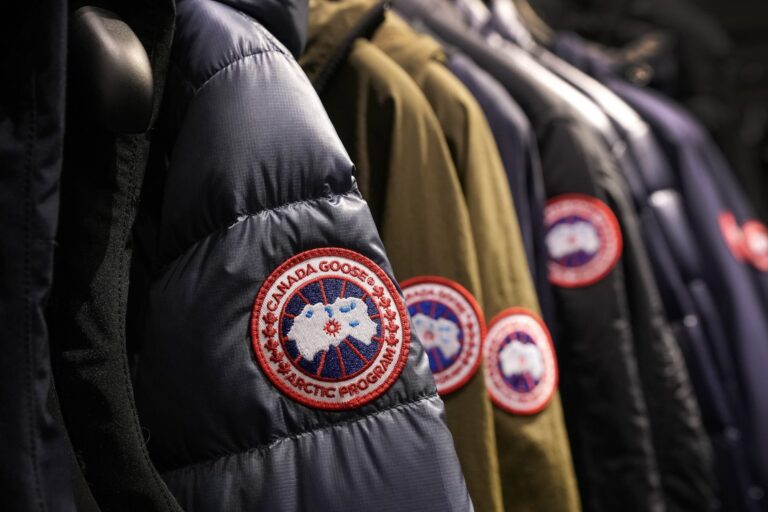
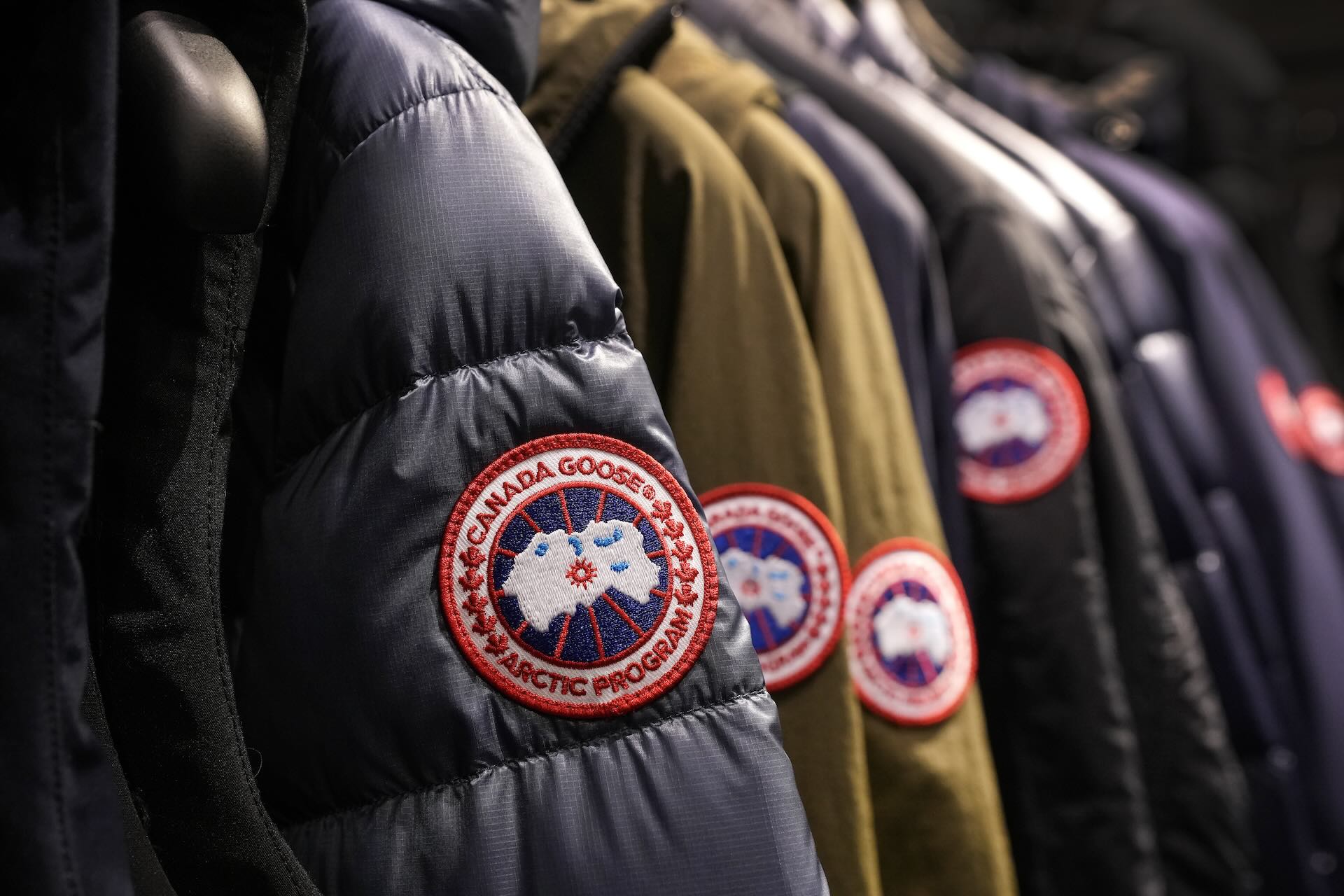
Canada Goose shrugged off being an apparent target of President Donald Trump’s latest tariff threats Thursday as it reported its latest financials.
Chief financial officer Neil Bowden told analysts that if the U.S. does impose 50 per cent duties on many Canadian clothing exports in August—and if Canada Goose does nothing to adjust to them—the company would suffer less than a two-percentage-point hit to its operating margin.
“We are actively evaluating mitigation measures and believe we have a range of options available to help minimize potential impact,” Bowden said on an earnings call.
The threats: Trump has promised tariffs to retaliate against Canada’s retaliation against his earlier tariffs on motor vehicles (among other things). The new import taxes would hit numerous categories of Canadian goods, including coats and vests made from synthetic fibres and containing down or feathers, gloves, mitts and hats. Plus T-shirts, tracksuits, “sweaters, pullovers and similar articles.”
Related Articles

In other words, quite a bit of Canada Goose’s product line. Despite the name and its Toronto pedigree, Canada Goose is controlled by Bain Capital, a U.S. private equity firm, but much of its operation remains in Canada—which has previously been an advantage.
In May 2025, when U.S. tariffs were relatively new, Canada Goose chief operating officer Beth Clymer said on an earnings call that the company was barely touched. Three-quarters of its stuff was made in Canada and covered by the Canada-United States-Mexico Agreement on free trade (CUSMA), so it was tariff-free. “Our remaining production, which is primarily from Europe, is facing an increase in tariffs, but they will have minimal financial impact,” she added.
Trump’s latest plan, however, is to apply tariffs regardless of CUSMA protections.
Critical quarters: In its latest release, Canada Goose said it lost $93 million in its most recent quarter, and that’s normal—an improvement over the same quarter last year, in fact, when it lost $125.5 million.
Historically, Canada Goose’s expenses have been spread throughout the year, but it pulls in three-quarters of its revenue starting in the fall, when people in the Northern Hemisphere are buying winter gear.
The company has been trying to smooth that out by marketing lighter clothing (like $250 shorts and T-shirts) in addition to parkas, with some success, but sales in the next several months are still pretty important.
The U.S. accounted for just over a quarter of Canada Goose’s revenue in its last fiscal year—about $385 million out of $1.53 billion—so it’s an important market, but not the heart of Canada Goose’s business. The region it labels “Greater China” (mainland China, Hong Kong, Macau and Taiwan) buys more Goosewear than the U.S. and sales there grew faster.
Macro wobbles: On Thursday’s earnings call, CEO Dani Reiss said Canada Goose’s retail stores are seeing fewer shoppers. Online and wholesale sales to other retailers increased, however.
Canada Goose wrote down the value it ascribed to its retail leases in May, admitting that its stores just weren’t worth as much as it had thought. People who do walk in are spending more, Reiss said, since the company has been raising prices, but “traffic across parts of our store network remained lower than we would have liked, largely reflecting a soft macro environment.”
Might be a TACO, who knows: In May, Canada Goose anticipated growing revenue and an adjusted operating margin of 11 to 12 per cent in its current fiscal year, though that forecast depended on a “tariff environment” that did not change.
The company is sticking with it despite the prospect of new tariffs. They would apply to some Canada Goose exports, it confirmed, but the “rapidly evolving Canada-U.S. trade environment” and possible “further changes in trade policy” make predicting the future uncertain. So in its financial outlook, Canada Goose will continue to assume the tariffs won’t happen.