VANCOUVER — Carbon Engineering, a Squamish, B.C.-based carbon-capture firm, has agreed to be purchased for US$1.1 billion by Houston-based oil producer Occidental Petroleum, in a deal that the companies said will help scale direct-air-capture technology.
Skip to content
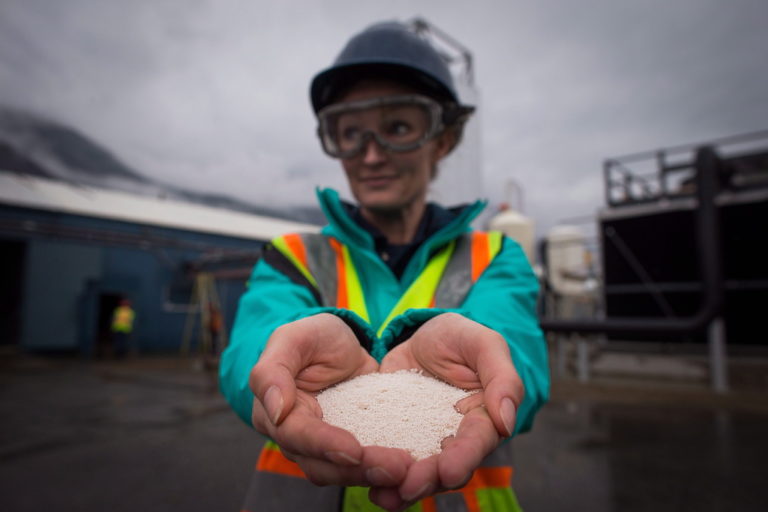
 Carbon Engineering has agreed to be acquired by a subsidiary of Occidental in a US$1.1-billion deal. Photo: The Canadian Press/Darryl Dyck

News
B.C.’s Carbon Engineering to be acquired by Occidental in US$1.1B deal
Deal will help scale direct-air-capture tech, companies say
Carbon Engineering has agreed to be acquired by a subsidiary of Occidental in a US$1.1-billion deal. Photo: The Canadian Press/Darryl Dyck
VANCOUVER — Carbon Engineering, a Squamish, B.C.-based carbon-capture firm, has agreed to be purchased for US$1.1 billion by Houston-based oil producer Occidental Petroleum, in a deal that the companies said will help scale direct-air-capture technology.
The companies announced the deal Tuesday, marking a culmination of their long-term partnership, which began in 2019 when Occidental acquired a stake in the Canadian cleantech firm.
“We have entered into an agreement that would see us join forces to finance and accelerate our business,” said Carbon Engineering CEO Daniel Friedmann in a statement. The company declined The Logic’s request for an interview.
Here’s what you need to know:
What it does: Founded in 2009, Carbon Engineering has developed technology to suck carbon dioxide out of the atmosphere and now has about 150 employees. It built a pilot plant in Squamish to prove the technology could work on a larger scale. In June 2022, it struck a deal with 1PointFive, a subsidiary of Occidental’s low-carbon ventures business, to build between 70 and 135 direct-air-capture plants by 2035. Earlier this month, one of the 1PointFive plants was one of two DAC projects that snagged US$1.2 billion from the U.S. Department of Energy.
The company also has been working on turning CO2 into a near-carbon-neutral synthetic fuel and sells carbon-removal credits, counting Shopify among its clients.
It is a pre-revenue company and needed resources to scale commercially, said Friedmann. “We have a strong path forward,” with the deal, he said.
Related Articles
What’s next: The deal is expected to close this year, subject to court and regulatory approvals. Carbon Engineering’s research and development hub will remain in Squamish. Its staff will continue to work on developing the technology, while working closely with Occidental and 1PointFive to commercialize the products. Carbon Engineering’s business development and commercial teams, which work out of Vancouver, will remain as well.
The companies are already working together on building what they call the world’s largest direct-air capture plant in Ector County, Texas. It should be commercially operational by mid-2025.
The winners: Carbon Engineering has raised more than US$110 million, according to PitchBook, in both equity funding and government grants as of November 2022.
Its other backers include Chevron, Bill Gates, BHP, Air Canada and Canadian oil and gas billionaire Murray Edwards.
In June 2019, the federal government’s Strategic Innovation Fund awarded it $25 million for a $114.6-million project to develop its technology; Ottawa had paid out almost all that sum by March 2022, according to the public accounts. The company has also received funding from Natural Resources Canada, the National Research Council of Canada, and Sustainable Development Technology Canada at the federal level, as well as the B.C. Innovative Clean Energy Fund and Emissions Reduction Alberta.
In March 2020, just before COVID-19 restrictions began, Carbon Engineering’s then-CEO Steve Oldham told a parliamentary committee, “It’s our very strong intent to remain a Canadian company” and to invest in R&D here.
Friedmann said Tuesday the company will remain incorporated in B.C.
Occidental CEO Vicki Hollub said she expects the acquisition “to deliver our shareholders value.” Occidental’s shares on the New York Stock Exchange did not rise significantly in after-hours trading.
The landscape: While direct-air-capture technology remains largely unproven at a mass scale, interest is high as companies and policymakers seek to accelerate their net-zero strategies.
Occidental is a 100-year-old company and one of America’s most prominent unconventional oil producers. Its decision to get behind direct air capture is a significant vote of confidence in the nascent carbon removal technology, and points to the growing emphasis on net-zero within the fossil fuel sector.
Another Canadian startup, Deep Sky, recently announced it has entered a deal with California-based Captura to build a direct-ocean-capture plant in Quebec. Started by two founders of the travel app Hopper, Deep Sky aims to build “the world’s first gigaton-scale” carbon-removal company. Other carbon-capture tech companies including Halifax’s CarbonCure Technologies and Toronto’s Char Technologies have secured backing from major U.S. investors and mining giants.
With files from Murad Hemmadi and Jesse Snyder



Loading...
Thanks for sharing!
You have shared 5 articles this month and reached the maximum amount of shares available.
CloseThis account has reached its share limit.
If you would like to purchase a sharing license please contact The Logic support at [email protected].
CloseGift the full article!
You have gifted 0 article(s) this month and have 5 remaining.
Recipients will be able to read the full text of the article after submitting their email address. They will not have access to other articles or subscriber benefits.
Photo: The Canadian Press/Darryl Dyck
Most Popular This Week



In-depth, agenda-setting reporting
Great journalism delivered straight to your inbox.
News
Panel decries Canada’s chaotic way of funding world-class science
Briefing
Trump administration faces lawsuit over 50% tariffs on Canadian goods
Canada-U.S. trade war to reduce real GDP by 1.4% over 2024 levels after five years: PBO
RBC weighs blocking Meta’s AI agent from accessing customer accounts
Best business newsletter in Canada
Get up to speed in minutes with insights and analysis on the most important stories of the day, every weekday.
Exclusive events
See the bigger picture with reporters and industry experts in subscriber-exclusive events.
Membership in The Logic Council
Membership provides access to our popular Slack channel, participation in subscriber surveys and invitations to exclusive events with our journalists and special guests.





