TORONTO — Collision is back in Toronto after two years of virtual conferences, and the industry is taking full advantage of the thousands of entrepreneurs, investors and executives together in one venue. In one corner of the buzzing exhibition hall, two entrepreneurs pitched a mental-health startup before an audience of about 100 people. In another, a large TV screen showed a real-time map of where RBC customers spend money with credit cards, part of an exhibition where Canada’s largest bank was showing off its tech bonafides.
Skip to content

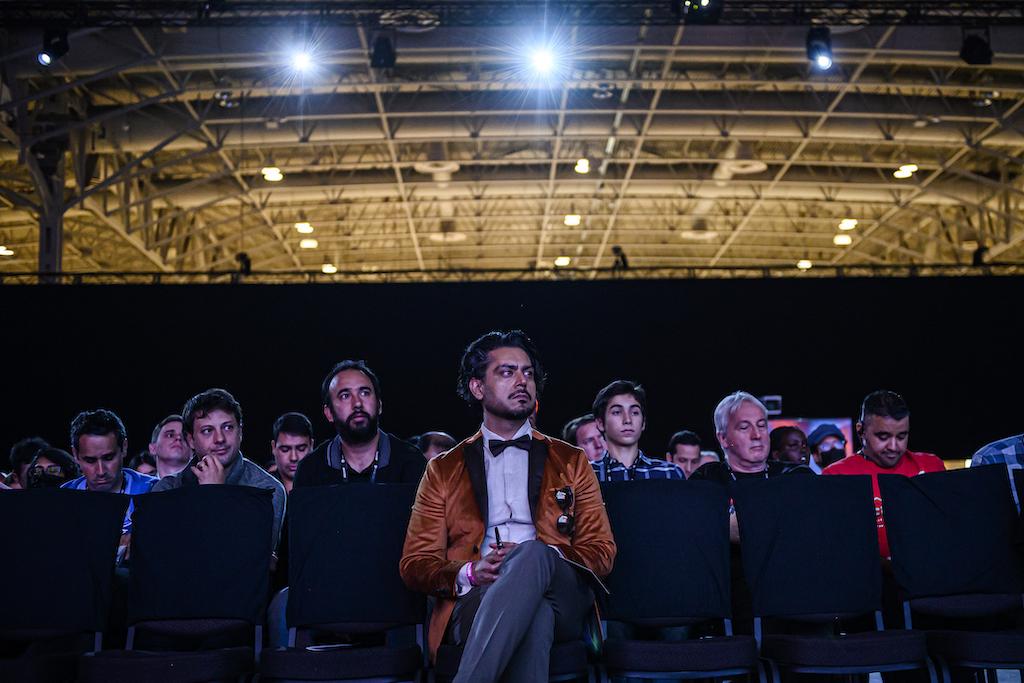 Collision is back in Toronto after two years of virtual conferences, and the industry is taking full advantage of the thousands of entrepreneurs, investors and executives together in one venue. Photo: Christopher Katsarov Luna for The Logic

News
At Collision, tech hype clashes with industry uncertainty
People attend the opening night of Collision 2022 in Toronto on June 20. Photo: Christopher Katsarov Luna for The Logic
TORONTO — Collision is back in Toronto after two years of virtual conferences, and the industry is taking full advantage of the thousands of entrepreneurs, investors and executives together in one venue. In one corner of the buzzing exhibition hall, two entrepreneurs pitched a mental-health startup before an audience of about 100 people. In another, a large TV screen showed a real-time map of where RBC customers spend money with credit cards, part of an exhibition where Canada’s largest bank was showing off its tech bonafides.
Unlike previous years, however, the tech mega-conference is taking place at an uncertain moment for the industry. Investors have pulled back, forcing entrepreneurs to plan with more discipline. I heard one story here about an investor who wore his name badge the wrong way around—an attempt to avoid getting swarmed by founders seeking funding. If Collision had taken place six months ago, perhaps that dynamic would have been the other way.
Here’s what else we’re seeing on the ground at Collision:
Talk of a crypto winter: With a steep price drop fresh in attendees’ minds, the industry has to answer for what—if anything—has changed for crypto startups. Speaking on a panel Tuesday morning, Kyle Samani, managing partner of crypto investment firm Multicoin Capital, said this is just another period in the market cycle. His firm, which made big bets on tokens like Solana during the last crypto winter and netted huge gains as a result, is still giving out plenty of term sheets, he said. On the same panel, Tezos co-founder Kathleen Breitman warned the amount of experimentation in the crypto sector means the rate of failure is high. “In order for the technology to scale well, we need better research and development, and we need better technological breakthroughs, otherwise we’re going to keep on hanging out in this holding pattern that we see every few years,” Breitman said.
Ukraine shows off its tech: The eastern European country is one of Collision’s sponsors and is highly visible at the conference. As it fights an expensive war against its neighbour, the country seems to be making a big push to attract investments. Ihor Markevych, an advisor to Ukraine’s minister of education and science, told me that the country wants its businesses to be strong so that it can afford to maintain its fight against Russia. The war has decimated more low-tech businesses in Ukraine’s east, where the majority of the fighting has been. But the country’s IT sector, which Markevych says is concentrated farther west in Kyiv, has emerged relatively unscathed.



Loading...
Thanks for sharing!
You have shared 5 articles this month and reached the maximum amount of shares available.
CloseThis account has reached its share limit.
If you would like to purchase a sharing license please contact The Logic support at [email protected].
CloseGift the full article!
You have gifted 0 article(s) this month and have 5 remaining.
Recipients will be able to read the full text of the article after submitting their email address. They will not have access to other articles or subscriber benefits.
Photo: Christopher Katsarov Luna for The Logic
Collision is back in Toronto after two years of virtual conferences, and the industry is taking full advantage of the thousands of entrepreneurs, investors and executives together in one venue.
Most Popular This Week




In-depth, agenda-setting reporting
Great journalism delivered straight to your inbox.
News
Adam Waterous proposes massive crude exports to Asia by rail through northern B.C.
Briefing
Rivals may be ‘horrified’ to realize how exposed their investments are to AI, Aviva CIO warns
Shopify, Sequoia co-lead US$200M investment in online-selling platform Whop
Amid revenue gains, 1Password bets on tools to protect data from AI agents
Best business newsletter in Canada
Get up to speed in minutes with insights and analysis on the most important stories of the day, every weekday.
Exclusive events
See the bigger picture with reporters and industry experts in subscriber-exclusive events.
Membership in The Logic Council
Membership provides access to our popular Slack channel, participation in subscriber surveys and invitations to exclusive events with our journalists and special guests.







