Listen Now
0:00
Canada can attract the $1 trillion in investment Prime Minister Mark Carney is targeting over the next five years, but the bigger challenge will be actually building enough projects to put that money to work, according to the head of one of Europe’s largest pension managers.
APG Group CEO Annette Mosman said Carney’s investment target is realistic, but reaching it will depend on whether Canada has the expertise, workers and capacity to deliver projects while meeting its other policy goals.
Talking Points
- APG Group CEO Annette Mosman told The Logic that Canada can attract Carney’s targeted $1 trillion in investment, but the big challenge is execution
- Mosman said Canada is still competing globally for capital, so making projects “faster, better and cheaper” will improve its odds of success
“I think that’s a bigger challenge than the capital,” she said in an interview Tuesday with The Logic.
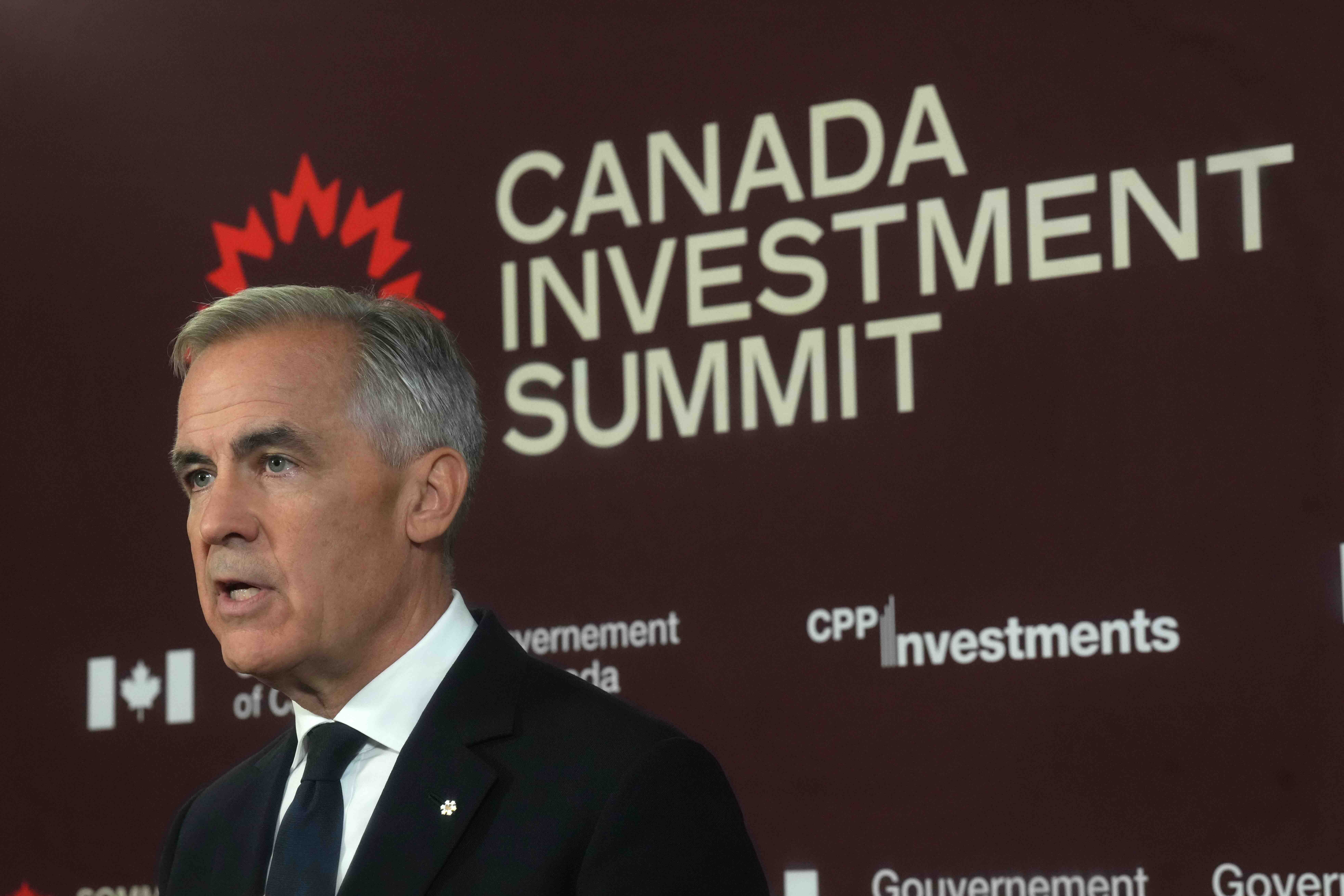
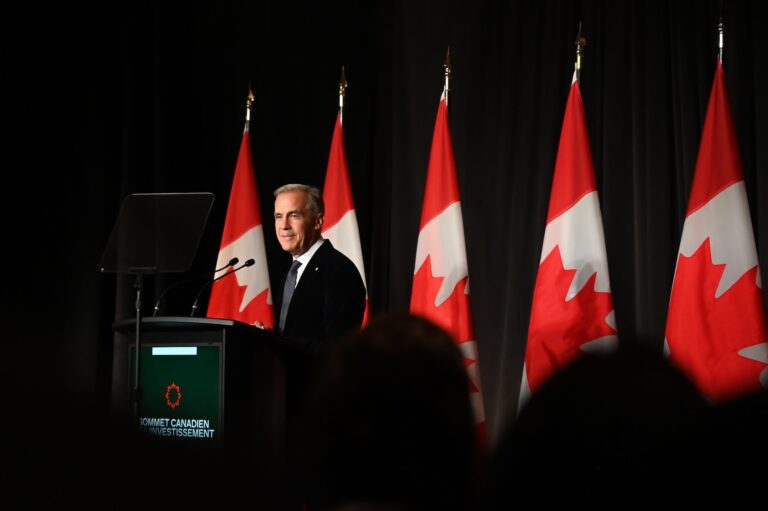
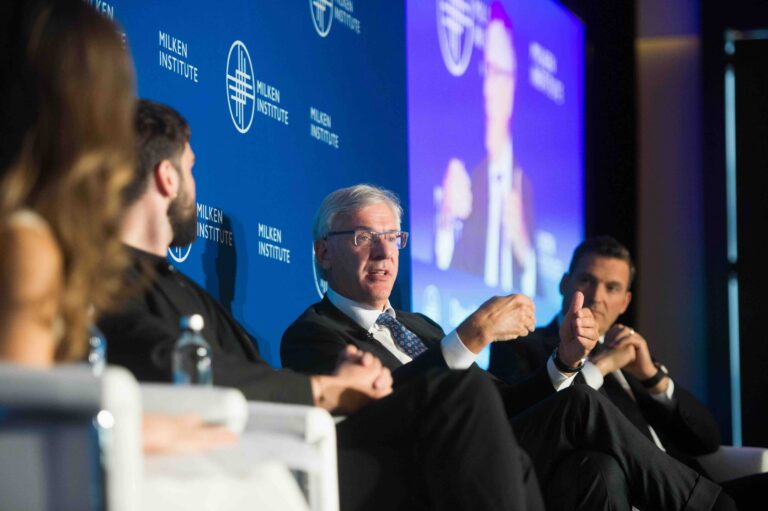
Mosman was speaking after appearing at the Canada Investment Summit on a panel alongside BlackRock CEO Larry Fink, Blackstone chief operating officer Jon Gray and Temasek Holdings CEO Dilhan Pillay Sandrasegara. Mark Wiseman, Canada’s ambassador to the U.S., moderated the session, titled “Global Capital, Canadian Opportunity: An Investor Perspective.”
Amsterdam-based APG Asset Management manages about €639 billion on behalf of Dutch pension funds and 4.6 million participants as of June, making it one of the world’s largest pension investors. Mosman was among deep-pocketed peers at the summit, which is part of Ottawa’s push to draw hundreds of billions of dollars of investment into projects spanning energy, infrastructure, mining, technology and other sectors.
Mosman said APG has not yet assessed the 167 projects that feature in the prospectus the federal government distributed to summit attendees, but is encouraged by the broader direction of the government’s plans, particularly around energy, digital infrastructure and defence.
Related Articles
APG is also in close contact with Canadian pension fund managers, which Mosman described as like-minded investors. That could lay the groundwork for future deals as APG begins evaluating the assets on offer, she said.
For APG, the size of Ottawa’s project pipeline matters less than the economics of each deal. Mosman said expected cash flows, returns and the way risks are divided between governments and investors will ultimately determine whether a project fits its portfolio.
APG is an investor in Hydro One, Ontario’s largest electricity utility, which Mosman cited as an example. It has characteristics that appeal to long-term pension investors, she said, including a regulated environment, stable cash flows and risks that can be assessed over longtime horizons.
APG has recently made similar bets in Europe. Last year, it committed €2.5 billion to acquire an approximately 11 per cent stake in TenneT Germany, whose high-voltage transmission network requires billions in investment as Germany expands its electricity grid. APG described the regulated infrastructure asset at the time as relatively low-risk, with stable and predictable long-term cash flows.
Mosman also pushed back on an argument raised at an event the Milken Institute hosted in Toronto on Monday: that Canada has plenty of capital, but too few investable projects. Though Canada’s Maple Eight pension funds have trillions under management, they need to invest abroad to diversify their portfolios, she said, just as European pension managers cannot concentrate their investments at home.
“Canada is competing with other countries to get capital here,” Mosman said. Making projects “faster, better and cheaper”—an echo of Carney’s message at the summit—would improve their economics and make Canada more competitive for international investment.
On Tuesday, Carney announced a new tax incentive allowing companies to immediately write off most new capital investments, part of Ottawa’s effort to lower the cost of investing in Canada. The government says the measure will cut Canada’s marginal effective tax rate on new business investment to 6.4 per cent from 13 per cent.
Mosman also sees scope for stronger investment ties among middle powers navigating a changing geopolitical environment. She pointed to Canada, Europe, Australia and Japan as economies facing similar challenges and said greater co-operation could translate into more investment both in Canada and between Canada and Europe.
Her comments come after reports that Ottawa was exploring whether Canada could become an “associate member” of the European Union, a status that does not currently exist. Carney rejected the idea of formal membership on Sunday, saying Canada is instead seeking a “unique alliance” with the bloc.
“I do think [the] EU and Canada have the same problems,” Mosman said, pointing to digital infrastructure, defence, sovereignty and the challenge they each face defining their place in a rapidly changing global order.
For Mosman, on what is her third trip to Toronto, the summit also reinforced that Canada’s investment push extends beyond Carney himself. Seeing federal ministers and provincial premiers aligned behind the strategy was an important signal for her as a long-term investor assessing political and policy risk.
“It’s not one man,” Mosman said. “It’s a complete team building this new Canada.”