Listen Now
0:00
OTTAWA — U.S. Ambassador Pete Hoekstra said this month there are some things Americans need from Canada, such as potash; and others they do not but might be willing to buy, such as cars. There is one major export he did not mention, which President Donald Trump both needs and wants to power his AI revolution: aluminum.
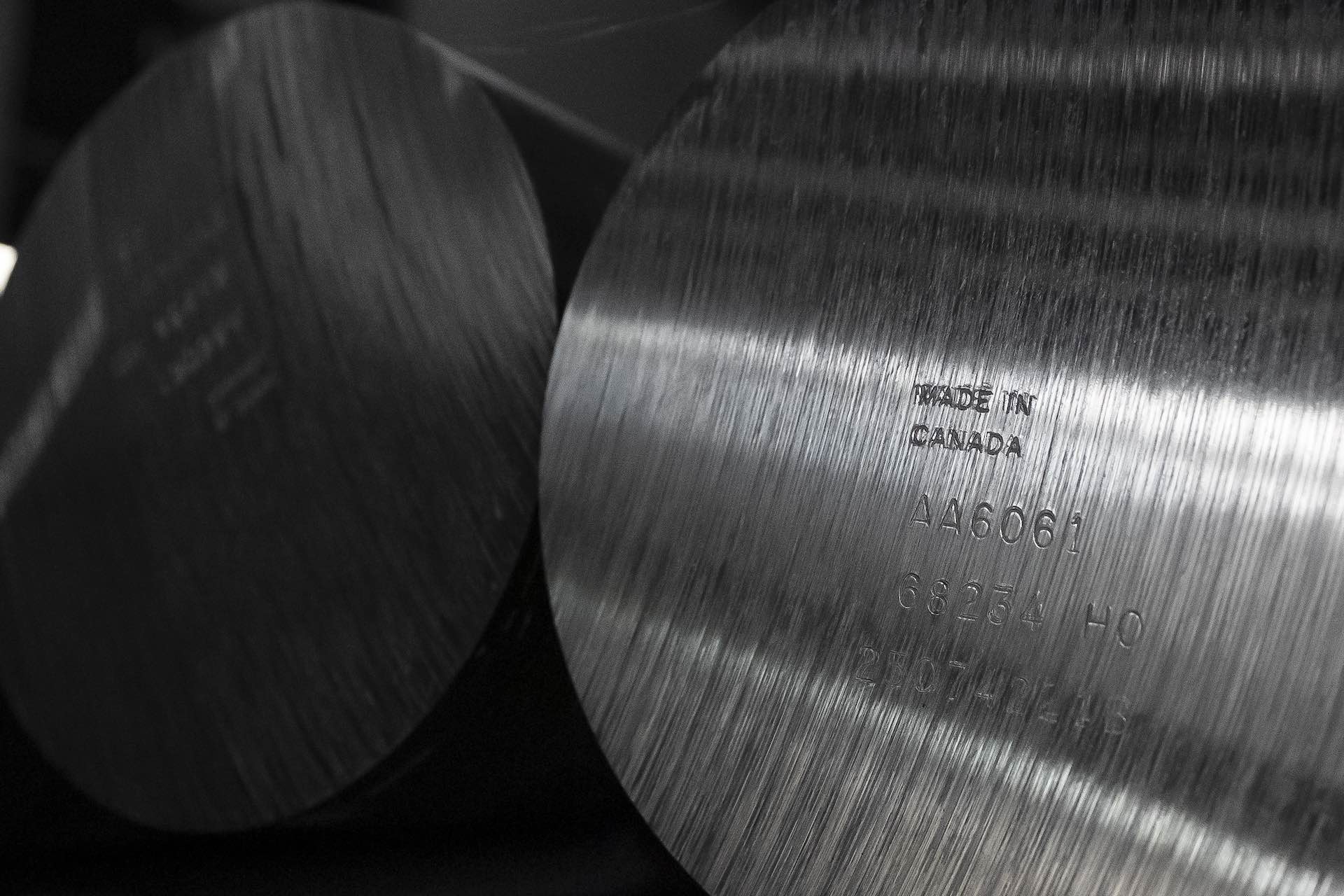
The Canadian aluminum industry feared major damage after Trump restored Section 232 tariffs on the metal, which now stand at 50 per cent, or 25 per cent for many downstream goods, but soaring prices have shielded it from the worst. Meanwhile, the president’s dream of reshoring aluminum production to the U.S. has come up against a stark reality: the 660,000 tonnes of primary aluminum that America produced last year is a drop in the bucket compared to Canada’s annual capacity of 3.3 million tonnes.
Talking Points
- Despite tariffs aimed at boosting domestic capacity, the U.S. will remain heavily reliant on aluminum from Canada because it lacks the inexpensive hydroelectric power needed to reach the same scale of production
- U.S. aluminum smelters are now competing with data centres for electricity, which bolsters the Liberal government’s argument for Canadian aluminum
- Soaring prices have softened the blow of tariffs for Canadian aluminum producers, who were able to divert shipments to markets offering the best return
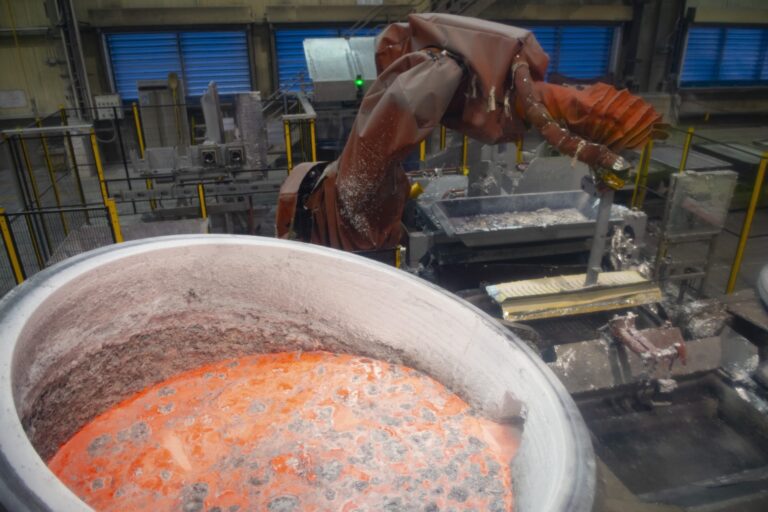
It takes more electricity to make a single tonne of aluminum than to power an average American household for a year. That made Canada, with its Quebec-based smelters powered by cheap hydroelectricity, a good place to make it. And to buy it. The U.S. has long sourced most of its aluminum from Canada. Protectionism cannot bridge that gap anytime soon.
“They’ve got a long way to go,” Helen Amos, a London-based commodities analyst at BMO Capital Markets, said in an interview. “Aluminum is a critical input into the buildout of data centres, grid infrastructure and battery storage, so you can’t do without it.”
Related Articles

Prime Minister Mark Carney had a smile on his face last October when he appeared live on a video screen above a crowd of business and policy leaders at a Toronto summit focused on Canada-U.S. relations. The day before, he had emerged from his second visit to the Oval Office believing he was close to a deal with Trump on energy, steel and aluminum.
Carney then made an argument that marked a shift in how the Liberal government was approaching negotiations with the Trump administration: neither conciliation nor retaliation, but something akin to the art of the deal. The U.S. gets about 60 per cent of its aluminum from Canada, Carney said. The amount of energy it takes to make it would require the output of 10 Hoover Dams.
“Just let that sink in,” he said, before sharing what he told Trump: “Is making aluminum really the first best use of that power at a time when you’ve got the AI revolution, you’re reshoring manufacturing and you want to keep people’s electricity costs down at home?”
The deal never landed. Trump halted talks later that month. Yet, the U.S. still needed aluminum—for beverage packaging, aerospace parts and autos, where it remains a popular choice in the push for greater fuel efficiency even as U.S. policy backs away from electric vehicles. Crucial to Trump’s push to lead the AI race, aluminum is also needed inside the data centres that power it, and the grids that will support them years into the future.
“One worrisome policy concern is that while President Trump’s AI Action Plan prioritizes data-centre construction, his approach to tariffs makes this effort far more expensive,” said a November 2025 paper from the Washington-based Brookings Institution. In addition to aluminum, the report noted, data centres need steel and copper. All are hit with tariffs.
The decision to restore tariffs on aluminum was meant to give producers a reason to make it in the U.S. “They want our aluminum to be produced in the U.S.,” said Dominic Barton, chair of British-American miner Rio Tinto. “The problem is, they don’t have hydro.” The company owns five smelters in Quebec’s Saguenay–Lac-Saint-Jean region.
U.S. smelters now have to compete with data centres for energy. Molly Beerman, chief financial officer at Alcoa, which has three smelters in Quebec and one each in New York and Indiana, said the U.S. government needs to do something about the cost and availability of electricity if it wants the company to build another one. Rates need to be about US$30 per megawatt-hour to run an economical smelter, she said in September, but data centres are crowding them out. “We are now, today, competing with Amazon and Microsoft, who are willing to pay over US$100 per megawatt-hour for power.”
Meanwhile, the three aluminum giants with operations in Quebec, which includes Aluminerie Alouette, were doing what they could to escape the worst of the tariffs. The cost of buying aluminum in the U.S. is typically set by the benchmark price on the London Metal Exchange, plus a markup known as the U.S. Midwest premium. When Trump doubled the tariffs to 50 per cent in June 2025, the U.S. pricing mechanism was slow to respond, which cut into the producers’ margins. Canada’s monthly exports of primary aluminum to the U.S. dropped by 23 per cent in June over the previous month. Also in June, Canada exported almost 62,850 tonnes of aluminum to the Netherlands—nearly as much as the full previous year.
Then, inventories began running out and the price of aluminum in the U.S. rose, so Canadian smelters started selling there again. As Meredith Lilly, a Carleton University professor who advised former prime minister Stephen Harper on trade, says about North American integration, “Gravity is real.”
Prices hit a four-year high this May over supply linked to the U.S.-Israeli war on Iran, which had both Europe and the U.S. competing for aluminum. Jérôme Pécresse, CEO of the aluminum and lithium division at Rio Tinto, told The Logic late last month that the company regularly adjusts its shipments based on where it can fetch the best price. However, it is back to exporting some 85 per cent of its aluminum to the U.S., which is what it was before the trade war. The company wants to show that it can “play a critical role” as a reliable source of “low-carbon, high-quality” aluminum, Pécresse said, so it is working daily “to maximize production and make sure that U.S. customers don’t get short of metal.”
Last week’s news of a U.S.-Iran deal softened the price, which had already started coming down from its peak. It could still take time, however, for shipping through the Strait of Hormuz to get back to normal, and for idled Middle East smelters to resume full production. In a note to clients last week, Amos, the BMO commodities analyst, said that dreams of a price-driven windfall are likely to be dashed. Chinese-funded aluminum smelting capacity across Southeast Asia, including in Indonesia, is ramping up and becoming cheaper. That will create downward pressure on prices as it enters the global market, she said in an interview, including for Canadian smelters.
That does not, however, change the fundamental facts in favour of Canada at the negotiating table: that the U.S. domestic supply of aluminum is not enough to meet its demand. Instead of restarting its idled smelters in the U.S., Alcoa plans to sell some of them to the data-centre industry. In January, UAE-based Emirates Global Aluminium announced a joint venture with U.S. producer Century Aluminum to build a primary production smelter in Oklahoma. It would be the first new one in the U.S. since 1980. It is expected to produce 750,000 tonnes of aluminum per year, which would more than double U.S. domestic capacity. That is still well short of what it needs, so the U.S. would have a choice between Canada and the rest of the world—including China’s offshore production in Southeast Asia.
“At the end of the day, the U.S. probably, on balance, thinks that Canada is a reliable trading partner,” Amos said. “So they’re probably not in the long run going to feel the need to replicate how much they’re importing from Canada.”
Last month, Carney told a gathering of business leaders at the Economic Club of New York that Ottawa had made specific, practical proposals to the Trump administration on how both countries could join forces to compete against the world. “Canada Strong will help Make America Great Again,” he said before launching into his first example: aluminum. “With America’s growing energy needs, does it make sense to build the gigawatts needed to replace Canada?”