Listen Now
0:00
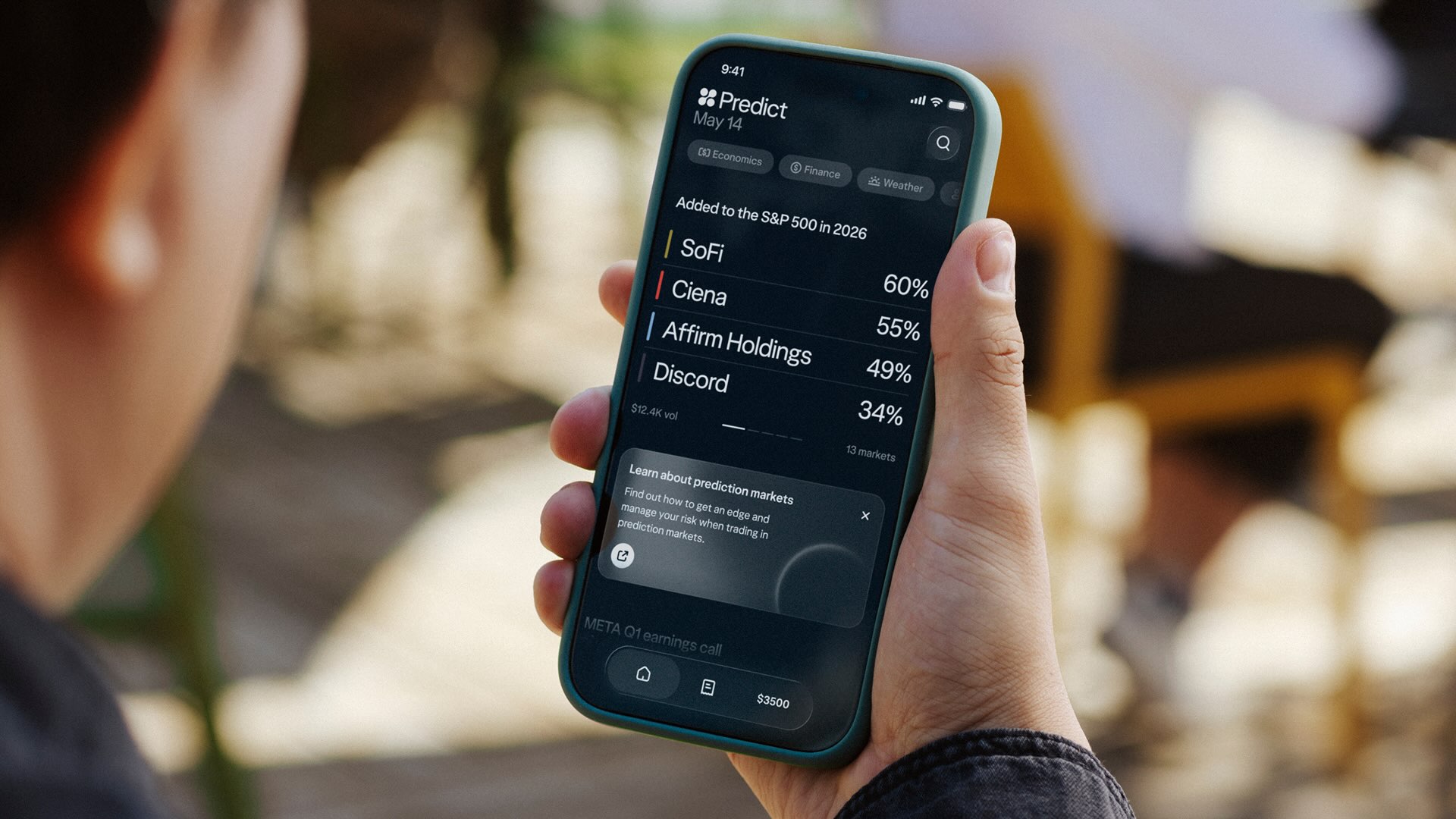
Toronto fintech Wealthsimple will launch a prediction markets trading app called Wealthsimple Predict this summer, offering nearly 4,000 event contracts on U.S. predictions exchange Kalshi.
How it works: Swapnil Parikh, Weathsimple’s vice-president of product, said Kalshi is to Wealthsimple what the Toronto Stock Exchange is to a brokerage. Prediction markets let users bet on the outcome of real-world events, with each contract posing a yes-or-no question that settles at $1 if the answer is yes and $0 if the answer is no. In a release, Wealthsimple’s example contract asks, “Will Canada’s inflation rate rise in the third quarter?” If the price of that contract were trading at $0.70, that would imply the market collectively thinks there’s a 70 per cent probability that Canada’s inflation rate will, in fact, rise.
Related Articles


When a customer clicks “buy” in the app, Wealthsimple routes the order to a clearing agent, who in turn routes it to Kalshi. Market makers hold an inventory of contracts so investors can buy or sell immediately without waiting for a counterparty. “It is no different than if you were to click ‘buy’ on a stock,” Parikh said. He said Wealthsimple charges a commission for each contract and pays fees to Kalshi and its clearing agent.
Strict rules: Prediction markets are hot. They’re U.S. digital stock trading giant Robinhood’s fastest-growing business line. Annualized trading volume on Kalshi more than tripled to US$178 billion over a six-month period ending in May.
But Canada has tight controls on the sector. In March, the Canadian Investment Regulatory Organization (CIRO) granted Wealthsimple permission to let users bet on economic indicators, financial markets and climate trends. Betting on sports or elections—which are among the most popular categories on U.S. prediction markets—is expressly forbidden.
Kalshi, Polymarket and Opinion—the three prediction market sites that reportedly facilitate the vast majority of global trading—all restrict Canadians or Ontario residents from directly using their platforms, even though Canadians will gain access to a limited subset of contracts on Kalshi through Wealthsimple’s app. It’s possible to get around those restrictions with a VPN, however.
Parikh said he thinks the relatively limited range of event contracts Wealthsimple will offer will be enough to keep customers off grey market sites. “We expect that Canadians are going to be excited about working with a regulated platform, a platform that they trust, a brand that they trust,” he said.
Why Kalshi: Parikh said Wealthsimple chose Kalshi as an exchange partner because it met three important criteria. First, it’s a registered exchange in the U.S., regulated by the Commodity Futures Trading Commission. Second, Kalshi gave Wealthsimple full control over which events contracts to list. And finally, Parikh said Kalshi takes insider trading “very seriously.” A U.S. House committee opened an investigation into possible insider trading on Polymarket and Kalshi in May. That same month, Kalshi announced it had raised US$1 billion at a US$22-billion valuation, saying it facilitates more than 90 per cent of U.S. prediction market activity and the majority of the world’s trading volume. Interactive Brokers, the only other company approved to offer forecasting contracts in Canada, uses the U.S. exchange ForecastEx.
What’s next: Parikh said employees have been testing the app to make sure everything works as intended before launch. Wealthsimple doesn’t “have a point of view” about how important prediction markets might become to the company’s overall revenue, he said. “It’s a product that has a lot of demand globally. We know our customers want it.”
Once it’s live, Wealthsimple chief legal officer Blair Wiley said the company will collect data to learn what additional options customers would like. That data will inform the company’s pitch to regulators about how the rules should evolve, he said.
One thing Wiley would like to discuss with regulators is the requirement to only offer contracts that fit under three categories. He said it can be hard to figure out, for example, whether a contract tied to the effect of weather on an insurance company counts as climate-related, a permitted category, or not. He said a more consistent approach would be to base eligibility on an underlying data source, like contracts based on Statistics Canada data. “We’ve had those conversations already with regulators, we know that they’re actively considering all of these issues.”