As U.S. president-elect Donald Trump threatens Canada with steep tariffs unless it can “close up” its border, Ottawa has presented a plan to secure the 9,000-kilometre frontier. To do so, it will need an army of new staff, new intelligence and surveillance technology, and an arsenal of new equipment. Sources told The Logic that will be easier said than done.
Skip to content

Analysis
Sources raise concerns about Canada’s plan to secure the U.S. border
As U.S. president-elect Donald Trump threatens to hit Canada with tariffs, Ottawa is scrambling to come up with a border security plan. Sources say the task is impossibly complex.
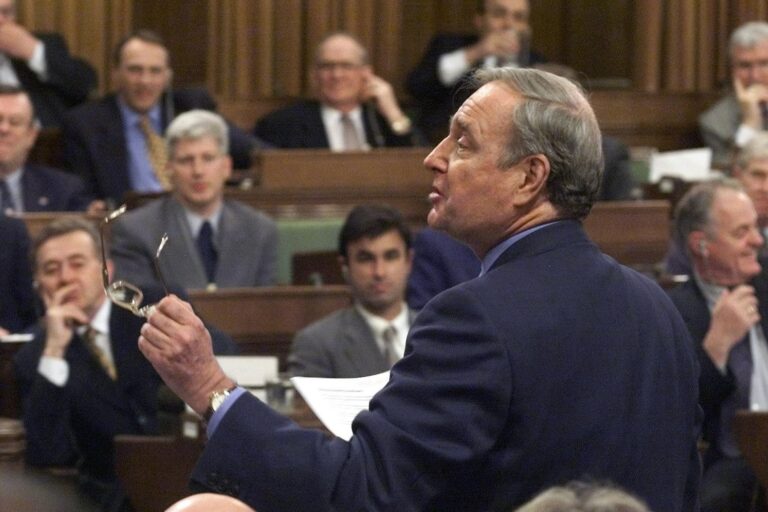
Details of Ottawa’s plans to strengthen the border in response to U.S. president-elect Donald Trump’s threat of tariffs remain vague Photo: The Canadian Press/Darryl Dyck
As U.S. president-elect Donald Trump threatens Canada with steep tariffs unless it can “close up” its border, Ottawa has presented a plan to secure the 9,000-kilometre frontier. To do so, it will need an army of new staff, new intelligence and surveillance technology, and an arsenal of new equipment. Sources told The Logic that will be easier said than done.
The border security plan Prime Minister Justin Trudeau presented on Wednesday to the premiers would further crack down on chemicals needed to produce fentanyl and improve cooperation between law enforcement agencies.
Talking Points
- Public Safety Minister Dominic LeBlanc’s office has been unable to provide details of Ottawa’s border security plan. A spokesperson deflected a request for details to other government departments.
- A Canada Border Services Agency source said a key list of suspected terrorists shared between the U.S. and Canada was “filled with such BS it’s not even funny.” Sources said names can be added with little oversight, and entries in the database are often incomplete or vague.
Details remain scant. The Logic asked Public Safety Minister Dominic LeBlanc — who flew with Trudeau to Mar-a-Lago to meet Trump — for details on that plan earlier this week. A spokesperson for the minister deflected the request to the RCMP, Canada Border Services Agency (CBSA) and departmental officials at Public Safety. When pressed, the minister’s office promised to furnish a reply, but never did.
When LeBlanc testified at the Standing Committee on Public Safety and National Security earlier this month, he insisted that plans were still being drawn up, “in terms of additional resources, including human resources, including personnel, that we could recruit, hire, and redeploy, as well as equipment.”
While Ottawa’s plans remain vague, criticism from Trump and his allies has become pointed. “Drugs are pouring in [from Canada] at levels never seen before,” Trump told NBC earlier this week. “Ten times what we had.” Tom Homan, Trump’s border czar, singled out the Canadian border as a “huge national security issue,” warning that Canada cannot be a “gateway to terrorists.”
The incoming administration can make these allegations because, technically, they have the data to back it up.
Related Articles
Statistics published by Customs and Border Protection (CBP) show that the U.S. seized 43 pounds of fentanyl at the northern border last fiscal year — 20 times what it seized the preceding year. CBP also says it identified almost 850 people on its terrorist watchlist crossing into the United States from Canada over the last two years.
Ottawa could litigate these statistics, of course. Officials could point out that the flow of fentanyl from Canada is a tiny fraction of what flows up from Mexico. They could also point out that the flow of suspected terrorists may not be what it seems; a source at the CBSA, speaking anonymously as they’re not authorised to talk to the press, says a “quite significant proportion” of the suspects at the U.S.-Canada border had served in the Islamic Revolutionary Guard Corps, which both countries consider a terror group. Given that many young Iranian men are conscripted into the group, including some who end up fleeing the theocratic regime, this isn’t necessarily indicative of a pressing national security threat.
But quibbling with the data is rarely a winning strategy in dealing with Trump. Regardless of whether the gripe is true, the notoriously transactional Republican always prefers to see action. And there are some clear areas where the Trudeau government could get to work.
We’ve been here before. In 2018, the Trump administration was “interested in improving information sharing for law enforcement and national security purposes,” according to documents obtained via the Access to Information Act request.
Currently, the U.S. shares intelligence on suspected terrorists via Tipoff U.S.-Canada, a database also known as TUSCAN that is populated by the FBI’s Terrorist Screening Center. The system dates back to 1997, but the U.S. and Canada identified a need to modernize it in 2016, prior to Trump’s election. Ottawa is tight-lipped about how that modernization went, but it was frequently on the agenda when Trudeau’s people met with Trump’s team during his first term in office.
Public Safety Canada would only say that “as it stands, TUSCAN is fully operationalized and the government of Canada has no intentions of expanding the current scope of the arrangement.” While TUSCAN was initially designed to flag travellers at land borders, records from Citizenship and Immigration Canada reveal it is being used to screen refugee claimants and asylum seekers into Canada, regardless of how they arrive.
There’s room for improvement, the CBSA source says. “The TUSCAN list is filled with such B.S. it’s not even funny.” Sources with knowledge of the system and the lawsuits filed on behalf of those who have been put on the TUSCAN list say names can be added with little oversight, entries in the database are often incomplete or vague, and removing a name from the list — including those added in error — is notoriously difficult.
Ottawa also needs to figure out how it can improve surveillance of the entirety of the border, not just official crossings. The Hill Times reported earlier this week that Ottawa was considering spending up to $1 billion to do just that. That plan, government sources told the paper, could include new equipment like helicopters and drones.
The problem isn’t necessarily the money, but Canada’s ability to actually procure the kit.
In 2014, Ottawa announced plans to acquire 12 drones to serve various functions at home and abroad. Ottawa hoped they would be a cheap and quick way to expand the strike capabilities of the Canadian Air Force, conduct maritime patrols with its coast guard, improve situational awareness in the high Arctic, conduct domestic surveillance and patrol its border with the U.S.
After numerous changes and overhauls, though, the Department of National Defence now says the $2.5 billion acquisition of these drones— a variant of the General Atomics MQ-9 Reaper — won’t begin until 2028, and they won’t be fully operational until 2033. The number of drones has also dropped from 12 to 11.
One former national security official said recently that this decade-long drone acquisition program shows that Ottawa had been overthinking the problem. The government should be focused on acquiring helicopters to monitor the border, they said. But apart from plans to refurbish and upgrade its existing fleet of search-and-rescue helicopters, the Department of National Defence doesn’t currently have any plans to acquire new helicopters.
While not strictly relating to the shared U.S.-Canada border, both countries have also been pursuing a modernization plan for the North American Aerospace Defense Command (NORAD). Canada has already put about $5 billion on the table for some of the first upgrades, including new radar coverage for the Arctic. Long-term, the modernization plan is estimated to be close to $40 billion.
If Canada can point to anything which may impress Trump, it would be this. Yet Ottawa has thus far been slow to get the money out the door. Given that the vast majority of NORAD infrastructure is currently owned and managed by the U.S., the sluggishness could do more to stir Trump’s ire than allay it.
All told, Canada is in a tricky spot. It will have a hard time convincing the Trump administration that border security is nothing to worry about, especially as Republicans scramble to declare it a “crisis.” Yet it has no obvious policy solutions on the table, which may give Trump the ability to claim a win.



Loading...
Thanks for sharing!
You have shared 5 articles this month and reached the maximum amount of shares available.
CloseThis account has reached its share limit.
If you would like to purchase a sharing license please contact The Logic support at [email protected].
CloseGift the full article!
You have gifted 0 article(s) this month and have 5 remaining.
Recipients will be able to read the full text of the article after submitting their email address. They will not have access to other articles or subscriber benefits.
Photo: The Canadian Press/Darryl Dyck
Most Popular This Week




In-depth, agenda-setting reporting
Great journalism delivered straight to your inbox.
Commentary
Carmichael: Being boxed in will help Canada focus on what matters
Briefing
Rio Tinto gets nearly $165M in additional federal funds for Quebec aluminum
U.S. to lift tariffs on some Canadian products crucial to Maine: Collins
Carney warns of tech dependence after Starlink disruptions in Ukraine
Best business newsletter in Canada
Get up to speed in minutes with insights and analysis on the most important stories of the day, every weekday.
Exclusive events
See the bigger picture with reporters and industry experts in subscriber-exclusive events.
Membership in The Logic Council
Membership provides access to our popular Slack channel, participation in subscriber surveys and invitations to exclusive events with our journalists and special guests.






