
Listen Now
0:00
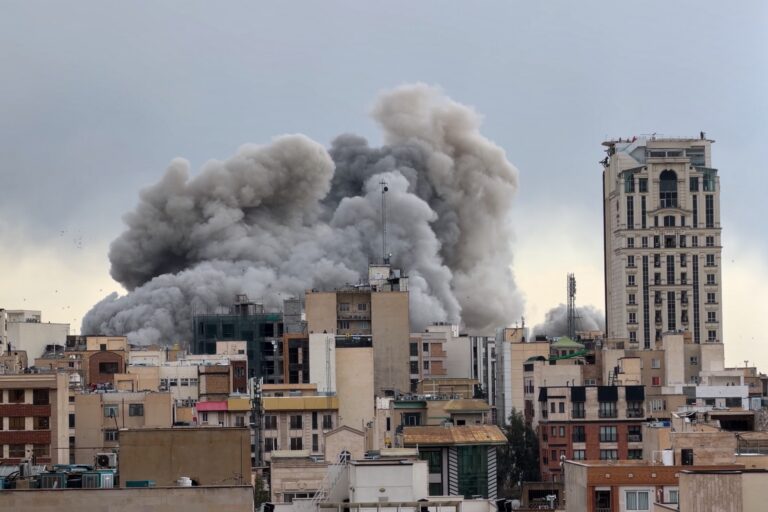
Canadian airlines are being squeezed by surging jet fuel costs as the most severe oil shock in over three decades drives up fares and forces carriers to cut capacity. While economists say the country’s oil reserves should offer some insulation, airlines’ recent moves suggest the pain is just beginning.
Global crude oil prices surged 64 per cent in March, disrupting roughly 20 to 25 per cent of global energy supply, according to Oxford Economics, following the closure of the Strait of Hormuz in late February.
Talking Points
- Domestic airfares have increased from the high-$200 range to a peak of nearly $500 by the end of April since the closure of the Strait of Hormuz on major routes like Toronto, Vancouver and Montreal
- Despite higher fares, demand for corporate travel has remained strong, according to a major travel agency
Domestic airfares for major routes like Toronto, Vancouver and Montreal have increased from the high-$200 to $300s range, peaking at about $496 in the week of April 20, according to data travel provider Kayak, after the strait’s closure. International fares are also climbing across key routes for Canadians. Tickets to Paris are up 4.8 per cent year over year, while fares to London, U.K., and New Delhi have risen 16.6 per cent and 14 per cent, respectively. New York saw one of the sharpest increases, surging 34.2 per cent.
The oil crisis is forcing Canada’s major carriers to rethink their pricing strategies. Air Canada, WestJet, Porter Airlines and Air Transat have all raised fares or introduced surcharges on baggage fees. Air Canada has so far suspended six existing routes it deems “no longer economically feasible” because of high fuel costs, saying it anticipates the changes will affect one per cent of its overall passenger-carrying capacity.
Related Articles
On Thursday, Air Canada said first quarter net income rose to $48 million from a $102 million loss a year earlier. The airline mitigated some of the impact of higher fuel costs through hedging, CFO John Di Bert said in a call with analysts. However, it suspended its full-year 2026 guidance due to ongoing volatility and uncertainty in jet fuel prices. CEO Michael Rousseau said strong demand should help offset roughly 50 to 60 per cent of higher fuel costs in the second quarter through “various commercial and cost actions.”
The carrier is set to cut its May seat capacity by just under 20 per cent, according to aviation data firm Cirium—one of the steepest reductions among the world’s largest airlines.
Despite a partial recovery, Air Canada’s shares remain below pre-war highs. National Bank analyst Cameron Doerksen said in a note that he is maintaining his $22 price target but expects the stock to remain under pressure in the coming quarters. Meanwhile, WestJet is also consolidating flights on lower-demand routes, trimming capacity by one per cent in April and three per cent in May.
“Carriers are going to have to chew up their cash reserves, chew up their loans, their lines of credit [and] whatever they can come up with to try to weather the storm,” said John Gradek, a former Air Canada executive and lecturer at McGill University. He added that prices may not fall even if fuel supply stabilizes.
Still, not everyone is convinced fuel costs alone explain the spike in flight prices. Chris Lynes, managing director at travel agency Flight Centre Travel Group Canada, said airlines may be using jet fuel prices as “cover,” arguing that route cuts reflect demand dynamics more than fuel pressures.
Airlines may also be testing how much consumers are willing to pay, Lynes said. Fares ultimately follow global demand—meaning if travellers keep booking at higher fares, competitors will follow suit, he said.
North America remains the most insulated region from global oil supply shocks, according to Oxford Economics, with the U.S. and Canada benefitting from strong domestic production, ample inventories and flexible refining capacity. A National Bank Financial Markets analysis published last week ranks Canada as the third least-exposed country to rising energy prices, after Saudi Arabia and Russia. It estimates Canada’s oil and gas surplus at roughly 4.4 per cent of GDP.
Gradek said domestic supply offers little protection against fuel price shocks. While about 85 per cent of Canada’s aviation fuel is produced domestically—with most imports coming from U.S. refineries—he said prices are still set globally, leaving Canadian carriers exposed to the same elevated costs as their international peers.
With fuel accounting for roughly 25 to 30 per cent of an airline’s operating costs, Gradek said sustained price pressure will strain their finances and make liquidity critical in the months ahead. Larger U.S. carriers tend to have deeper reserves than Canadian ones, he added. Air Canada, for instance, reported roughly $8.8 billion in total liquidity at the end of last quarter, compared to American Airlines’s roughly $14.6 billion (US$10.8 billion).
“It’s a self-fulfilling prophecy that those carriers that are on the margin financially will not survive,” Gradek said, warning that prolonged pressure could lead to layoffs and potential bankruptcies.
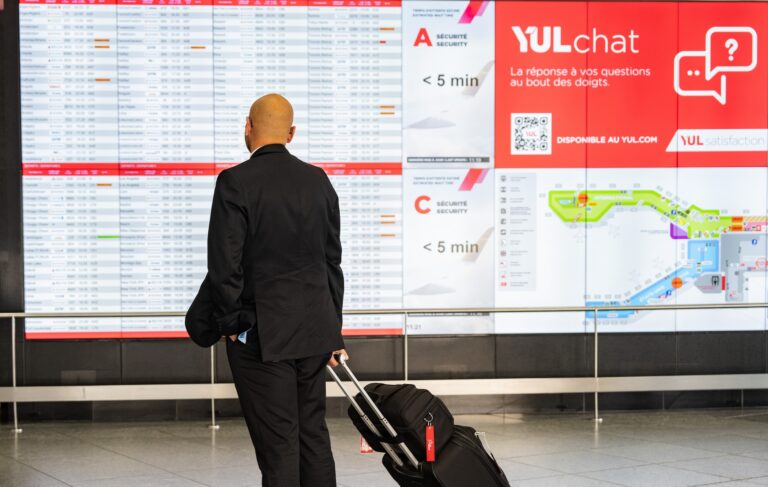
Despite elevated fares, corporate travellers—particularly those of small and medium-sized businesses—have yet to significantly alter their plans, Lynes said, as business travel remains largely non-discretionary. He warned, however, that a prolonged crisis could begin to shift behaviour, with companies pausing trips, opting for longer routings or redirecting travel altogether.
He said recent government moves to attract investment into Canada have already encouraged business travellers to stay closer to home, but warned of a “tipping point” of what people will pay to fly domestic versus international.
Last month, Prime Minister Mark Carney announced a temporary suspension of the federal fuel excise tax on gasoline, diesel and aviation fuel until Labour Day. The measure, which includes removing the roughly four-cent-per-litre excise tax on aviation fuel, is expected to cost about $2.4 billion and is aimed at easing pressure on both airlines and consumers.
“This is worse than COVID. This is worse than the oil crisis in the 1970s because we don’t know where it’s going to go,” Gradek said.













