Listen Now
0:00
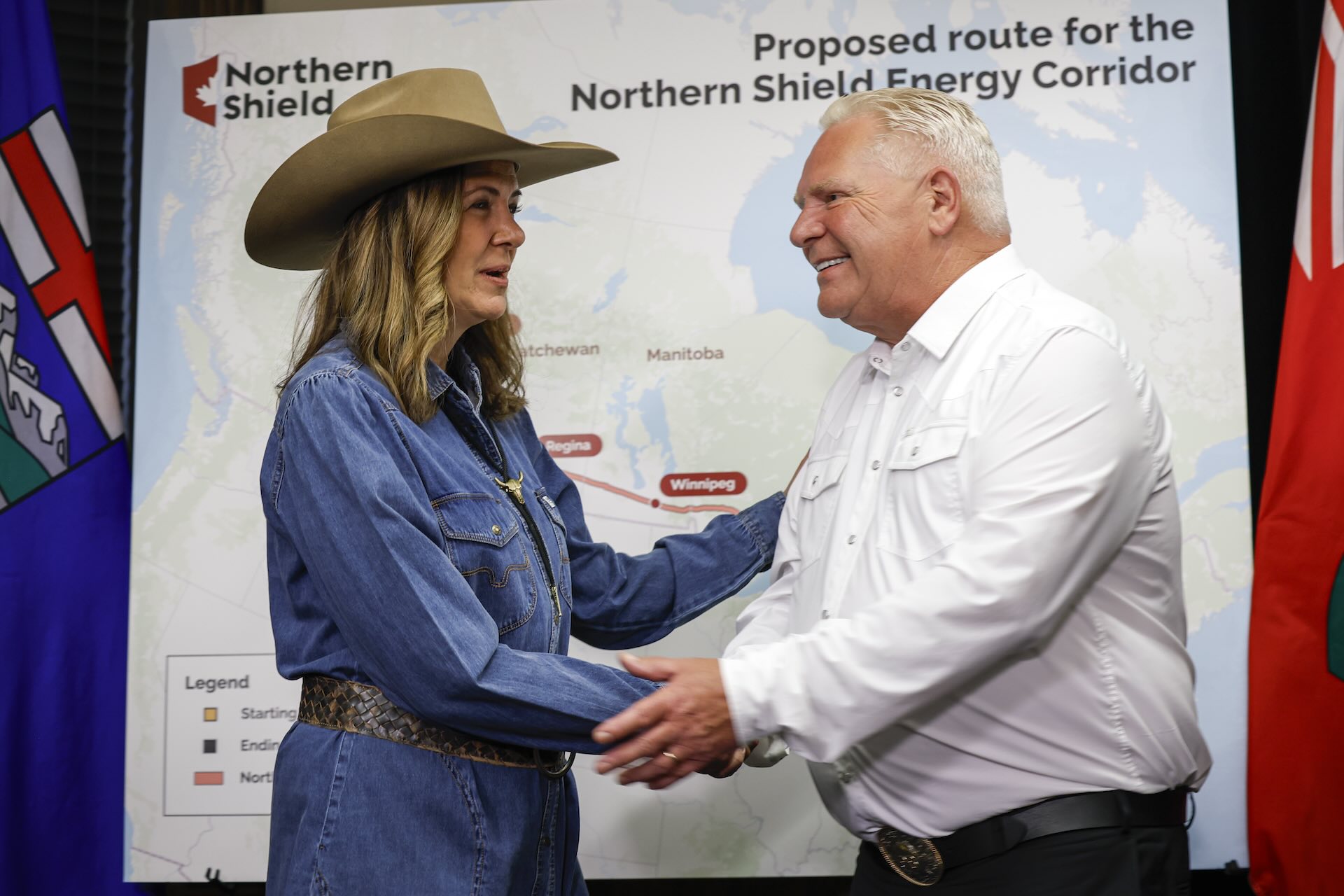
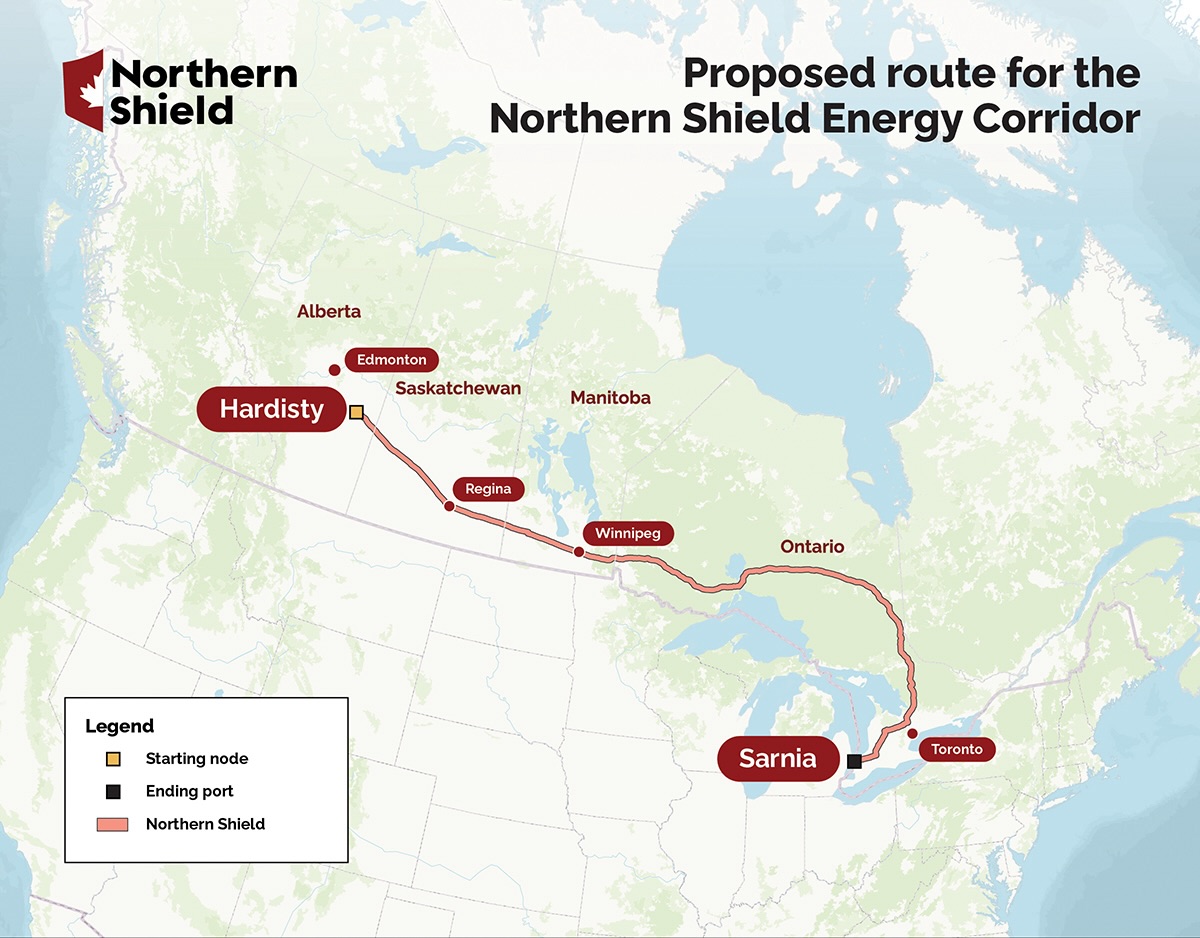
Premiers Danielle Smith and Doug Ford unveiled a proposal Monday for a new 3,300-kilometre oil pipeline from Alberta to refineries in Sarnia, Ont.—with Ontario set to lead a feasibility study and Ford leaving the door open to public financing for the megaproject.
The proposed Northern Shield Energy Corridor would have an initial capacity of 500,000 barrels per day, and would carry western Canadian crude on a path traversing Saskatchewan, Manitoba and northern Ontario, staying entirely within Canadian borders—unlike the existing Enbridge Mainline system, which crosses into the United States before re-entering Canada at Sarnia.
Related Articles
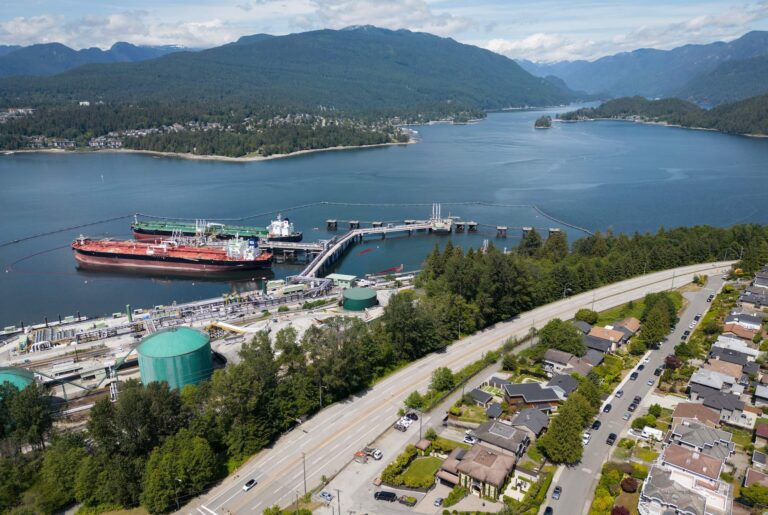

The study will also examine a potential Canadian strategic petroleum reserve near the pipeline’s terminus. Ford said he would prefer private-sector investment, but is open to public financing for the proposed line which would be built with Canadian steel and could eventually expand to 800,000 barrels per day.
“I think it’s a great investment,” Ford said at a news conference with Smith in Calgary on Monday, arguing the project would generate a return whether financed by government or the private sector.
“We have to make sure we’re self-reliant, self-sufficient,” he added. “We are an economic powerhouse around the world, and now we have to unleash that powerhouse.”
Saskatchewan Premier Scott Moe and his Manitoba counterpart Wab Kinew were not present at the news conference—although the pipeline announcement release included a statement from Moe in support of the project.
Asked explicitly about Kinew’s absence, Ford said Kinew “has to consult a little more with his folks in Manitoba, but we’ll work something out.”
Ford noted the new route will also provide the government of Manitoba and the Manitoba Crown-Indigenous Corporation with the opportunity to explore the feasibility of a pipeline extension to the Port of Churchill.
The announcement follows Alberta’s unveiling last week of a proposed route and private-sector partner for its separate West Coast pipeline project.
Asked whether industry has the appetite for another pipeline, with new capacity already in development through South Bow’s plan to repurpose leftover Keystone XL assets and Alberta’s own West Coast pipeline project, Smith argued oil producers had backed multiple projects before and could do so again.
Smith pointed to a trio of major pipeline proposals that stalled or were cancelled in the past decade, including Northern Gateway, Keystone and Energy East.
This is resurrecting all three of those concepts, perhaps on different corridors with some different partners, she said. “I feel like the industry was there 10 years ago; they can be there again.”
Northern Shield, however, is substantially shorter than the original Energy East proposal from TransCanada, now known as TC Energy, which would have carried crude from Western Canada through Quebec to refineries and an export terminal in New Brunswick. Energy East faced substantial resistance in Quebec and from some environmental and Indigenous groups. TC Energy cancelled it in 2017 after the National Energy Board expanded its review of the project to include both direct and indirect greenhouse-gas emissions associated with the pipeline.
“Wouldn’t it be great, folks, if we could bring this pipeline right across the country, right over to Irving?” Ford said Monday, referring to the original Energy East proposal which would have terminated at the Irving Oil refinery in Saint John, N.B.
“I think It’d be beautiful for East Coast provinces and for the people of Quebec as well. But that’s up to them,” he said. “I’m going to focus on Ontario and building this pipeline to Ontario.”
The project is already being met with skepticism and questions about the economic viability of the proposed route. Unlike Enbridge’s Mainline which follows a flatter route through the U.S. Midwest, Northern Shield’s all-Canadian route would face more difficult terrain through rock and muskeg in northern Ontario, said TD Cowen analyst Aaron MacNeil.
“Notably, what is now the TC Energy Mainline (built 1956) opted for an all Canada route that looks similar to Northern Shield, and eventually became synonymous with cost overruns and government bailouts,” MacNeil wrote in a note published Monday. “Given the capacity and route, we expect that this route would not likely be economically feasible although details are limited at this time.”