Listen Now
0:00
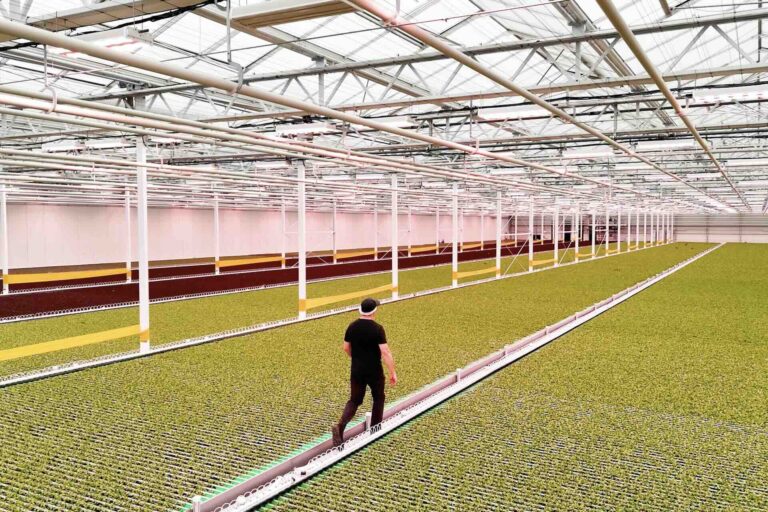
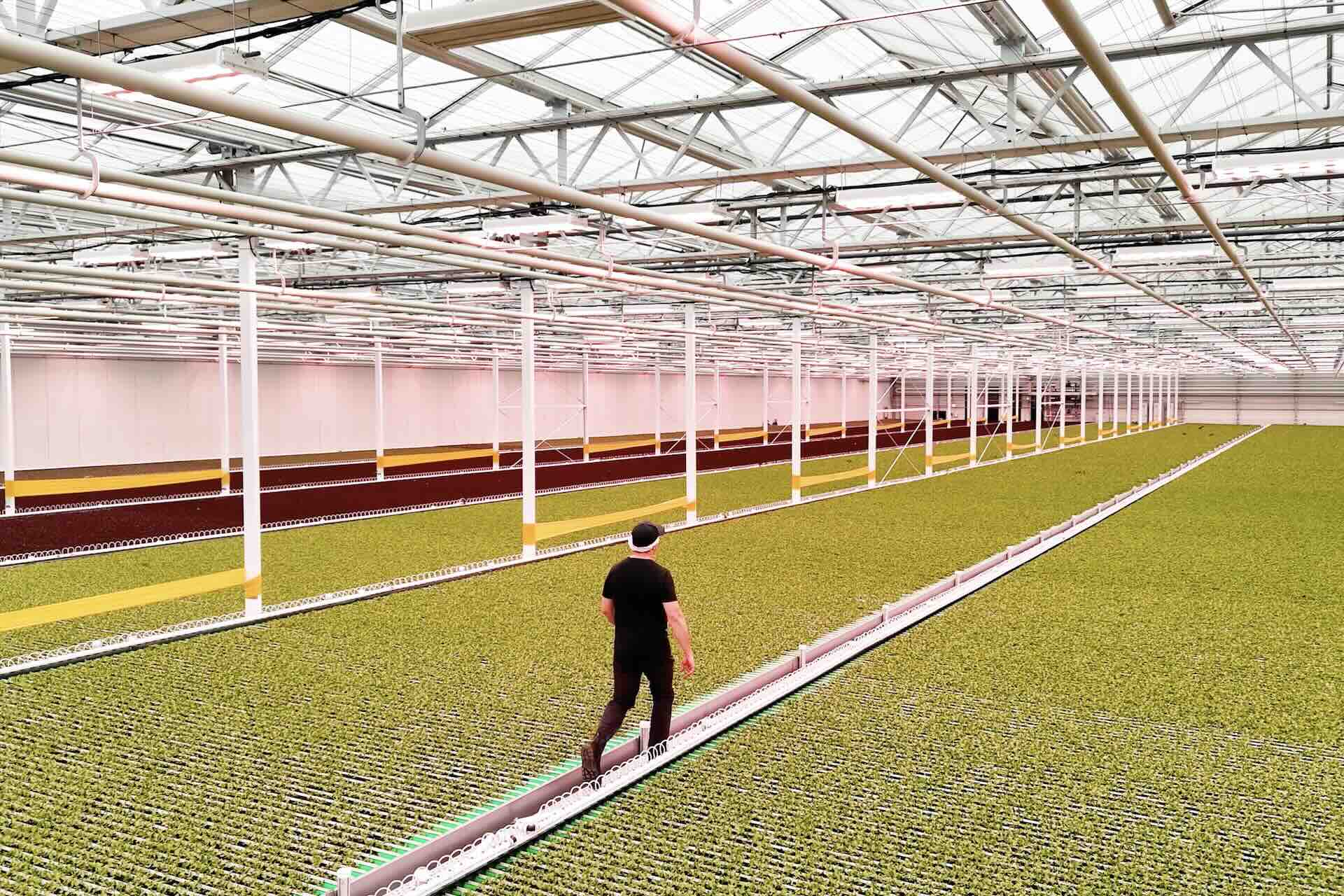
When Jay Willmot pitched his parents on an advanced automation system for the family’s farm, it was a hard sell. The technology, made by Finland-based Green Automation, was relatively new in Canada, and Kinghaven Farms was still better known for raising racehorses than growing vegetables. The family was also busy experimenting with new ventures, including honey hives.
After some convincing, Willmot’s bet on AI paid off. He and his brother have taken over daily operations running the farm in King City, Ont., from his parents. In early 2025, Willmot planted the first seeds in the automated greenhouse; today, the family farm’s subsidiary Haven Greens sells lettuce in stores like Costco Canada. As concerns over food sovereignty and produce safety grow, the farm’s locally grown lettuce—with minimal human and animal contact—has become a competitive advantage.
Willmot’s experience points to a broader challenge facing many Canadian businesses: pressure to invest in AI systems just as owners reach retirement age. Canadian farmers are now 56 years old on average. It could be a pivotal moment for a new generation of entrepreneurs to take up the mantle, he said.
Talking Points
- With hundreds of Canadians retiring each day on average, many are vacating senior leadership or ownership positions at a time when AI is placing new demands on executives
- That’s putting pressure on senior leaders to pick their successors carefully, with an eye toward AI prowess. But it’s also an opportunity, some say, to attract fresh talent and use technology to give companies a second life.
“Farming families in particular in Canada, where you’ve got one or two generations…. the kids themselves are not always interested in taking on that business,” Willmot said. If the new generation sees traditional businesses as opportunities to implement leading-edge tech, he said, it could attract more young people to the industry.
“You’re running a stealth STEM model where the people that come in and operate it, whether they be family or not, can say ‘This is really cool.’”
Canada’s economy has been bracing for a succession wave as baby boomers retire: 76 per cent of owners expect to leave their companies by 2032, according to a 2022 survey from the Canadian Federation of Independent Business. The pressure to embrace AI has created a pivot point for Canadian senior leaders, as 25,500 workers retire monthly. ChatGPT’s public launch at the end of 2022 accelerated everything in the business world—and succession planning was no exception, from local family farms to the world’s largest corporations.
Related Articles


Coca-Cola CEO James Quincey, who stepped down this year, said he made progress digitizing the company in the pre-AI era but sought a replacement who would have “energy to pursue a completely new transformation.” Former Walmart CEO Doug McMillon made similar remarks before he stepped down in January.
The shift is particularly striking among older workers. Data analysis by the Center for Retirement Research at Boston College found that since the launch of ChatGPT, there has been a surge of job exits by older workers in careers most exposed to AI. However, the researchers noted that computer-focused careers typically still have more longevity than more physically intensive vocations.
For business owners who are fresh off the challenges of pandemic-era supply chain shortages and months of tariff uncertainty, AI is just the latest iteration of a familiar choice: “Adopt new technology and invest in the business today, or sell it to somebody who does, because the reality of change is not going away,” said Cameron Percy, managing director of mergers and acquisitions and capital markets at BDO Canada.
About 84 per cent of Canadian hiring managers surveyed this year reported that AI is having an impact on succession planning, according to Robert Half’s poll of 1,500 respondents. While over a third of small businesses say AI is not yet a major factor, the vast majority of medium and large businesses are considering it as part of their leadership transitions, the recruitment firm found.
People coming close to retirement are “making sure they’re hiring the right people,” and looking for a number 2 with an AI background, said Meena Dube, who works at Robert Half’s Toronto practice.
Jason Murray, managing partner at BES Executive Search, said AI is one of several recent economic stressors “causing individuals to think about how much time they want to spend in the workforce and if they want to pass on the baton.” The next generation of leaders, he said, will not only need technical knowledge but also strong ethics and emotional intelligence, as AI-related layoffs cultivate mistrust between workers and leaders.
Murray noted that AI could also be part of the solution, if algorithms can be trained to identify overlooked leadership candidates with the right skills for the AI age.
Governments are leveraging AI to brace the economy for changes too. In February, Ontario’s provincial government said it would spend $2 million to expand a Kingston-based program that helps business owners exit while preserving local jobs.
The program has tapped Avril Sun, CEO of Succession AI, whose technology helps owners prepare to sell and identify potential buyers. The Toronto-based startup finds industry influencers or overseas acquirers that might not be on the radar of traditional investment bankers.
While AI creates new challenges for business owners, Sun is hoping it also clears a path forward. Her own family deliberated for over a decade to decide how and when to sell their business. For owners selling today, she said, “Our AI agent is behind the scenes doing all the manual work.”