Despite some uncertainty and signs of a cooling housing market, 68 per cent of respondents to The Logic’s September survey said they do not intend to revise their real estate goals, with many indicating that they remain focused on home ownership.
Skip to content


Subscriber Survey
Most subscribers undeterred by Canada’s cooling housing market: Survey
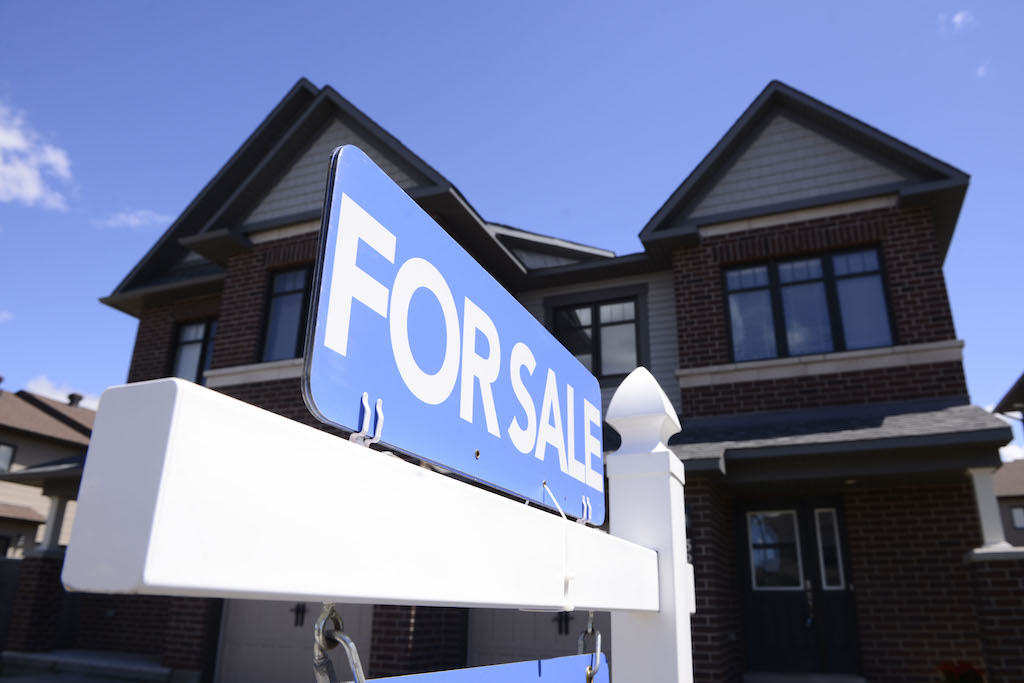
A new home is displayed for sale in Ottawa in July 2020. Photo: The Canadian Press/Sean Kilpatrick
Despite some uncertainty and signs of a cooling housing market, 68 per cent of respondents to The Logic’s September survey said they do not intend to revise their real estate goals, with many indicating that they remain focused on home ownership.
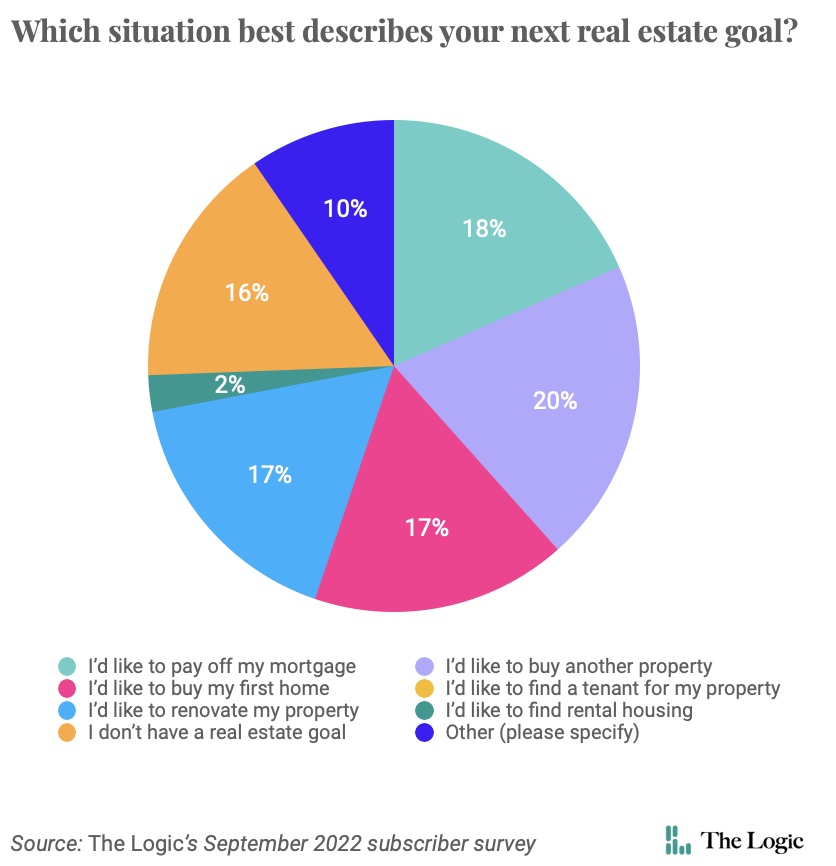
While nearly 70 per cent of respondents said they already own their current residence, the survey found that one-fifth aim to buy another property in addition to their primary residence. Another 18 per cent said they’d like to pay off their mortgage, while 16 per cent want to buy their first home.
Related Articles


“We bought our first house about four years ago [and] have no intention of buying another one until we pay this one off,” wrote one subscriber.
The shift to remote work accelerated significantly due to the effects of the COVID-19 pandemic. As more people were able to work from wherever they wanted, Canada’s housing affordability crisis spread from urban centres like Toronto and Vancouver into smaller communities. As previously reported by The Logic, the cost of housing became an urgent problem, including for Canadian tech companies trying to compete for talent.
Today, the portrait of the housing market is much different, with prices falling in recent months and a correction underway. The Bank of Canada has introduced several interest rate hikes to cool the economy, while Statistics Canada reported last week that overall consumer prices declined in August for the second month in a row.
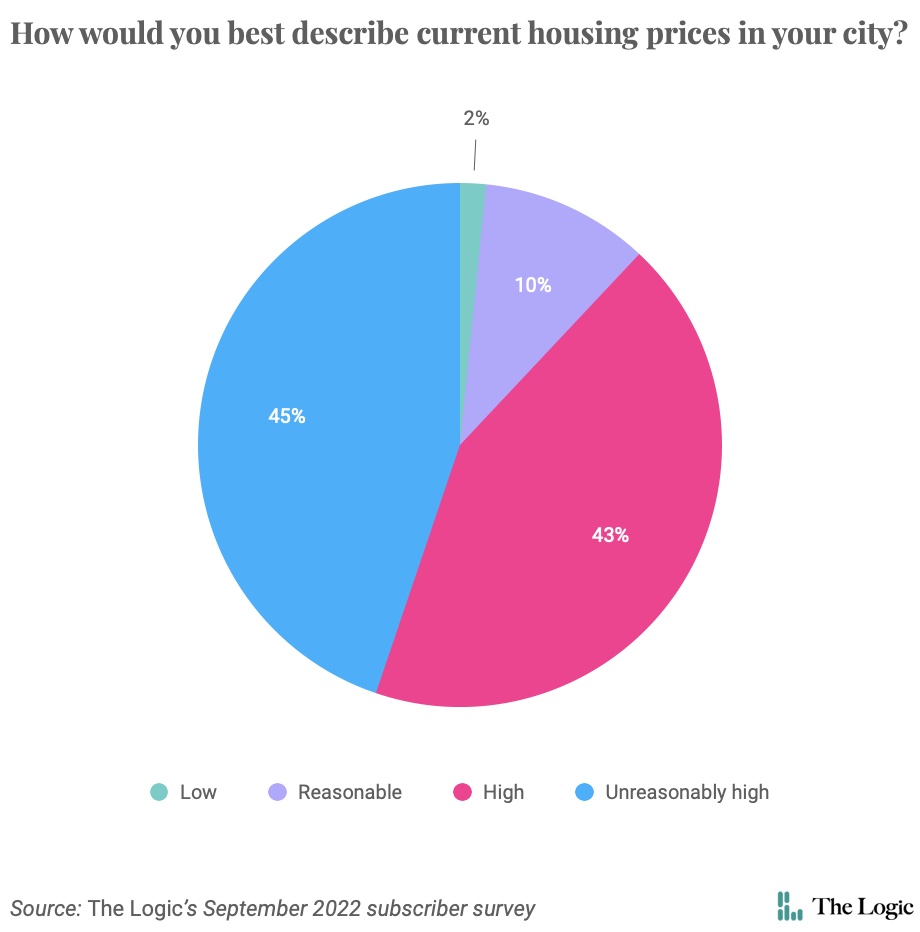
Yet housing-affordability issues have persisted. The Logic’s survey found that almost 90 per cent of respondents said they still find housing prices in their city to be either high or unreasonably high.
When asked to elaborate on housing affordability in their city, many respondents noted simply that they live in Toronto or the Greater Toronto Area.
Methodology
The Logic emailed subscribers a private link to an online survey on Sept. 19 and the survey closed Sept. 21. Respondents’ identities were kept anonymous and duplicates were removed as needed. Subscribers were asked, “What is your current living situation?” and could select: “I own my residence,” “I rent my residence,” “I don’t pay for my residence and live with family/others,” or “Other (please specify).” They were also asked, “Which situation best describes your next goal when it comes to real estate?” and could select: “I’d like to pay off my mortgage,” “I’d like to buy another property other than my primary residence,” “I’d like to buy my first home,” “I’d like to find a tenant for my property,” “I’d like to renovate my property,” “I’d like to find rental housing,” “I don’t have a real estate goal,” or “Other (please specify).” Next, they were asked if they had revised their real estate goal as a result of the cooling market, and could select “Yes” or “No.” They were then asked to best describe current housing prices in their city and could select: “Low,” “Reasonable,” “High,” “Unreasonably high,” or “I don’t know.” Finally, they were asked if they had had to decline a job opportunity or promotion as a result of housing affordability, and could select “Yes” or “No.”
According to a National Bank report released last month, Canadian housing affordability has declined to the worst levels in more than four decades. Toronto home prices grew almost 23 per cent year over year, with the average home costing nearly $1.4 million, and the average condo coming in at nearly $800,000.
Prices in B.C. cities, similar to Toronto, were frequently mentioned by The Logic’s subscribers, too.
The average non-condo home price in Vancouver is about $1.7 million, per National Bank, and the average condo costs about $733,000. It is the least affordable city in Canada to “buy a dwelling,” according to the report.
Thirty-two per cent of subscribers said they’ve had to revise their goals as a result of the cooling market. Of them, many mentioned their goal was to lower spending by delaying renovations or property searches.
“Focusing on completely paying off the mortgage as opposed to upgrades [or] considerations to sell,” wrote one respondent.
Less than eight per cent of respondents said they have had to decline a job offer or promotion because of housing affordability. As some continue to work from home even as others are mandated to return to offices, relocating isn’t as big a desire for many. “I work remotely and don’t plan to leave my city,” said one respondent.
Others, however, are staying put because of their housing situation. “I feel I can’t make any changes to my job situation in the next 12 to 18 months until I can secure mid-term mortgage refinancing,” wrote one subscriber.



Loading...
Thanks for sharing!
You have shared 5 articles this month and reached the maximum amount of shares available.
CloseThis account has reached its share limit.
If you would like to purchase a sharing license please contact The Logic support at [email protected].
CloseGift the full article!
You have gifted 0 article(s) this month and have 5 remaining.
Recipients will be able to read the full text of the article after submitting their email address. They will not have access to other articles or subscriber benefits.
Photo: The Canadian Press/Sean Kilpatrick
Most Popular This Week




In-depth, agenda-setting reporting
Great journalism delivered straight to your inbox.
News
National Bank CEO warns AI alone won’t give banks a lasting edge
Briefing
Canada and Ontario commit over $5B to support tariff-hit steel sector
Hackers will see cars as major targets in next 3 years, 83% of car-tech workers say
EA shutting down Edmonton studio BioWare
Best business newsletter in Canada
Get up to speed in minutes with insights and analysis on the most important stories of the day, every weekday.
Exclusive events
See the bigger picture with reporters and industry experts in subscriber-exclusive events.
Membership in The Logic Council
Membership provides access to our popular Slack channel, participation in subscriber surveys and invitations to exclusive events with our journalists and special guests.





