While nearly 90 per cent of respondents to The Logic’s subscriber survey believe an economic recession is on the horizon, many subscribers say the uncertainty has set back their long-term financial goals.
The July poll found that almost 40 per cent of respondents are putting off plans like buying a home or paying off debt, as the possibility of a recession looms.
Two respondents added they’ve put off both home renovations and plans to buy new vehicles.
The results come amid recession fears, rising interest rates and expectations that inflation will climb even higher. The Canadian consumer price index rate in June surpassed eight per cent, the largest yearly change since January 1983. Expecting “higher and more persistent inflation,” the Bank of Canada hiked its key interest rate last week by one percentage point to 2.5 per cent earlier this month.
Experts have varied outlooks on whether Canada will enter a recession and how severe it might be, with some economists pointing out that the unemployment rate is low but the Canadian economy’s reliance on housing could make the downturn more painful.
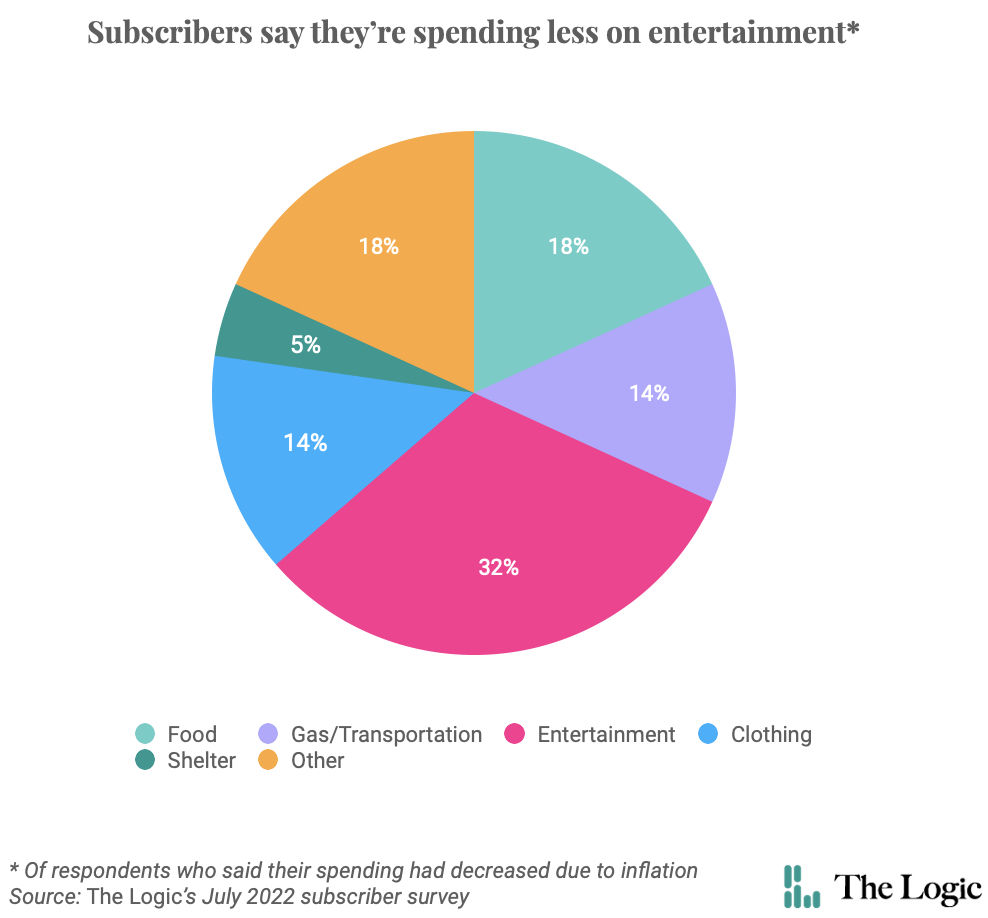
The Logic’s survey found 20 per cent of respondents said they’ve increased their spending and 56 per cent said it stayed the same—though 23 per cent of subscribers actually decreased their spending.
Recreational spending, like travelling, shopping and dining out, were some of the areas subscribers pulled back on the most.
Methodology
The Logic emailed subscribers a private link to an online survey on July 13 and the survey closed July 15. Respondents’ identities were kept anonymous and duplicates were removed as needed. Subscribers were asked, “Do you believe a recession is coming?” and could select “Yes” or “No.” They were also asked how inflation has impacted their spending, and could select “It’s increased,” “It’s decreased,” or “It’s the same.” They were asked which categories they increased spending on the most in the last month, and in which category they had reduced spending most, and could select one of the following: Food, gas/transportation, entertainment, clothing, shelter, or other. Subscribers were also asked if they planned on slowing investments, if they had any, and could select “Yes,” “No,” or “I don’t have investments.” They were asked, “Do you need to receive a wage increase within the next year to help manage the cost of living?” and could select “Yes” or “No.” They were also asked to elaborate on their answer. Finally, they were asked if the possibility of a recession set back their long-term financial goals, like buying a house, and could select “Yes” or “No.”
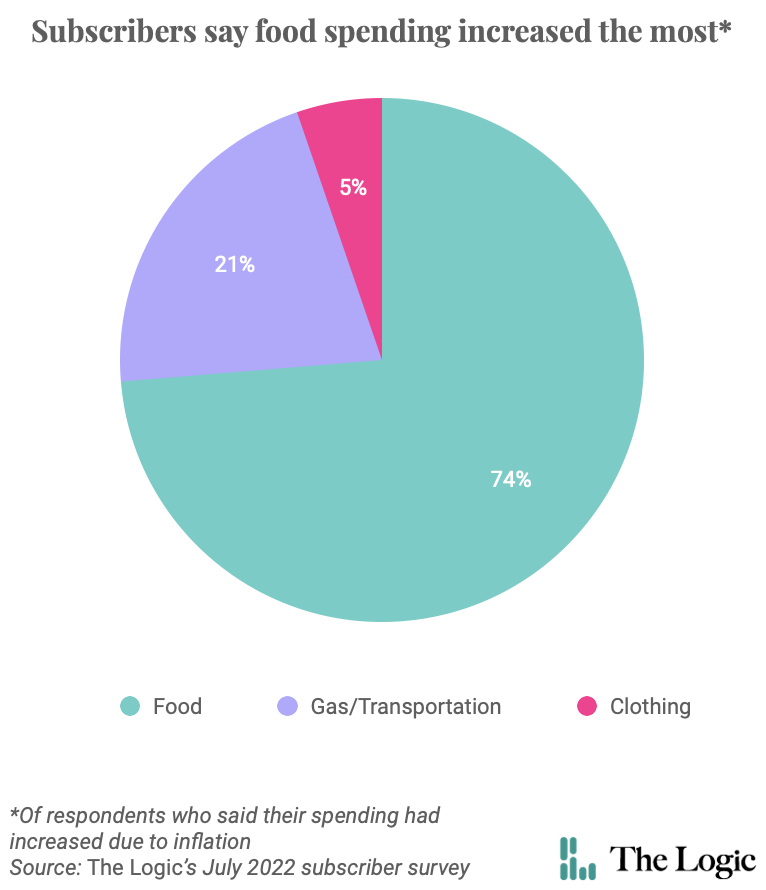
Of the 20 per cent of respondents whose spending has increased due to inflation, a whopping 74 per cent said their food costs had increased more than anything else. Twenty-one per cent said their gas and transportation costs had increased the most.
Yet, more than half of subscribers said they won’t need a wage increase to manage their finances.
A few respondents commented that while a raise would certainly be helpful, for now, they’re able to meet their expenses. “I don’t NEED a wage increase although one would be helpful to weather the long-term impacts of inflation coupled with recessionary pressures,” wrote one respondent.
“An increase would be nice but for now we are managing and received increases in the last year,” another subscriber said.
Roughly 96 per cent of survey respondents said they have investments; just over a quarter said they’d be slowing them.
Nearly 69 per cent of those who have investments said they do not plan on slowing any of them.
“Investors invest for the long haul. Recessions last two to three years. … If you can’t ride out recessions, you probably shouldn’t be investing (at least not in the stock market),” one subscriber wrote.
Another person shared a similar sentiment, saying they are ready to stick with their investments despite the economic uncertainty: “I’m hoping that if I can weather the storm, carrying on with the same habit will yield a better return in the long run.”