Listen Now
0:00
The majority of respondents to The Logic’s latest subscriber survey said the government’s plan to privatize Canada’s four largest airports will increase travel costs, but more than one-third said they still support the effort.
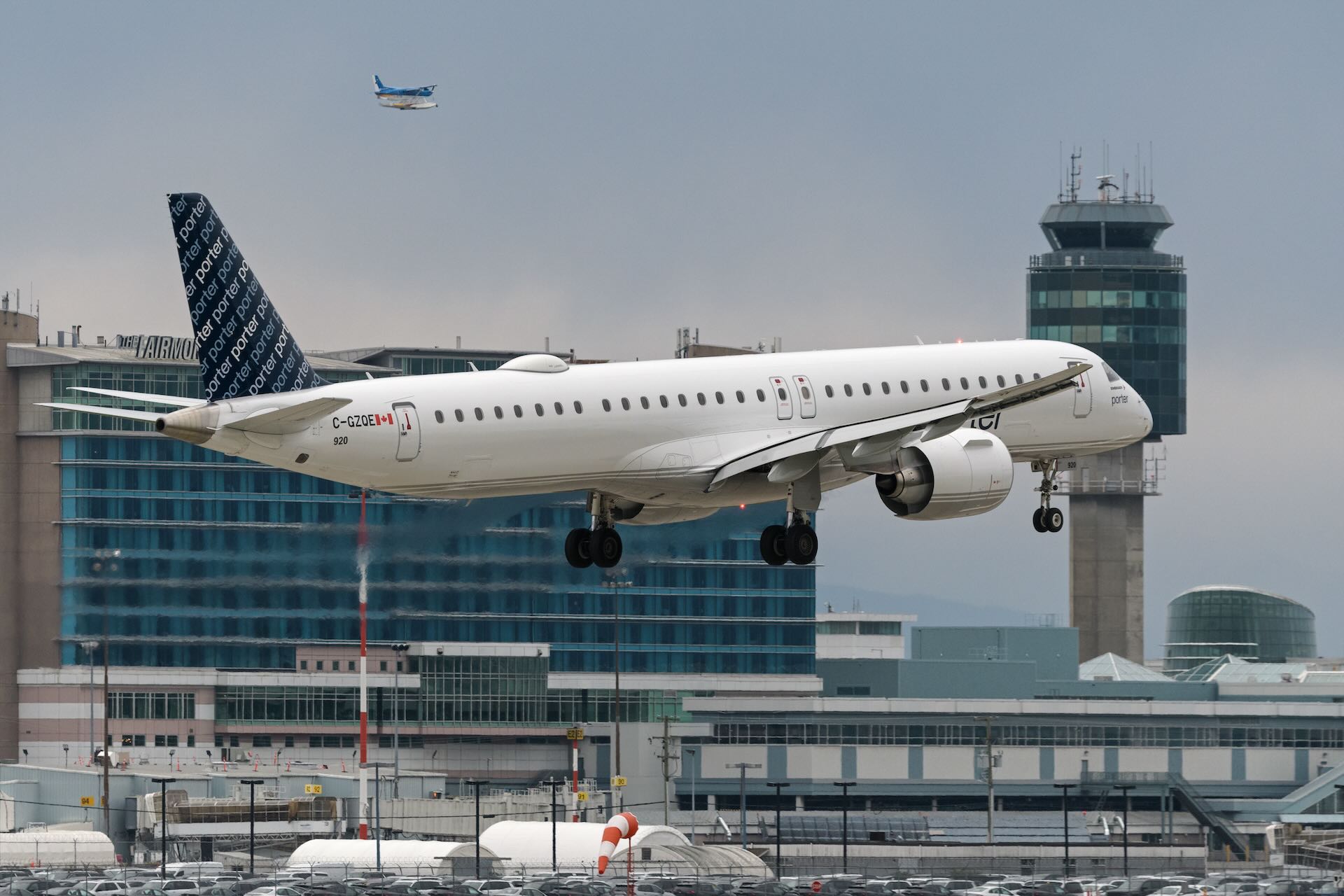
At the Canada Investment Summit last month, Prime Minister Mark Carney announced plans to privatize the major airports of Toronto, Vancouver, Montreal and Calgary. While the federal government will still own the airports, it plans to lease them to private investors instead of the non-profit organizations currently operating them. Private investors will in turn pay for the right to operate and collect profits from the airports.
Related Articles

While many of the details have yet to be announced, the prime minister has said the move will make Ottawa tens of billions of dollars for nation-building projects, lower travel costs and “improve passenger services.” But critics aren’t so sure; airlines and labour groups have opposed the move, citing concerns about workers’ job security and wages, as well as rising costs for travellers.
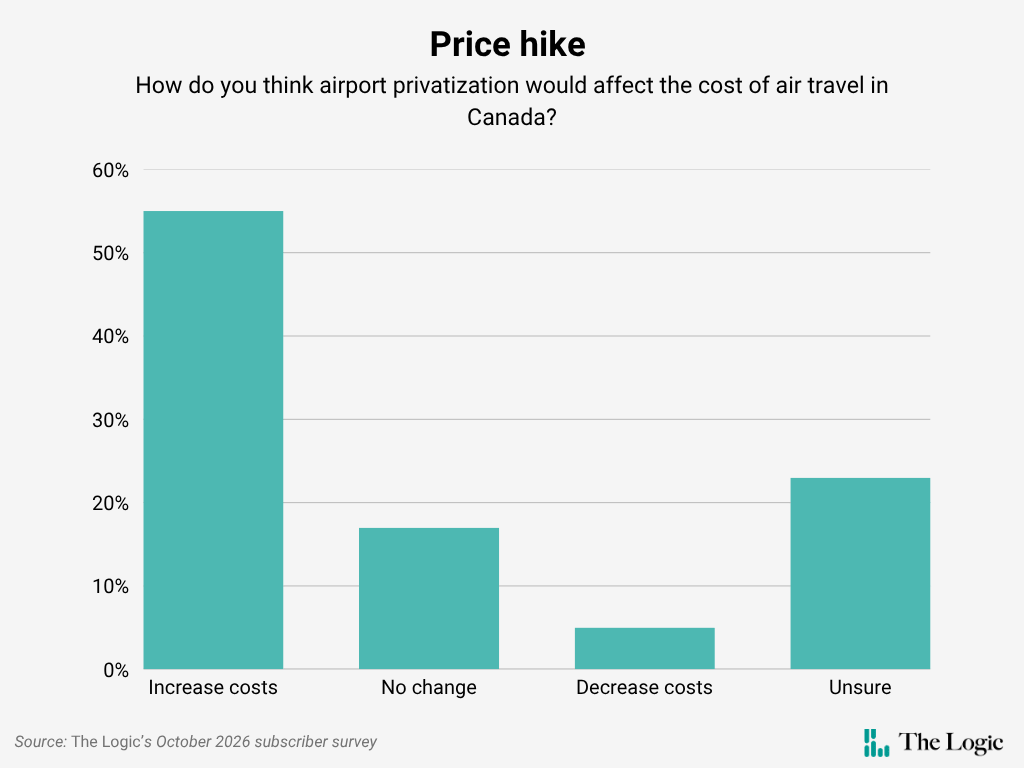
Fifty-five per cent of survey respondents said airport privatization would increase the cost of travel in Canada, while 23 per cent were unsure about its impact on prices. Only 5 per cent said it would decrease costs.
Many respondents said private investors would be motivated to generate returns, which one reader said “would come from travellers, either indirectly or directly.”
“Privatization implies somewhere, somehow, profit has to be made, not for the airport but for investors,” said one respondent, while another said they suspect the “profit motive likely outweighs potential efficiencies.”
But some readers said the higher price tag could be worth it: “There might be more services that come with the higher costs, thus the values stay the same,” one said.
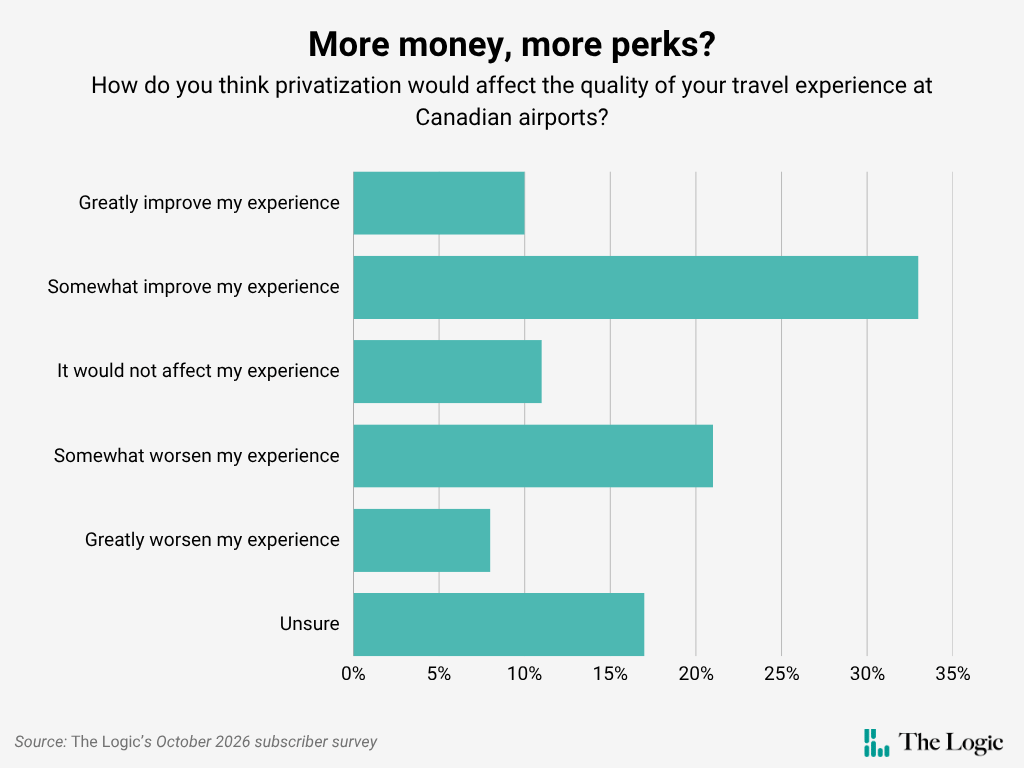
In fact, 43 per cent of respondents said privatization would likely improve the quality of their travel experience at Canadian airports, even if they are paying more for it. (Forty-eight per cent of respondents said their experience at Canadian airports is already “somewhat good.”) Several readers said more investment means airport hubs could expand their operations and become more efficient.
“If it does result in better services then I am okay paying,” another said. “If the government just uses it as an alternative way to tax Canadians then I am skeptical.”
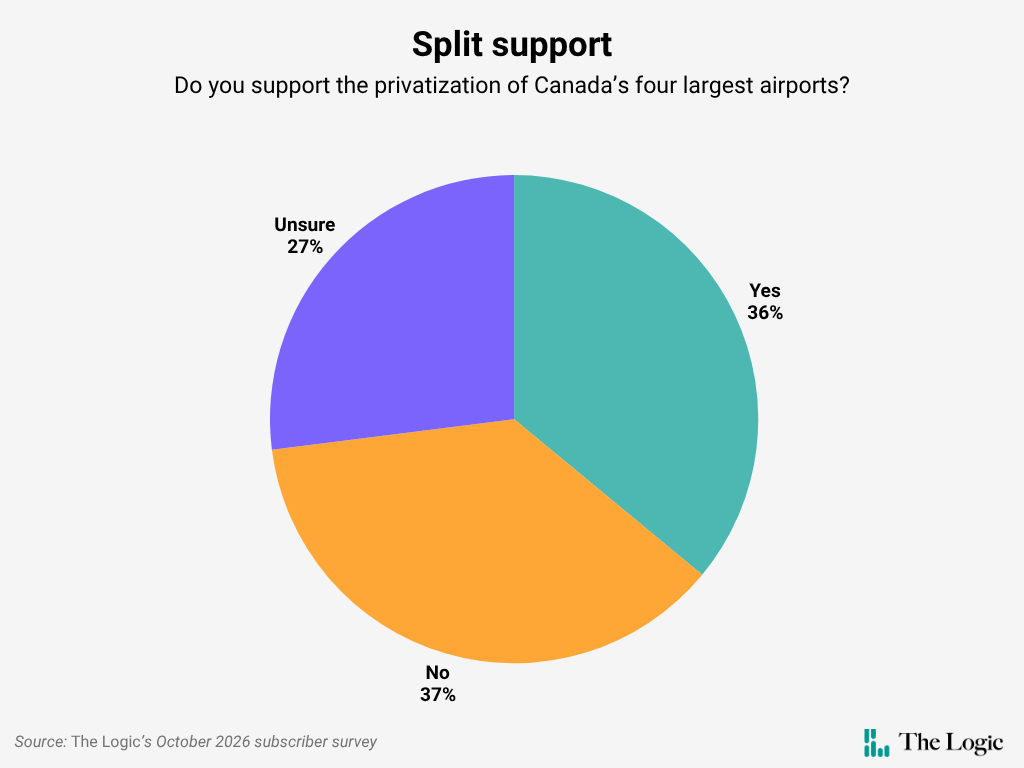
Readers were almost evenly split on their support for the privatization of Canada’s four largest airports, with 36 per cent for and 37 per cent against. Twenty-seven per cent remained unsure.
“Airports are captive markets that do not benefit from the competition of private companies,” said one reader. “Instead, it encourages cost-cutting, diminished services and rent-seeking.”
Those who supported the effort cited its potential for national fundraising: “It’s a low-hanging fruit initiative that both raises capital for Canada and also invigorates more competitive, innovative and client-focused operations,” said one subscriber.
Many readers said their support of the plan depended on the details. Several said they would only support Canadian investors—and especially not U.S. companies—running the airports. A few said they would support the privatization of the “least well-managed” airports, naming Toronto Pearson or Montreal Trudeau International, but worried privatization could get in the way of Vancouver International Airport and others they thought were already doing okay.
Several readers said their experience at private airports overseas was mixed. One reader said the retail side of private airports in Europe was “much improved,” but they weren’t sure about airport operations. Another respondent said there were several “passenger experience-enhancing” services in Turkey’s Istanbul airport, like separate levels for deplaning and boarding.
Many readers were still skeptical, though. “Service would have to improve dramatically to justify fee increases,” said one. “I’ve never had an experience where privatization has improved the experience,” said another.
Thirty-four per cent of respondents said they don’t support infrastructure privatization as a way to raise public funds, generally speaking, while almost 30 per cent of respondents said they do. Twenty-eight per cent said they somewhat supported the practice, also known as “asset recycling,” when governments make revenue from existing infrastructure like highways.
Several readers said the Greater Toronto Area’s Highway 407, a toll road opened in 1997 and leased to a private consortium shortly after, is an example of privatization gone wrong.
“Public funds built the truck bypass, but then it was handed over to private interests that use it as an express lane for a few willing to pay while the rest of us are swamped in truck traffic,” said one reader. “There’s just no credible explanation of how some private company is going to do better once they’re in what is basically a monopoly provider position able to hold us hostage.”
Several respondents said they were also skeptical of the airport privatization having proper oversight.
“Canadian travellers already pay substantial airport fees, and a for-profit operator would need to generate returns for investors in addition to covering operating costs, maintenance and infrastructure improvements,” one respondent said. “Without strong pricing regulations, those additional financial expectations could be passed on to airlines and passengers.”
“For-profit, privately-run airport operations depend on [a] strong legislative structure and competitive market,” said another reader. “Many of the factors don’t exist in Canada.”