MONTREAL — It was a hot-as-hell day last summer in a cramped minivan somewhere in the Saguenay, and Pierre Fitzgibbon was lamenting cheap electricity. As we drove, the province’s innovation minister told me how nearly a quarter century of inexpensive kilowatts had turned Quebecers into wastrels. People who use (woefully inefficient) baseboard heaters? “Bolsheviks” addicted to nationalized electricity, Fitzgibbon said, before riffing on the supposedly limited mental capacities of those who heat solely with electricity.
Skip to content
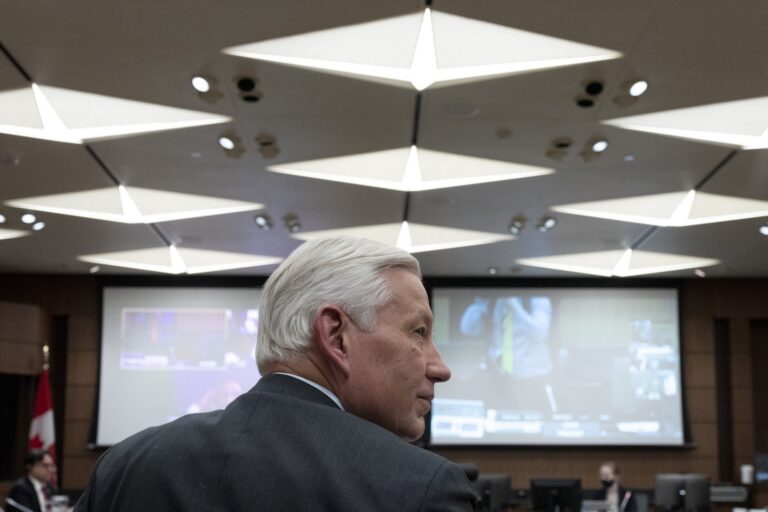
 Quebec’s Finance Minister Pierre Fitzgibbon at the World Trade Centre in Montreal, in July 2023. Photo: Andrej Ivanov for The Logic

Commentary: Quebec Ink
Quebec turns the page on dirt-cheap energy
A new bill proposes to raise the province’s rock-bottom electricity rates. It’s a responsible use of power—in more ways than one
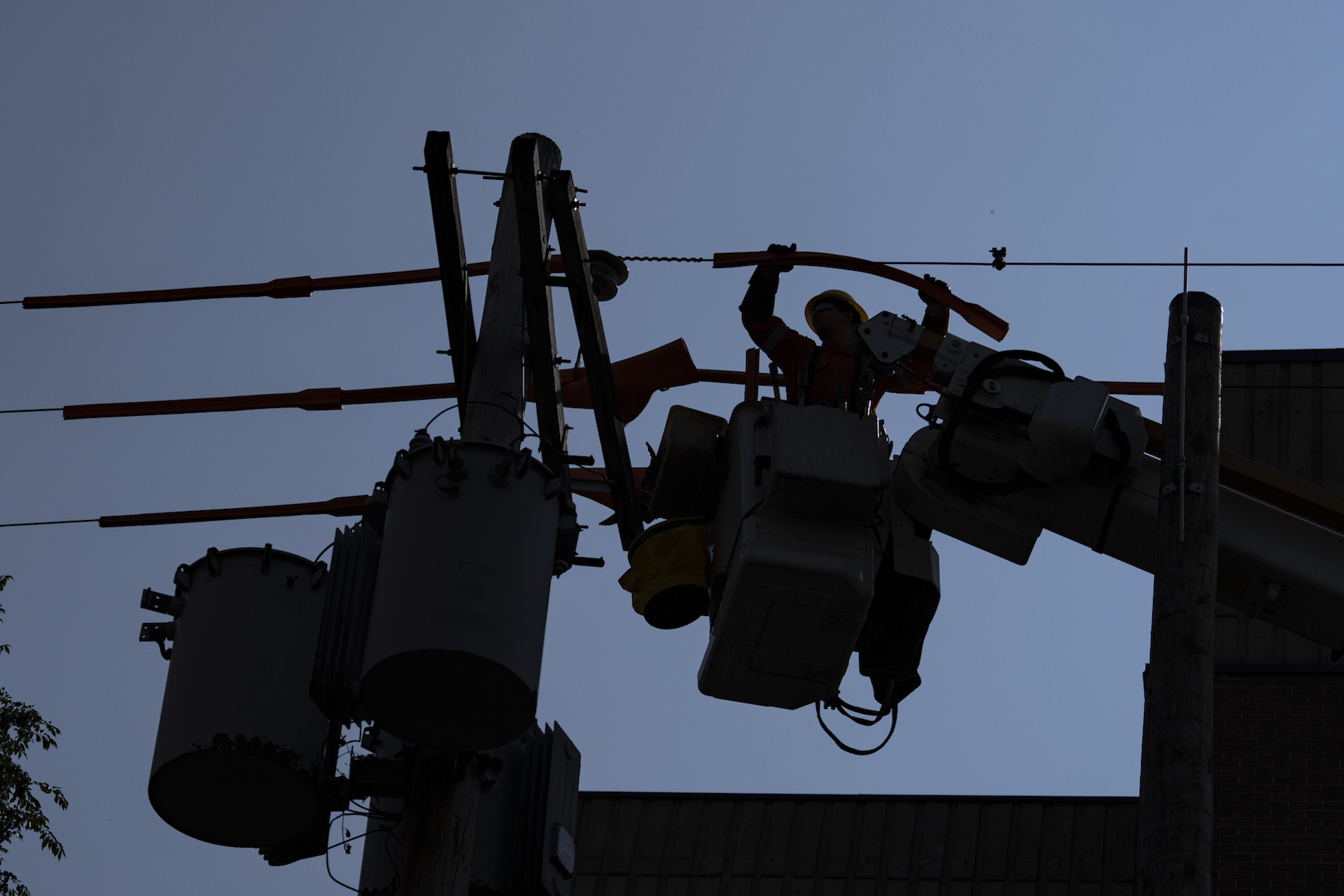
Hydro-Québec workers change a line in a residential neighbourhood in Montreal, in September 2023. Photo: The Canadian Press/Christinne Muschi
MONTREAL — It was a hot-as-hell day last summer in a cramped minivan somewhere in the Saguenay, and Pierre Fitzgibbon was lamenting cheap electricity. As we drove, the province’s innovation minister told me how nearly a quarter century of inexpensive kilowatts had turned Quebecers into wastrels. People who use (woefully inefficient) baseboard heaters? “Bolsheviks” addicted to nationalized electricity, Fitzgibbon said, before riffing on the supposedly limited mental capacities of those who heat solely with electricity.
His solution: increase electricity rates to something comparable to the rest of the industrialized world, with a carve-out for lower-income households. But this wasn’t going to happen, as it would mean slaying the most sacred of Québécois cows: the right to power at bargain-basement prices. “Politically, you just can’t do it,” he told me.
Related Articles

It took about a year for Fitzgibbon to prove himself wrong. He recently tabled a bill whose mouthful of a name—”An act to ensure the responsible governance of energy resources and to amend various legislative provisions”—gives little hint of the startling precedent within. For residents, it formalizes the peak pricing of electricity, with a financial assistance program for those who need it. Quebec industries, meanwhile, will see their rates not only increased but indexed to inflation.
None of this will sound revolutionary to people in other corners of the country. Ontario, for one, has had some form of variable rate pricing for decades. What’s more, the Quebec residential rate increase is capped at three per cent until at least April 2026—and possibly until 2035, according to Hydro-Québec CEO Michael Sabia—meaning that even with this bump Quebecers will be paying a little over a third what put-upon Ontarians fork out at peak times. Quebec’s industrial rates, meanwhile, are just over half the Canadian average.
So Fitzgibbon’s proposed law is testament to how, when one is murdering sacred cows, it’s important to do so slowly. Still, should it become law, it will mark one of the biggest changes in Hydro-Québec’s scope and operation since the province first nationalized electricity production over 60 years ago. Dynamic pricing “could drastically change [Quebec’s] consumption profile if it is well designed,” Pierre-Olivier Pineau, an HEC Montréal professor who studies the energy industry, told me.
I’ve written before about the side effects of cheap residential power. It has spurred the construction of detached homes, to the detriment of more efficient housing, and made the province largely repellent to solar electricity generation. Some of the most effective ways to fight climate change are the low-tech methods of changing windows and blowing insulation into walls. In Quebec, it’s hardly worth the effort.
But Quebec’s long-standing habit of luring industry with cheap electricity is arguably worse. Consider aluminum production. Ten of the country’s 11 aluminum smelters and refineries are in the province thanks to this practice.
Coincidentally or not, the industry has hardly evolved since its rapid expansion in Quebec began in the 1940s. Despite its reputation as a high-tech metal, the often dirty and energy-intensive process of producing aluminum has hardly changed in 120 years—though Apple is trying its best. Not coincidentally, the province’s present-day aluminum industry is a powerful, lobbyist-heavy, tax-avoiding behemoth that gobbles up anywhere from 12 to 20 per cent of the province’s electricity.
(To soften the blow for aluminum and other thirsty industries, Fitzgibbon’s bill allows for private electricity generation—another significant precedent in a province that has long demonized the concept.)
Subsidizing heavy industry might have been acceptable when Hydro-Québec was swimming in surpluses. Now, as those surpluses dwindle, it seems downright obscene.
“The new oil” is a term used to describe everything from smartphone semiconductors to the data coursing through ethereal clouds. If so, then electricity—the clean stuff keeping my computer alive as I write—is the new oil’s new oil. It is a crucial part of getting gasoline-powered cars off roads, oil-burning furnaces out of cellars and carbon out of electricity grids. It is high time Hydro-Québec stopped peddling the stuff on the cheap, as it has practically since the utility’s inception.
For some, it isn’t happening fast enough. Pineau thinks Fitzgibbon’s bill is too timid a step towards true energy responsibility. Capping rate increases at three per cent shows “the government doesn’t seem to want to impose anything truly transformative,” he told me. “It’s like we’re afraid of upsetting the voters.”
He has a point: three per cent ain’t much. But just over a year ago the minister in charge thought the very concept wasn’t possible, and here we are. If anything, it shows that precedent matters, particularly in a province where sacred cows die hard.
Martin Patriquin is The Logic’s Quebec correspondent. He joined in 2019 after 10 years as Quebec bureau chief for Maclean’s. A National Magazine Award and SABEW winner, he has written for The New York Times, The Guardian, The Walrus, Vice, BuzzFeed and The Globe and Mail, among others. He is also a panelist on CBC’s “Power & Politics.”



Loading...
Thanks for sharing!
You have shared 5 articles this month and reached the maximum amount of shares available.
CloseThis account has reached its share limit.
If you would like to purchase a sharing license please contact The Logic support at [email protected].
CloseGift the full article!
You have gifted 0 article(s) this month and have 5 remaining.
Recipients will be able to read the full text of the article after submitting their email address. They will not have access to other articles or subscriber benefits.
Photo: The Canadian Press/Christinne Muschi
Quebec’s Finance Minister Pierre Fitzgibbon at the World Trade Centre in Montreal, in July 2023.
Most Popular This Week



In-depth, agenda-setting reporting
Great journalism delivered straight to your inbox.
News
EDC wants to help sell the full stack of Canadian technology abroad
Briefing
First Nations object to Bell’s Saskatchewan data-centre plans
Oilpatch profits surged 68%, outpacing spending
SEC warns asset managers against co-ordinating activist campaigns
Best business newsletter in Canada
Get up to speed in minutes with insights and analysis on the most important stories of the day, every weekday.
Exclusive events
See the bigger picture with reporters and industry experts in subscriber-exclusive events.
Membership in The Logic Council
Membership provides access to our popular Slack channel, participation in subscriber surveys and invitations to exclusive events with our journalists and special guests.





