Michael Sabia’s tenure in the upper echelons of the federal government is remarkable in part for how long he lasted. Or didn’t last. Paul Rochon, the guy Sabia replaced as deputy finance minister in 2020, had the job for six years. Sabia didn’t even manage three. He logged less than a year in his previous gig as director of the University of Toronto’s Munk School. Most people slow down in their golden years. Sabia, who will turn 70 this year, has instead been struck with professional wanderlust.
Skip to content


Commentary: Quebec Ink
It’ll take a lot of power to fix Hydro-Québec. Enter Michael Sabia.
Few have more experience remaking monolithic Montreal-based corporate institutions
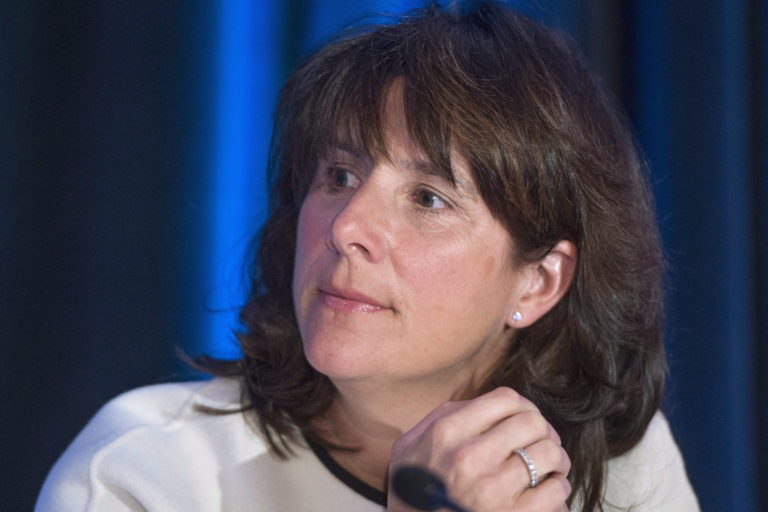
Michael Sabia at a press conference in Ottawa in October 2020. Photo: The Canadian Press/Sean Kilpatrick
Michael Sabia’s tenure in the upper echelons of the federal government is remarkable in part for how long he lasted. Or didn’t last. Paul Rochon, the guy Sabia replaced as deputy finance minister in 2020, had the job for six years. Sabia didn’t even manage three. He logged less than a year in his previous gig as director of the University of Toronto’s Munk School. Most people slow down in their golden years. Sabia, who will turn 70 this year, has instead been struck with professional wanderlust.
His itchy feet, we now know, have carried him to the helm of Hydro-Québec. It is the second of Quebec’s jealously guarded, vastly profitable public institutions to be led by the mercurial mandarin, the first being the Caisse de dépôt et placement, the province’s pension fund manager.
At the Caisse, Sabia quoted Austrian economist Joseph Schumpeter on the delights of creative destruction, put the staff through turnover-inducing paces and otherwise pulled the place from its post-crash doldrums, when his predecessor’s ill-advised bet on commercial paper resulted in a $40-billion loss in 2008.
In this regard, Sabia’s Hydro-Québec mandate will be easier. The place is, in a word, flush. It netted just over $4.5 billion in 2022, thanks in large part to electricity exports, and handed a $3.42-billion dividend cheque to the Quebec government. For context, this is almost exactly what Premier François Legault’s cost-of-living cheques cost the Quebec treasury when the province doled them out last November, fulfilling a campaign promise. Handy things, those government monopolies, when politicians are feeling spendy.
Related Articles
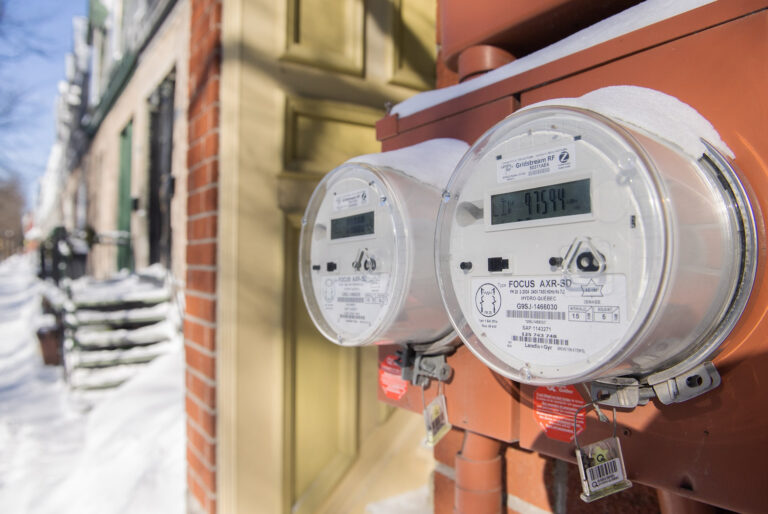
In other ways, though, the gig will be more difficult, and to understand why you have to consider the conflicting forces bearing down on the public utility over the last several years. First, there’s pressure from above: the current government wants to keep attracting and furnishing energy-intensive industries with cheap power, while simultaneously selling electricity to the likes of New Brunswick, Ontario and the New England states at higher rates than those coveted industries pay.
Hydro-Québec is also the self-professed engine powering the province’s decarbonization and electrification efforts; the juice behind its fledgling EV battery sector; and the giver of the manna that turns Quebec-produced hydrogen green. Quebecers, meanwhile, have their right to cheap power written into law. It has turned us into energy wastrels as a result.
And supply has peaked, even as these various demands have taxed Hydro’s network. For more than a half-century, the utility has sucked cheap power from Newfoundland’s Churchill Falls, thanks to an absurdly lopsided deal signed in Our Year of Woodstock. To be polite—many justifiably aren’t—Newfoundland and Labrador isn’t keen to repeat the mistake in 2041, when the deal expires.
Building dams, meanwhile, has never been a particularly easy affair. Doing so in 2023, in an era of heightened awareness of their environmental harms and the resulting, often-vociferous opposition from Indigenous communities, is damn near impossible. With supply throttled, the utility expects to cease running electricity surpluses in 2027, and will find itself in a 6.9-terawatt-hour hole by 2029.
All of which is to say that, at first glance, Hydro-Québec is a strange landing place for Sabia—who has dabbled in railways, telecom, pension funds and high finance, but not electricity. “My initial impression was that his appointment was stupid,” energy consultant Benoit Marcoux, who has worked with Hydro-Québec, told me.
But Marcoux thought about it some more and came to a different conclusion. His reasoning is instructive. Sabia’s first legacy-defining job was at the telecom then known as BCE, which at the time was much as Hydro-Québec is now: a hulking monolith that delivered its wares via utility pole. Once installed, Sabia righted the joint’s finances, in large part by reversing his predecessor’s diversification attempts and focusing instead on the humble wireless telephone. He laid off a bunch of people and grew revenues before leaving with a hefty severance cheque in his back pocket.
If cutting fat and wringing out profits are your thing, 2023-era Hydro-Québec is an enticing place to be. Over the last several years, the utility has moved into things like battery storage, smart thermostats, fleet charging and the like. Some of these initiatives have gone OK. Others—Hilo, its smart thermostat subsidiary, comes to mind—have been disappointments. The number of Hydro-Québec employees grew by 11 per cent, to 22,000, between 2016 and 2022. So Sabia has what you might call a target-rich environment if he plays to type and brings Hydro back to its core function of generating electricity and delivering it to customers.
Which brings us to the utility’s existential problem of increasing supply. Last week, the Quebec government floated the idea of allowing private dams to supply Hydro’s grid. It is, as far as I can remember, the first time a government has suggested as much. Privatization is anathema to Hydro-Québec’s raison d’être; the utility was born of resentment towards the private companies who got rich by charging exorbitant energy prices. Yet the P-word was on Innovation Minister Pierre Fitzgibbon’s lips just as the province was digesting the news of Sabia’s appointment.
Sabia: the man who rebuilt Montreal-based BCE, remade the Montreal-based Caisse—and, as it happens, once privatized a Montreal-based national rail company. Strange coincidence, that.
Martin Patriquin is The Logic’s Quebec correspondent. He joined in 2019 after 10 years as Quebec bureau chief for Maclean’s. A National Magazine Award and SABEW winner, he has written for The New York Times, The Guardian, The Walrus, Vice, BuzzFeed and The Globe and Mail, among others. He is also a panelist on CBC’s “Power & Politics.” @MartinPatriquin



Loading...
Thanks for sharing!
You have shared 5 articles this month and reached the maximum amount of shares available.
CloseThis account has reached its share limit.
If you would like to purchase a sharing license please contact The Logic support at [email protected].
CloseGift the full article!
You have gifted 0 article(s) this month and have 5 remaining.
Recipients will be able to read the full text of the article after submitting their email address. They will not have access to other articles or subscriber benefits.
Photo: The Canadian Press/Sean Kilpatrick
Most Popular This Week




In-depth, agenda-setting reporting
Great journalism delivered straight to your inbox.
Commentary
Carmichael: Canadian ignorance about India is a strategic weakness
Briefing
Aritzia shares pop after earnings rise 204%
First Nation in Alberta goes to court over fast-tracked oil pipeline
Chinese EV maker Geely Auto Group to launch in Canadian market in 2027
Best business newsletter in Canada
Get up to speed in minutes with insights and analysis on the most important stories of the day, every weekday.
Exclusive events
See the bigger picture with reporters and industry experts in subscriber-exclusive events.
Membership in The Logic Council
Membership provides access to our popular Slack channel, participation in subscriber surveys and invitations to exclusive events with our journalists and special guests.





