MONTREAL — Sophie Brochu’s recent resignation as president of Hydro-Québec has been described as a loss for all Quebecers and a win for the coterie of powerful men who govern the province. Brochu herself was courageous to leave or woefully negligent of her own legacy, depending on whom you were reading, while her premature exodus was a sign of Hydro-Québec’s corporate myopia, if not a full-blown existential crisis. That Brochu so quickly became a collective Rorschach test for Quebec’s chattering class simply by quitting speaks to this province’s abiding obsession with its public utility—and the person charged with directing the more than 37 gigawatts coursing through its network.
Skip to content


Commentary: Quebec Ink
Sophie Brochu, and the truth about Quebec’s new power structure
The outgoing Hydro-Québec CEO warned against becoming the ‘Dollarama’ of utilities
Sophie Brochu, the outgoing CEO of Hydro-Québec, at a meeting in Montreal in 2016. Photo: Paul Chiasson/The Canadian Press
MONTREAL — Sophie Brochu’s recent resignation as president of Hydro-Québec has been described as a loss for all Quebecers and a win for the coterie of powerful men who govern the province. Brochu herself was courageous to leave or woefully negligent of her own legacy, depending on whom you were reading, while her premature exodus was a sign of Hydro-Québec’s corporate myopia, if not a full-blown existential crisis. That Brochu so quickly became a collective Rorschach test for Quebec’s chattering class simply by quitting speaks to this province’s abiding obsession with its public utility—and the person charged with directing the more than 37 gigawatts coursing through its network.
In a big-picture sense, Brochu’s dash for the exit—she will officially leave the company in April, three years into a five-year mandate—barely registers as a blip. In 2021, her first full year on the job, Hydro-Québec wrung more than $3.5 billion in net income from those 37 gigawatts. The utility brought in more than this in the first nine months of 2022, blowing past its own projections in the process. Regardless of who is steering the ship, Hydro-Québec is testament to how a government-bequeathed monopoly of an in-demand product is generally a profitable endeavour, often absurdly so. (Quebec’s liquor, lottery and cannabis monopolies further underscore this axiom, though to a far lesser degree.)
Yet when Brochu arrived in 2020, Hydro-Québec was already a vastly different enterprise than even five years earlier. In 2016, then-CEO Éric Martel launched a strategic plan to double the utility’s revenues in 15 years, essentially by building more dams and transmission lines, and through more commercialization of Hydro-Québec’s intellectual property.
Related Articles


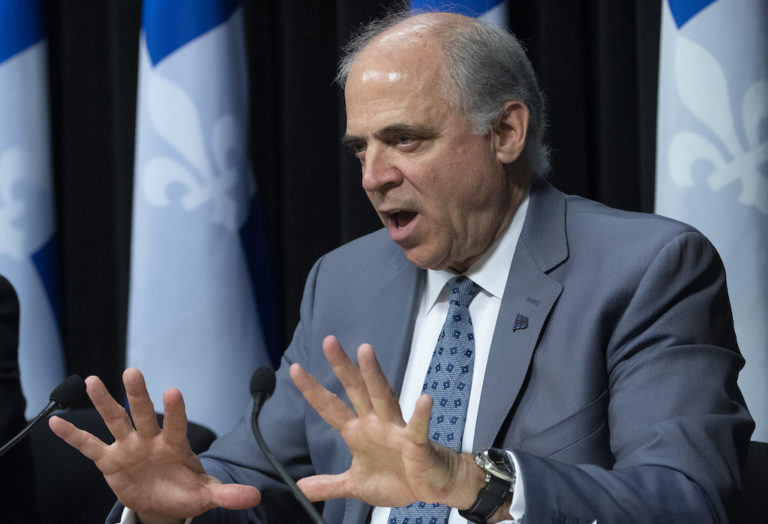
Premier François Legault and his Coalition Avenir Québec government have expanded on this ambition since winning the 2018 election, pitching Hydro-Québec as everything from “the green battery of northeastern America” to a crucial balm for energy markets overstressed by the war in Ukraine. The Legault government has further sought to isolate and diminish the province’s energy oversight body, if only to have more control over electricity prices—and harvest the boffo political capital earned by dolling out electrons at bargain basement prices. Brochu’s mistake, if you can call it that, was to stand in the way.
Quebec electricity is cheap—about five times less than what the residents of San Francisco pay and four times less than rates big industry pays in Boston, by HQ’s own calculations. Hydro-Québec offers this power to industries it would like to attract to the province, as well as residential and commercial markets linked to its network. Its business case to the continent at large, as pitched by the province’s economy and innovation minister, Pierre Fitzgibbon, is a cocktail of legacy contracts guaranteeing cheap power for energy-intensive customers like aluminum smelters, along with agreements to transform minerals mined in Quebec—another industry heavily dependent on Hydro’s discounted wares.
An example of the success of the latter gambit lies roughly 150 kilometers northeast of Montreal in the town of Bécancour, where the likes of POSCO, GM and BASF announced EV battery-production, -assembly and -recycling projects in 2022. Yet Brochu was at best lukewarm on the government’s cheap-power strategy, telling The Globe and Mail that Hydro-Québec shouldn’t be the “Dollarama” of utilities. “Brochu’s point is really to say, ‘We have very, very high-value electricity. It’s worth a lot, so let’s not give it away cheaply,” as Hydro-Québec consultant Benoit Marcoux told me recently.
Along with questioning the wisdom of selling power on the cheap, Brochu was given to attacking another sacred cow: the perceived right of Quebecers to be wastrels with the province’s bounty. Martel’s motto might have been “Dam, baby, dam.” Brochu’s was more, “Turn off the lights and maybe don’t heat the hot tub in winter.”
Her energetic parsimony has a precedent. As CEO of Énergir, the province’s natural-gas distributor, Brochu led an initiative to sell 70 per cent less gas to consumers by 2037, and to get out of excavated natural gas completely by 2050, in favour of hydrogen and renewable natural gas. “For Sophie, it was pretty clear that the gas network had reached maturity,” Énergir spokesperson Catherine Houde told me.
At Hydro-Québec, Brochu also hacked away at the corporate-governance structure, long criticized as opaque and utterly cozy with the government of the day. In February 2021, she merged the utility’s three divisions, eliminating three president positions in the process. One of those presidents, offered the lesser title of executive vice-president, promptly quit.
Martin Fassier, an entrepreneur who saw the Martel-era Hydro-Québec effectively bigfoot his cleantech startup out of existence, said there’d been a marked change under Brochu. “Sophie was the best person to address the rot that had taken hold of Hydro-Québec’s higher branches, and she had started to address it,” he told me.
Legault hasn’t shown much enthusiasm to continue this corporate cleansing. If anything, he has ensured that Hydro-Québec is that much closer to the governmental bosom. Thanks to a law passed in 2019, the government effectively sidelined the Régie de l’énergie, the arm’s-length body charged with setting electricity rates. The effect is to give the government more latitude to raise and lower the price of electricity as it desires. “Now, the rates will have to be decided in the premier’s office,” Marcoux told me.
Finally, there’s Fitzgibbon. The minister has shown himself to be near-invincible, having strolled through five ethics investigations (and had his shoes soiled with a sixth) with his job intact. In fact, he seems to grow stronger with every ethical skirmish. In October, days before the fifth such investigation, Legault added energy to Fitzgibbon’s portfolio. Brochu threatened to leave her position if the government rushed big-ticket, hydropower-heavy projects through. She announced her intention to leave not three months later. Perhaps she realized what had become increasingly obvious in the interim: Fitzgibbon is bulletproof. She isn’t.
Martin Patriquin is The Logic’s Quebec correspondent. He joined in 2019 after 10 years as Quebec bureau chief for Maclean’s. A National Magazine Award and SABEW winner, he has written for The New York Times, The Guardian, The Walrus, Vice, BuzzFeed and The Globe and Mail, among others. He is also a panelist on CBC’s “Power & Politics.” @MartinPatriquin



Loading...
Thanks for sharing!
You have shared 5 articles this month and reached the maximum amount of shares available.
CloseThis account has reached its share limit.
If you would like to purchase a sharing license please contact The Logic support at [email protected].
CloseGift the full article!
You have gifted 0 article(s) this month and have 5 remaining.
Recipients will be able to read the full text of the article after submitting their email address. They will not have access to other articles or subscriber benefits.
Photo: Paul Chiasson/The Canadian Press
Most Popular This Week




In-depth, agenda-setting reporting
Great journalism delivered straight to your inbox.
News
Panel decries Canada’s chaotic way of funding world-class science
Briefing
Feds pledge $15M for U.S. satellite navigation company Xona to expand in Montreal
Inovia raises US$200M for new VC fund as it eyes AI’s impact
43% of eligible Albertans voted ahead of Monday’s referendum
Best business newsletter in Canada
Get up to speed in minutes with insights and analysis on the most important stories of the day, every weekday.
Exclusive events
See the bigger picture with reporters and industry experts in subscriber-exclusive events.
Membership in The Logic Council
Membership provides access to our popular Slack channel, participation in subscriber surveys and invitations to exclusive events with our journalists and special guests.





