MONTREAL—In Quebec, cheap electricity is a birthright rooted in history. And while this bounty of kilowatts has helped develop industry and burnish the province’s green bona fides, it has turned Quebecers themselves into entitled energy hogs who have effectively stifled carbon reduction and deprived the state of billions in revenues.
Skip to content


Commentary: Quebec Ink
The heat is on in Quebec, but not to save energy
We won’t uphold our promise to be the ‘green battery of the northeast’ if we keep wasting our own power
Electricity meters outside of a Montreal home, February 2023. Photo: The Canadian Press/Graham Hughes
MONTREAL—In Quebec, cheap electricity is a birthright rooted in history. And while this bounty of kilowatts has helped develop industry and burnish the province’s green bona fides, it has turned Quebecers themselves into entitled energy hogs who have effectively stifled carbon reduction and deprived the state of billions in revenues.
Consider this: the average Quebecer uses nearly 30 per cent more energy to exist than the equivalent Norwegian—even though that Norwegian lives in a similar climate and, in being far wealthier on average, is given to consuming more.
The main reason behind this wee factoid, from HEC Montréal professor Pierre-Olivier Pineau’s recent book, L’équilibre énergétique (or Energy Balance), is price. In the pre-COVID, pre-Ukraine invasion year of 2019, Norway sold its abundant hydroelectricity to residential customers for about 28 cents a kilowatt hour. Hydro-Québec’s government-mandated price is less than one quarter of that amount. As a result, Norwegians treat the stuff for what it is: a valuable commodity. In Quebec, it’s like the air we breathe.
In L’équilibre énergétique, Pineau parses the legacy of cheap power and finds one main offender: housing. In 2000, the Quebec government introduced a “heritage pool” of electricity that guaranteed inexpensive power to Quebec households. Quebecers responded in kind; between 2000 and 2018, the number of detached homes in the province grew by 26 per cent, while the population grew only by 14 per cent. (The number of apartments, which are exponentially less expensive to heat, grew by 15 per cent.)
What’s more, as Pineau explained to me recently, Quebec’s existing housing stock remains inefficient and prone to leaking energy, if only because cheap power makes changing windows and insulating walls pricey acts of virtue largely reserved for well-meaning greenies. “The residential sector has no financial incentive to consume better,” Pineau told me.
Related Articles

Present company included. I live in a house built around the time the Queen mum was in nappies. Insulation, such as it is, mostly consists of newspapers and soot. Strong winds make themselves known in the street-facing bedrooms. Every December, a draft takes up residence in the living room like a cold ghost, where it stays until spring.
Yet the cost of keeping this heat-bleeding, semi-detached pile warm is almost laughable, especially with the addition of a thermo pump, which makes that ghost bearable in winter and can turn the cat into a near-popsicle in the summer. Yes, I should insulate, but at less than seven cents a kilowatt hour, it’s easier to rely on newspapers and soot.
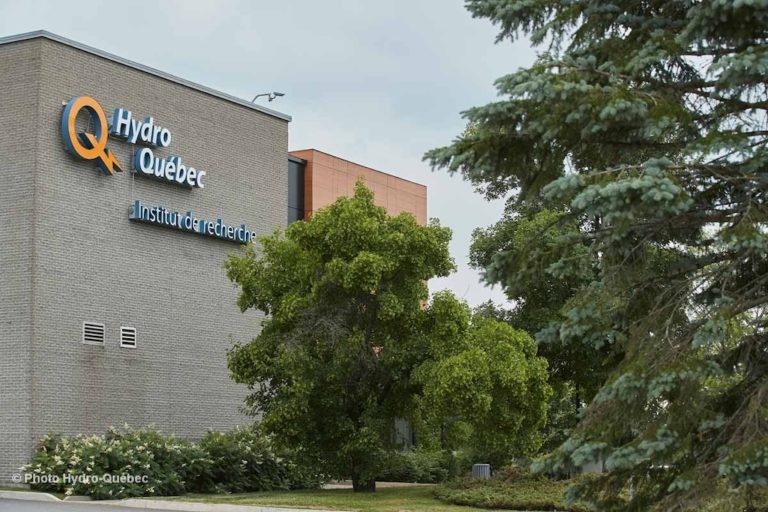
To be fair, Quebecers’ collective expectation of cheap power isn’t just a matter of economics. Hydro-Québec may be seen outside the province as a humdrum public utility, but here the stylized Q—an O with a thunderbolt squiggle—is an iconic symbol.
Hydro-Québec’s power lines and 61 mostly farflung hydroelectric stations serve as reminders of how the Quebec government smashed a private monopoly on electrical production, whose bosses spoke English and charged exorbitant rates, to become part of the landscape. It’s no coincidence that “Maîtres chez nous” (“masters of our own house”), a Liberal campaign slogan in the 1962 Quebec election, often appeared below an image of thunderbolts clenched in a fist. Quebec was marching into the future, fueled by electricity of its own making.
The trouble is, we’ve marched straight into complacency, so much so that we complain wildly when anyone says we should pay more. In a 2021 report, Hydro-Québec estimated the province could save nearly 25 GWh—three times that of its Romaine generating station in the Côte-Nord region, Pineau said—by 2030, in part through large-scale residential retrofitting.
Yet the last Hydro-Québec president to suggest Quebecers practice energy sobriety didn’t fare very well. Hilo, the utility’s smart thermostat project launched in 2019 to curb electrical appetites, has so far been a bust. And when economic minister Pierre Fitzgibbon floated the idea of dynamic pricing, which would make electricity more expensive at peak hours, one of his main political opponents accused him of forcing Quebecers to choose between “using their dryer or dishwasher at midnight.”
There is a sizable cost to all this cheap power. Every kilowatt hour pumped into my drafty abode is one Quebec can’t sell to outside customers for considerably more. Pineau pegs the cost of this de facto subsidy to Quebecers at $3 billion every year.
There’s another cost as well. Premier François Legault has said he wants Quebec to be the “green battery of the northeast” by keeping the lights on in Maine, Massachusetts and New York, and using Quebec electricity to decarbonize the likes of hydrogen and aluminum production.
Yet Quebec doesn’t have the capacity to match the promises, in part because Quebecers waste so much of their own power. The proposed solution is to build more dams—a lot more. In a recent memo, Hydro-Québec estimated it would take 13 new large-scale dams to service all the proposed projects. The utility called this “unrealistic”, as does Pineau. Yet Legault is plowing ahead, saying he wants someone in “development mode” to occupy Hydro-Québec’s president’s office.
You can hardly blame him, in a way. Nothing gets a politician’s endorphins going like a legacy-defining mega project. Yet the billions in construction costs, not to mention the billions lost in subsidizing Quebecers’ overindulgence, show how decades of cheap electricity has come at a very steep price.
Martin Patriquin is The Logic’s Quebec correspondent. He joined in 2019 after 10 years as Quebec bureau chief for Maclean’s. A National Magazine Award and SABEW winner, he has written for The New York Times, The Guardian, The Walrus, Vice, BuzzFeed and The Globe and Mail, among others. He is also a panelist on CBC’s “Power & Politics.” @MartinPatriquin



Loading...
Thanks for sharing!
You have shared 5 articles this month and reached the maximum amount of shares available.
CloseThis account has reached its share limit.
If you would like to purchase a sharing license please contact The Logic support at [email protected].
CloseGift the full article!
You have gifted 0 article(s) this month and have 5 remaining.
Recipients will be able to read the full text of the article after submitting their email address. They will not have access to other articles or subscriber benefits.
Photo: The Canadian Press/Graham Hughes
Most Popular This Week




In-depth, agenda-setting reporting
Great journalism delivered straight to your inbox.
Commentary
Carmichael: Canadian ignorance about India is a strategic weakness
Briefing
Aritzia shares pop after earnings rise 204%
First Nation in Alberta goes to court over fast-tracked oil pipeline
Chinese EV maker Geely Auto Group to launch in Canadian market in 2027
Best business newsletter in Canada
Get up to speed in minutes with insights and analysis on the most important stories of the day, every weekday.
Exclusive events
See the bigger picture with reporters and industry experts in subscriber-exclusive events.
Membership in The Logic Council
Membership provides access to our popular Slack channel, participation in subscriber surveys and invitations to exclusive events with our journalists and special guests.





