Over the summer, Matthew Winkler, the former editor-in-chief of Bloomberg News, published a gushing review of Prime Minister Justin Trudeau’s handling of the economy. Among Winkler’s reasons was the observation that exports had increased 45 per cent since 2015, enough to qualify Canada as a “trade powerhouse.”
Skip to content

 RBC CEO Dave McKay warned the world is shifting from a rules-based order to a “power-based order.” Photo: The Canadian Press/Frank Gunn
Commentary
Carmichael: Some hard truths about ‘trade powerhouse’ Canada
The global order is shifting from rules-based to power-based. Can Ottawa keep up?
The Liberal government touts the statistic that Canadian exports are up 45 per cent since they took office in 2015. Photo: The Canadian Press/Darryl Dyck
Over the summer, Matthew Winkler, the former editor-in-chief of Bloomberg News, published a gushing review of Prime Minister Justin Trudeau’s handling of the economy. Among Winkler’s reasons was the observation that exports had increased 45 per cent since 2015, enough to qualify Canada as a “trade powerhouse.”
Liberals loved that line. Finance Minister Chrystia Freeland and Treasury Board President Anita Anand amplified the column on social media. “Another proof point that our economic plan is working and paying dividends,” Freeland tweeted.
Powerhouse? Depends on your definition. As Bank of Canada governor Tiff Macklem said in a speech earlier this month, trade as a share of Canada’s gross domestic product is second-highest in the G7 and fourth-highest in the G20. He also pointed out that growth in Canadian merchandise exports to the U.S. and the European Union has lagged economic growth in both those places since the end of the COVID-19 pandemic. That means we’re losing market share, even though we’re one of the few countries in the world that has preferential access to both markets.
A true powerhouse probably would do better, which is something policymakers ought to keep in mind as they embark on what could be the biggest overhaul of trade policy since Brian Mulroney’s government took a leap of faith and embraced duty-free trade with the U.S. in the 1980s.
Related Articles
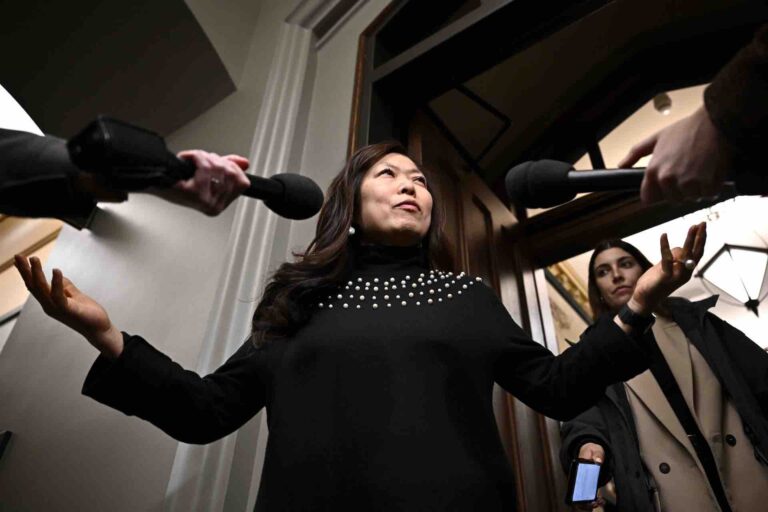
Public consultations on “potential new measures to advance and defend Canada’s economic security interests” ended this week, evidence that Ottawa is retooling its trade policy to navigate the global shift to what RBC chief executive Dave McKay calls a “power-based order,” after enjoying the benefits of a “rules-based order” for so long.
Globalization, guided by institutions such as the International Monetary Fund and the World Trade Organization, was good for Canada because there was less risk of ending up on the wrong side of Great Powers. Canadian negotiators were less susceptible to being bullied by Americans when their shared objective was a global trade deal and there were dozens of other significant players at the table.
But the Great Powers have thrown off those restraints. As we discuss what new measures will be required to compete in this power-based order, a frank self-assessment might also be helpful. When it comes to trade, we aren’t as good as we think we are.
With inflation back to normal, Macklem has more time for his unofficial role as the country’s chief economist. His remarks on trade are an example. He’s given us a more realistic baseline for a conversation about trade than a superficial assessment based on one chart. Canada has strengths, but lots of weaknesses too.
Maybe the most important thing Macklem’s speech did was show that we tend to think about trade the wrong way. Narratives that revolve around the exchange of bulk goods and consumer electronics are no longer relevant for a country like Canada. The growth is in services, which means a successful trade strategy will focus on tourism, international students and helping web-based service providers reach a global audience.
Yet the conversation is driven by narratives around the various demands of farmers, automobile makers and steel unions. Most commodities trade on global markets, which is why China’s tit-for-tat threat of tariffs on Canadian canola is more harassment than haymaker. China would end up sourcing the canola it was buying from Canada somewhere else, opening up new markets for Canadian farmers. It’s inefficient, but not disruptive.
Same for much of the stuff you buy from Amazon or at Canadian Tire. Asian goods have become so cheap, and supply chains so sophisticated, that a television is essentially a commodity. Economic gravity will dictate the trade patterns of such things. Global Affairs Canada’s annual State of Trade report observed that there is “little evidence” of Canadian and American companies “reshoring” production that moved overseas in the 1990s, despite the trade war between U.S. and China. Instead, production is relocating from China to countries such as Vietnam.
Again, inefficient. Macklem concluded his remarks with a warning that trade now will be a source of upward pressure on prices, a big change from the past few decades, when globalization was a deflationary force. But the world will continue to trade with itself. The system might even be more stable, since supply will be less dependent on conditions in China.
A greater emphasis on services doesn’t mean we abandon resources. The latter remains a Canadian competitive advantage, especially since the Great Power struggle is about access to critical minerals. Macklem recommends greater investment in trade infrastructure to ensure we can supply that demand. The Global Affairs report notes that the majority of goods we produce is delivered on roads that converge at a relatively small number of already congested ports and border crossings. That clearly needs greater attention. We won’t be a node in the electric vehicle supply chain if we can’t get stuff out of the country.
The challenge of crafting a new approach to trade will be leaving as many options open as possible. Macklem said Canada should continue to advocate for rules-based trade and strong multilateral institutions. It might already be too late for that. China is targeting Canadian canola because Ottawa quickly matched U.S. tariffs on Chinese electric vehicles.
It will be hard for Canada to remain an honest broker for open trade when it’s chosen a side. Maybe that’s just accepting reality. McKay told an audience in Toronto this month that “we have to figure out what the United States needs from us.”
But let’s be honest about what that means. If Canada’s trade ambitions are largely confined to North America, that’s not a trade powerhouse. That’s Michigan.
Kevin Carmichael is The Logic’s economics columnist and editor-at-large. He has spent more than two decades covering economics, business and finance for outlets including Bloomberg News, The Globe and Mail and the Financial Post, where he also served as editor-in-chief.



Loading...
Thanks for sharing!
You have shared 5 articles this month and reached the maximum amount of shares available.
CloseThis account has reached its share limit.
If you would like to purchase a sharing license please contact The Logic support at [email protected].
CloseGift the full article!
You have gifted 0 article(s) this month and have 5 remaining.
Recipients will be able to read the full text of the article after submitting their email address. They will not have access to other articles or subscriber benefits.
Photo: The Canadian Press/Darryl Dyck
RBC CEO Dave McKay warned the world is shifting from a rules-based order to a “power-based order.”
Most Popular This Week




In-depth, agenda-setting reporting
Great journalism delivered straight to your inbox.
Commentary
Carmichael: Being boxed in will help Canada focus on what matters
Briefing
Rio Tinto gets nearly $165M in additional federal funds for Quebec aluminum
U.S. to lift tariffs on some Canadian products crucial to Maine: Collins
Carney warns of tech dependence after Starlink disruptions in Ukraine
Best business newsletter in Canada
Get up to speed in minutes with insights and analysis on the most important stories of the day, every weekday.
Exclusive events
See the bigger picture with reporters and industry experts in subscriber-exclusive events.
Membership in The Logic Council
Membership provides access to our popular Slack channel, participation in subscriber surveys and invitations to exclusive events with our journalists and special guests.






