Skip to content

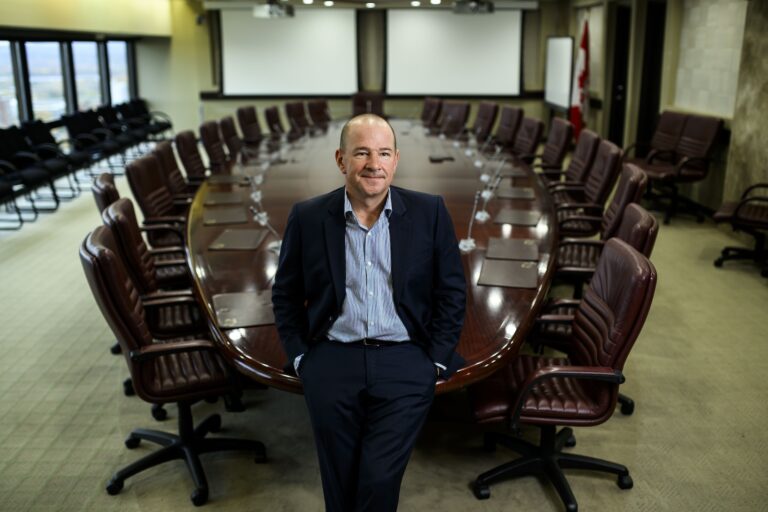
 Boswell has noticed growing interest in competition issues at the grassroots level. Photo: Justin Tang for The Logic
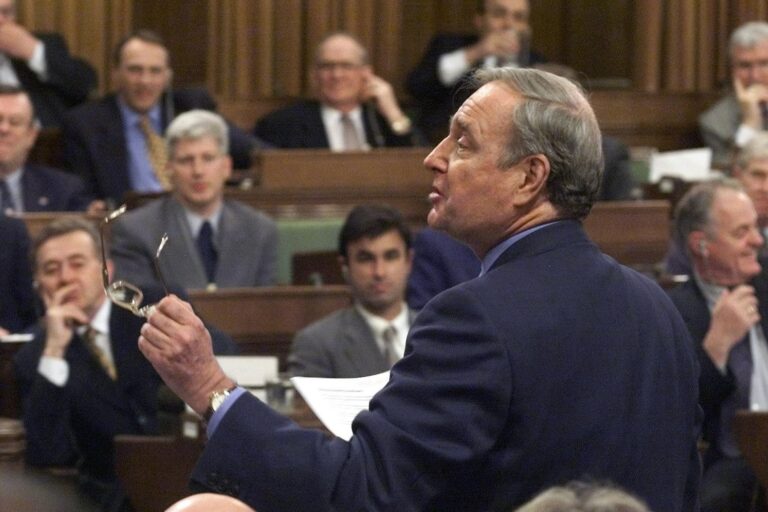
 Rogers chair Edward Rogers, right, and Brad Shaw, former chair and CEO of Shaw Communications, chat before a CRTC hearing looking into the merger of the two companies in November 2021. Photo: The Canadian Press/Fred Chartrand
The Interview
What Matthew Boswell saw in the jungle of Canadian competition policy
The outgoing competition commissioner took on tough cases and unapologetically promoted creative disruption. Now he wants his successor to do the same.
Matthew Boswell, the outgoing competition commissioner of Canada. Photo: Justin Tang for The Logic
Matthew Boswell’s speech at the Canadian Bar Association’s autumn competition law conference this year was a banger, figuratively and literally. Boswell, who announced this month that he will end his seven-year tenure as competition commissioner on Dec. 17, had decided that the theme of his remarks would be creative destruction, the concept that sustainable growth comes from new ideas and companies supplanting old ones.
Canada needs more creative destruction. A weak commitment to competition has resulted in an economy dominated by a handful of oligopolies and larger firms that innovate at their own pace and box out upstarts who would like to disrupt the industries they control. The productivity problem is very much a competition problem.
Related Articles

For his final speech, Boswell chose the Guns N’ Roses album Appetite for Destruction as a narrative device. He walked to the stage with “Welcome to the Jungle” playing in the background, “much to the surprise of however many lawyers were sitting in the audience,” Boswell said in a recent interview at the Competition Bureau’s headquarters in Gatineau, Que.
Boswell’s walk-off song, “November Rain,” was from a later album, Use Your Illusion I, that most rock critics associate with peak Guns N’ Roses. The band that disrupted rock music in the 1980s was on the verge of being replaced by the grunge movement of the 1990s.
Unlike one of his favourite bands, Boswell is getting out when he’s on top. He might be the most consequential commissioner in the Competition Bureau’s history, and certainly the most consequential in recent memory, thanks to his quixotic fight to block the Rogers Communications takeover of Shaw Communications.
In an interview with The Logic, Boswell reflected on his tenure, pitched the idea of a task force to scrub anti-competitive regulations from all layers of government and urged leaders in his position to be a little more disruptive.
This transcript has been edited for length and clarity.
You’re a hard rock guy, then?
I suppose so. I’m embarrassed to say I like a lot of music from the ’80s, late ’80s, ’90s. It’s my age group. My wife and daughters don’t like that very much.
Why did you choose to use your final speech to focus on creative destruction?
Creative destruction is effectively a manifestation of competition—healthy, vigorous competition—in an economy. We desperately need that as a country.
There are two ways to go about doing that. One we’ve made some good progress on, which is giving the Competition Bureau tools to police anti-competitive conduct. Three sets of amendments. A budget increase in 2021, which was long, long overdue. Frankly, it’s still not really enough. We’re it for the whole of Canada in terms of policing anti-competitive conduct, and there are lots of types of anti-competitive conduct. [But] we’re in a better position than we were five years ago.
The other half is the government regulatory barriers to competition. We have a terrible problem with that, and it’s getting worse.
Say more about that.
At all levels of government, it is crystal clear that we have a problem with regulations, laws that hinder competition. I don’t [mean] these regulations, laws, policies were designed to hinder competition. More likely what happened is nobody thought how they might impact competition. That’s part of the root problem. And it’s been a problem in this country for decades and decades and decades. Maybe back to the formation of the Hudson’s Bay Company.
So decades go by. The bureau is allowed to atrophy. Its budget [paid for] fewer people in 2020 than 20 years before. The economy got a lot more complex in the last 20 years. Then you have this ever-building problem of regulatory barriers to competition, and that includes things at all levels of government. Municipalities have regulations that hinder competition. Things as simple as where food trucks can park. It’s kind of resolved now in most of the country, but things as simple as rideshare versus just having a taxi business in your town or city. Then there are huge examples. There are restrictions on foreign investments in certain sectors. Supply management is a regulatory barrier to competition. Interprovincial trade is a massive regulatory barrier to competition.
These regulatory barriers are massive unforced errors. We could fix them without giving a billion dollars to this company or that company. We could fix them by creating a task force of public servants, an initiative led by the prime minister, and bring all the provinces and territories and municipalities on board using federal leverage and say, “OK, let’s attack the regulatory barriers across this country.” And do it with input [from business]. Because you know who can tell you where the barriers are? Small and medium-sized enterprises can certainly tell you where they are. Regulations have created moats around incumbents.
This is kind of one of my biggest regrets, that we haven’t got this to happen yet.
You’ve tried to get it to happen?
I’ve been giving speeches about this, advocating for literally years. We call it a whole-of-government approach to competition in the Canadian economy. We look to other countries that’ve done this. The best example is Australia. In the ’90s, they struck a productivity commission and a national competition effort. It was led by the prime minister. They used transfer payments and other levers to get the states in Australia on board. Over a period of time, they looked at, I think, 1,800 laws and regulations, specifically examining them on whether they hinder competition unnecessarily. They looked at them in that light and amended them, repealed them.
Those changes resulted in an increase in the Australian average household income of 5,000 Australian dollars per year in the ’90s. That’s one example, and they’re revving that engine up again in Australia, to go back and do it again. The beautiful thing is that in the last five years, there’s been this great awakening. We’re in a new era in terms of awareness among Canadians of the importance of competition in their daily lives.
When normal people care, politicians care. We’ve seen a huge spike in parliamentary debates, in Hansard, of the use of words related to competition.
But we still have a ton of work to do. The bureau is now engaged 100 per cent in implementing all the changes to our law, using the changes to our law to bring cases, to push back against [anti-competitive] behaviour. We’re redrafting all of our enforcement guidance because basically every aspect of our enforcement work has been impacted by these amendments. We have to redo all the guidance we give to Canadians, give to the business community, give to the legal community.
This new era, how fragile is it? Could we go in reverse?
Let’s use a smoking analogy. If you smoke for 30 years and you quit, and quit for a year, but then something or someone convinces you to go back to the old ways, it’s easy to slip backwards. When you have that mental attachment to something you used to do. That’s the risk.
What could trigger a backsliding?
There’s always the risk of lobbying that says, “Look, we’re in this really difficult time. What we need to do here is not focus on competition. We need to orchestrate the economy so that we have national champions who can do really well in Canada and then go out and compete in the world.”
We’ve seen that before. It’s not a new record. Everybody knows it doesn’t work. Not having competition at home and then going out and being successful in the world where you face competition. That’s a bad playbook.
I think there’s even more argument for doubling down on domestic competition at this time because it drives productivity growth, it drives innovation and it is good for our economy over a long period.
What could we do immediately that would have the biggest impact? The task force you mentioned?
I would say, absolutely, a whole-of-government approach.
This is a relatively cheap endeavour. Get a group of public servants who are committed to the idea of enhancing competition and who have the skills to analyze these laws and regulations. It’s often not that hard. We have developed something called the competition assessment tool kit that regulators can use if they want to think about competition when they’re drafting regulations or laws.
Are they using it?
Frankly, not nearly enough. We put it out five years ago. It’s getting better. We’re getting a lot more traction in Ottawa and in the provinces and territories on competition issues than we’ve ever had before. But when I first came here, outside of this building, this group of people, in the federal government there was very little awareness at all of the concept of competition. In other parts of the government, we would try to find [other] experts in competition. Nobody. Which quite frankly boggled my mind, considering we are a capitalist country.
The regulations you are doing are impacting markets. When you are thinking about them, you should be thinking, “OK, are they impacting markets to hinder competition?” It’s fundamental.
It’s getting a lot better. More and more ministries are calling us up, calling our competition promotion team up, which are people who give advice on these types of issues and seeking them out. There’s been a huge change.
What’s your advice to your eventual replacement?
They need to keep going. Be plain spoken about the issues. Sometimes that can be difficult because there are tough messages that people don’t want to hear.
We really do two things here. We protect competition, that’s enforcement work. And we promote competition, pro-competitive policies. On the promotion side, we need to continue being plain-spoken, evidence-based. We need to back up what we’re saying with evidence and studies and we need to do it in plain language, which is something we put a huge emphasis on in the last three, four years.
Continue vigorously enforcing the Competition Act. Under my time, we certainly tried. We brought a lot of cases. We’ve resolved a lot of matters to our satisfaction. And we’ve litigated on all fronts. We have multiple different cases in front of the Competition Tribunal right now. We’re ready, willing and able to take things to court.
We’re not regulators. We’re a law enforcement agency [that is] part of the federal government, but independent when it comes to decision-making. We have to keep pushing the boundaries on cases. We can’t only take winners. That doesn’t mean don’t only take losers. It means there are a lot of cases in the gray area where you sometimes have to put yourself out there and say, “OK, it’s not clear, but the evidence we have supports a finding of anti-competitive conduct.” If we’re only taking slam dunk winners, we’re not doing our job.
During the Rogers-Shaw fight, a criticism that I often heard was that you were pursuing a case that everyone knew you’d lose.
[If] there’s a decent chance of success, but there is a possibility of losing, and it’s a significant competition issue that needs to be addressed, the question is “What’s the risk of doing nothing?” versus “What’s the risk of taking the case and losing?”
You have to have the courage to take tough cases. And to put forward the best evidence and make your best arguments as to why this is anti-competitive conduct, or why this merger shouldn’t be allowed to proceed in its current form. At that point, you wait and hear what the tribunal has to say. That has its benefits in terms of clarifying the law. For a country that’s had a competition law since 1889, one year before the Sherman Act in the United States, we have shockingly little jurisprudence, because there haven’t been a lot of cases brought over time.
On Rogers-Shaw, the amount of work that was done by the bureau, by our internal economists, by our investigators, by our external economists; the amount of records that were reviewed, the amount of expert economic reports that were prepared, is staggering.
I find it interesting that people were saying, “Boswell is doomed to lose.” The most unfortunate thing about Rogers-Shaw is that in the decision itself, there is very little reference to all the records we put into evidence that contradicted the testimony of executives at those companies. That’s my biggest regret about that case. I would have really liked to know what the tribunal thought about these contradictory pre-existing records. I guess I’ll never know. I stand 100 per cent behind our decision to take that case and to continue that case once Videotron became the divestiture buyer. We continue to be of the view that it would result in a substantial lessening of competition in Alberta and British Columbia.
It was a tough period of time for all of us as a bureau, because we believed in the case. We were disappointed that we didn’t see the deep analysis that we normally see from the Competition Tribunal.
“If we put water in our wine here and there and everywhere, that has long-term implications for the economy.”
Do you think Rogers-Shaw will be a rallying cry for future commissioners, or a cautionary tale?
I don’t know, obviously, if everyone is always being totally upfront with me, but what I know is that the feeling in this building throughout that case—and after the unfortunate series of events that brought it to a close—everyone here was 100 per cent on board. It’s a good lesson from the organization that we’re not in the happiness business. This is the thing that is the perception from some people on the outside is that we should be putting water in our wine. We should be playing “Let’s Make a Deal.” We should be resolving these things with kind of a half solution and just letting everybody move on. But that’s not our job. If we just put a little water in our wine here and there and everywhere, that has long-term implications for the economy. A structural thing, like a merger, could impact people and the price they pay for a product for the next 20, 30 years.
This is not joking around. This is not commercial litigation. It’s real stuff. I think people here were happy that we fought the fight. Lots of people have criticized me for that, but I was doing my job.
When I talked to Peter Howitt, he was critical of how competition policy became too fixated on price at the expense of innovation. What’s your take on that critique?
We certainly saw cases that drove all the analysis to econometrics and price analysis. That was tied to the efficiencies defence and that is now gone.
But you know, I agree. Especially in the digital economy, we need to be thinking more about other factors like innovation. That’s part of the shift that the bureau has been undergoing for five years. It’s now something we include more in our merger enforcement guidelines: How we’re going to think about innovation in assessing mergers. It goes into the pot of all the factors we consider.
What do you think about the new emphasis on economic sovereignty?
Global free trade is something that has generally benefited Canada. Foreign companies coming into Canada, competing with our companies is good for competition. We’re not going to put a wall around Canada, at least I hope not. I think it’s very country-specific right now. That’s my take.
You said the bureau’s budget isn’t where it should be. What would the bureau do with more money?
We probably need more resources on the legal side to advance litigation.
In a lot of these cases, we’re fighting against huge companies with deep, deep pockets. It is not this fallacy that the government has the deepest pockets in litigation. We have a very small crew of lawyers and we need more. And because it’s a very niche area, it takes a long time to learn. We are responsible for policing competition in the entire country. That includes criminal offenses like bid rigging and price fixing, all the deceptive marketing practices. We get something like 5,000 complaints a year on deceptive marketing. We don’t even deal with the sliver of that crime.
“I believe that’s what Canadians want out of people in these types of jobs—where you go flat out. And you’re going to piss people off when you go flat out.”
What’s next for you?
I don’t know. I’m going to go on vacation. And then, yeah, figure it out. I’m not retiring, though.
I’ve been watching people like you for 25 years, and you stand out as someone who is unafraid to take advantage of the position to do more than just play by the rules.
I hope so. Don’t get me wrong, there were times where, in this room or in other boardrooms, it would be like, “OK, we’re pushing the envelope here.” I really do believe that’s what Canadians want out of people in these types of jobs—where you go flat out, and you’re going to piss people off when you go flat out. As I said, we’re not in the happiness business and apologize now to everyone I’ve pissed off for the last seven and a half years. But it’s rewarding when you put yourself out there and say, “This is what I think, and this is what we think, and this is what the evidence shows, and over to you, the government, we need to fix this.”
Do you think you need to be something of a crusader to push through all the headwinds that come with this job?
You need to believe in the importance of competition in the organization of our economic affairs. You need to believe that this is the right way. That’s not hard. Certainly on the international scene, it’s clearly the right way. A big part of driving healthy economies is competitive intensity and a good watchdog on the job.



Loading...
Thanks for sharing!
You have shared 5 articles this month and reached the maximum amount of shares available.
CloseThis account has reached its share limit.
If you would like to purchase a sharing license please contact The Logic support at [email protected].
CloseGift the full article!
You have gifted 0 article(s) this month and have 5 remaining.
Recipients will be able to read the full text of the article after submitting their email address. They will not have access to other articles or subscriber benefits.
Photo: Justin Tang for The Logic
Boswell has noticed growing interest in competition issues at the grassroots level.
Rogers chair Edward Rogers, right, and Brad Shaw, former chair and CEO of Shaw Communications, chat before a CRTC hearing looking into the merger of the two companies in November 2021.
Most Popular This Week




In-depth, agenda-setting reporting
Great journalism delivered straight to your inbox.
Commentary
Carmichael: Being boxed in will help Canada focus on what matters
Briefing
Rio Tinto gets nearly $165M in additional federal funds for Quebec aluminum
U.S. to lift tariffs on some Canadian products crucial to Maine: Collins
Carney warns of tech dependence after Starlink disruptions in Ukraine
Best business newsletter in Canada
Get up to speed in minutes with insights and analysis on the most important stories of the day, every weekday.
Exclusive events
See the bigger picture with reporters and industry experts in subscriber-exclusive events.
Membership in The Logic Council
Membership provides access to our popular Slack channel, participation in subscriber surveys and invitations to exclusive events with our journalists and special guests.






