
Listen Now
0:00
Forget Donald Trump. The pipeline-and-climate pact between Prime Minister Mark Carney and Alberta Premier Danielle Smith was the most important business development of 2025. The former put the economy under siege, but the latter offered a strategy for coming out stronger than when the siege began.
The signatures and the smiles and the cheers were only the beginning, of course. Moving forward has meant accepting increasingly uncomfortable concessions, such as Carney’s decision on Friday to soften the industrial carbon tax. There will be more.
Carney and Smith still are searching for the right combination of carrots and sticks to mollify a restive electorate, while inspiring a risk-averse energy industry to get behind them. The big oil companies—the third party in talks that ultimately are about boosting Canadian heavy oil exports—were notably absent when the prime minister and premier met to update the memorandum of understanding they signed in November.
Related Articles

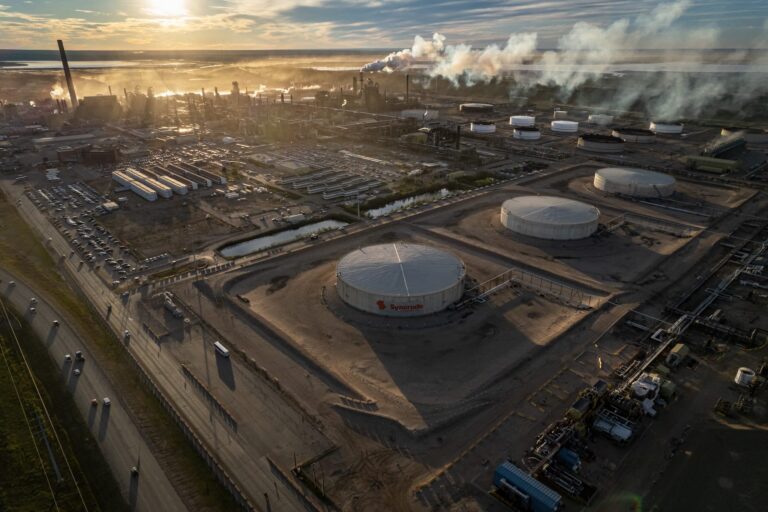
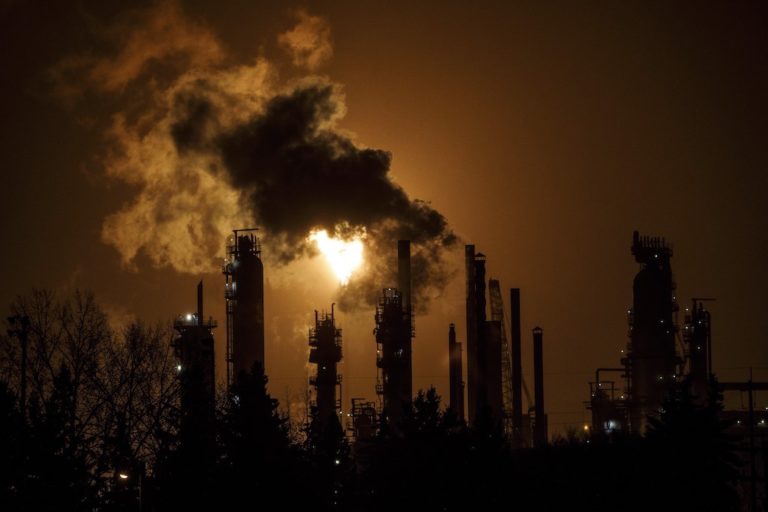
The backtracking on climate policy can’t have been easy for Carney, who served the UN as a special envoy on climate action and finance not so long ago. Activists will accuse him of abandoning the cause, and they will have a point. But the shift is more a reminder that governing Canada requires compromise. It’s something the political sphere has been lacking for a couple of decades.
The ideologically oriented governments of Stephen Harper and Justin Trudeau tended to insist on doing things their way. They got away with it because the political class learned that elections could be won by efficiently mining thin veins of support, rather than trying to win in as many places as possible. The unintended consequence was polarization.
Compromise is hard when politics becomes a blood feud. Whatever regulatory paralysis that afflicts Canada was partially, if not primarily, the result of political paralysis: a federation with four layers of government can’t possibly work if the polity is at war with itself. The emergence of a serious separation movement in Alberta is one of the reasons why any analysis of the memorandum that fixates on climate change is too narrow. Carney, who was Bank of England governor when the U.K. voted to leave the European Union, has seen up close what happens when politics becomes an exercise in forcing your worldview down the throats of a critical mass that is unready to digest it.
So, the Carney-Smith pact should be judged first on whether it proves the federation still works. Maybe the majority of us believe it does, but I doubt any of us think it works well. Canada ranks below the U.S. in the latest World Happiness Report. When asked by Statistics Canada to rate their life satisfaction on a scale of one to 10, roughly a quarter of residents in British Columbia, Alberta, Saskatchewan, Manitoba and Ontario entered a number between zero and five. Alberta was the highest, at 29 per cent. In Quebec, the number was only 15 per cent.
Something’s not right. Highly visible examples of people who often disagree nonetheless finding ways to get along might help with the malaise. The headlines from Carney’s previous stomping grounds show why you try. The yield on British 10-year debt has surged above five per cent, much higher than in other rich countries, as the population turned on Prime Minister Keir Starmer’s Labour Party in local elections, prompting cabinet ministers to resign and rivals organizing to take him out. Political instability has a price. Maybe Canada can avoid having to pay it.
That’s the reminder: Canada exists on compromise. The learning, at least for me, was that the wildcat spirit that created Alberta’s heavy oil industry is essentially gone. Canadian Natural Resources Ltd. (CNRL), Suncor Energy and Cenovus Energy (the three Canadian members of the Oil Sands Alliance; the Canadian subsidiaries of ExxonMobil and ConocoPhillips are the other two) are impressive, highly profitable companies. They also are mature and controlled institutional investors that value dividend increases, share buybacks, debt reduction and free cash flow. That is, CNRL, Suncor and Cenovus now operate more like utilities than companies whose future viability relies on growth.
In that regard, the Canadian oil majors are little different from their peers. Wood Mackenzie, an energy consultancy, estimated in February that production from existing projects owned by the world’s 30 biggest oil companies was on track to decline by 40 per cent, on average, between 2025 and 2040—even as demand for oil continues to rise. The gap, according to Wood Mackenzie, exists because “pressure to return cash to shareholders” and “price uncertainty” deterred producers from expanding.
Carney, Smith and their cabinet ministers describe the fallout from the Iran war as an opportunity. Canada’s heavy oil producers don’t appear to see it that way. The federal government gave ground on the carbon tax, but the Oil Sands Alliance still hasn’t agreed to build the Pathways carbon capture and storage project, which the governments say they must do if they want a new pipeline that will move one million barrels per day to the Pacific Coast.
It’s beginning to look like it’s the politicians who want the pipeline, and not the people who would have to fill it. That might also explain why there is still no private sector proponent. The incentives in the oil industry have changed so much that no one is willing to take any risk.
At CERAWeek in March, I asked Mark Maki, chief executive of Trans Mountain, the Crown pipeline company, if he’d come off the sidelines to build a second heavy oil conduit to Pacific ports. “The prime minister has been crystal clear about this,” Maki said. “He wants private capital to do the next West Coast pipeline.”
So, no? “For some reason, if they need to tag us in, we’re there,” Maki said. That reason may have arrived. The lesson of the past six months is that institutional investors who control heavy oil production don’t care if Canada becomes an energy superpower. If Carney and Smith want that outcome, they might have to do it themselves.
Kevin Carmichael is The Logic’s economics columnist and editor-at-large. He has spent more than two decades covering economics, business and finance for outlets including Bloomberg News, The Globe and Mail and the Financial Post, where he also served as editor-in-chief.













