Skip to content

Canada's Business and Tech Newsroom

  • Professional Subscription
  • Partnerships & Advertising
  • Licensing & Syndication
Log In Subscribe
Welcome,
  • My Account
  • Log Out
  • Business
  • Tech
  • National
  • The Big Read
  • Briefings
  • Commentary
Search
Log In Subscribe
Welcome,
  • My Account
  • Log Out
Commentary

Carmichael: The math has changed for Canada’s oilpatch

Listen Now
0:00
Commentary

Carmichael: The math has changed for Canada’s oilpatch

The country needs its energy giants to rekindle the wildcat spirit—but their investors have little appetite for risk

By Kevin Carmichael
The image shows the silhouette of a pumpjack drawing out oil from a well head against an orange sunset.
A pumpjack draws out oil from a well head near Calgary, Alta., in September 2022. Photo: The Canadian Press/Jeff McIntosh
Apr 4, 2026
A A
A Small A Medium A Large
Share

Gift

Share

Listen Now
0:00

HOUSTON — Jim Mattis, the retired U.S. marine general and Donald Trump’s first defence secretary, left a rapt audience at CERAWeek with this parting advice: Watch your assumptions like a hawk. 

A significant percentage of the 11,000 people who attended S&P Global’s annual energy extravaganza filled a hotel ballroom on March 23 to watch Mattis talk with S&P Global senior vice-president Carlos Pascual and Suzanne Maloney, an Iran expert at the Brookings Institution, about the biggest energy story in the world. 

Related Articles
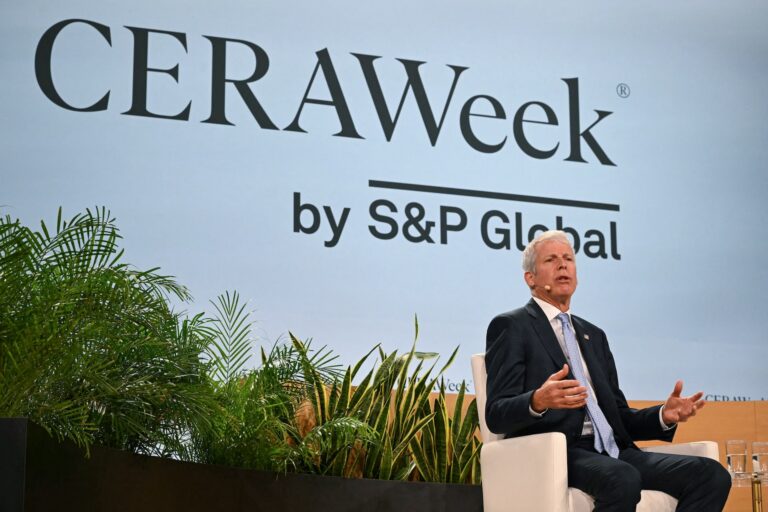
A man wearing a suit and tie sits on a stage. He speaks into an earset microphone and gestures with his hands. A screen behind the speaker reads CERAWeek by S&P Global.

Carmichael: Canada gets a second chance to become a global energy superpower

By Kevin Carmichael
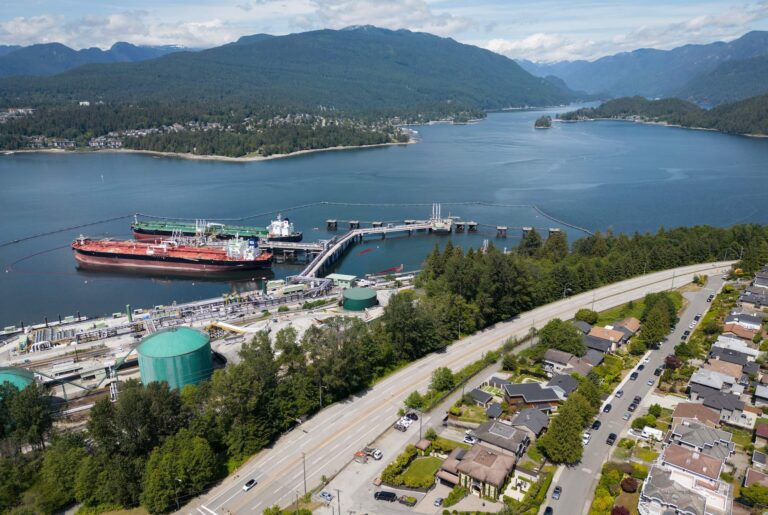
An aerial photo of a petroleum sea terminal, in a landscape of mountains and coastal waterways, with residential homes in the right foreground. There are two tankers docked at the terminal.

Why pumping more Canadian crude won’t stop oil prices from soaring

By Laura Osman
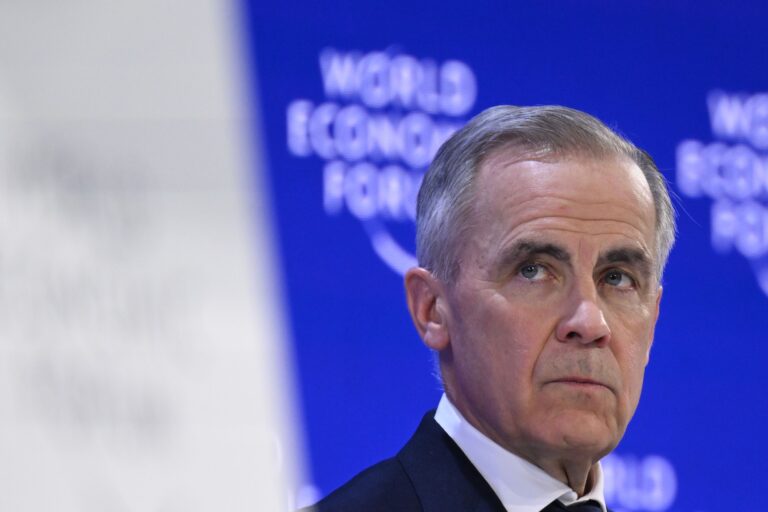
A close-up of Mark Carney wearing a solemn expression, with the World Economic Forum logo on a blue backdrop behind him.

Carmichael: It’s easier to be a back-seat driver, but Carney wants his hands on the wheel

By Kevin Carmichael

Mattis, who resigned after two years in the first Trump administration, had already punctured any remaining assumptions that the U.S.-Israeli war on Iran would leave the world in a better place. “If we were to declare victory and basically pull out our armada, the number of forces we’ve sent there, [Iran] would say, ‘We now own the Strait,’” Mattis said.  

In other words, the best-case scenario would leave Iran in a position to administer some kind of toll on the oil, natural gas and other commodities that pass through the Strait of Hormuz. The other possibility—escalation—would be more of what the world has been watching since Feb. 28, only worse. Neither scenario suggests oil and gas prices will be returning to prewar prices anytime soon. The polycrisis rolls on. 

It’s a bad idea to cling to old notions when everything is coming undone. Mattis advised the business leaders in the room to hire someone to stress test every assumption on which their strategies were based; he shared that he used to have an aide from the CIA who kept him honest. “Check your assumptions very closely [during] this time, because they can give you a pathway into some really bad decisions when you are in this crisis mode right now,” he said.  

What assumptions might Canada have wrong? Probably too many to tally in one go, so let’s narrow the focus to the issue of the moment. 

Even before the Iran war, Prime Minister Mark Carney, Alberta Premier Danielle Smith and other leaders were talking freely about Canada as an energy superpower. Practically every Canadian at CERAWeek—and there were a lot of them—described the real-time geopolitical shift to energy independence as an opportunity. “Alberta really is a powerhouse when it comes to energy,” said Brian Jean, the province’s energy minister. “All we need to do is get it to market.” 

All we need to do is get it to market. 

The assumption for years has been that the only thing standing between Canada and superpower status was its aversion to stringing pipelines across undisturbed wilderness. That aversion has softened considerably since Carney became prime minister a year ago. Yet the federal and Alberta governments missed their April 1 deadline to clear a regulatory path for a new pipeline to the West Coast. 

Why? It isn’t a lack of opportunity. Mark Maki, chief executive of Crown-owned pipeline company Trans Mountain, said at the conference that China and India “love” Alberta’s heavy oil. My guess: the delay is rooted in the political class’s assumption that profit-seeking enterprises would be keen to chase that opportunity and join the Big Leagues. The revealed preference of the five oilsands behemoths who would fill any new pipeline suggests they are only moderately interested in making the jump to superpower status. They have it too good being merely powerful, so why change?

The misalignment between government and industry showed itself each time Jean appeared onstage at CERAWeek. I noticed a disconnect between Cenovus and the Alberta energy minister over who should cover the cost of a carbon capture and storage system, a condition of the federal government’s support for a pipeline. There was another such moment when Jean appeared alongside Enbridge executive Colin Gruending, who oversees pipelines that the company says transport about 30 per cent of the oil produced in North America. 

More pipelines will be necessary, Gruending said, but Enbridge isn’t responsible for any holdup. “We need to talk about a couple of other P’s here too,” he said. “One is policy and another is production to fill them. I feel like we over-index on the pipeline part, but we have got to make sure the other two are in lockstep.” 

The oilsands exist because of an excellent marriage between former Alberta premier Peter Lougheed’s desire to make his province wealthier and the oil industry’s wildcat spirit. But that union of purpose has faded since the local subsidiary of Sunoco that became Suncor Energy began mining bitumen nearly six decades ago. One of Lougheed’s successors, Ralph Klein, slashed royalty rates and gave the industry a long leash. Lougheed’s entrepreneurial state was replaced by a different kind of government.  

Alberta’s oil industry has also changed. Canadian Natural Resources Ltd., Suncor and Cenovus—the three distinctly Canadian oilsands miners—have evolved into hyper-efficient producers who need an oil price of only US$60 per barrel to generate gushers of cash. The oilsands companies are now majority-owned by institutional investors and Canadian banks, not freewheeling entrepreneurs. That changes the incentive structure. Institutional investors are wary of expensive greenfield investment, and they attach no value to moonshots such as carbon capture. They want predictable returns over long periods of time, so the oilsands companies have responded by focusing on free cash flows, dividends and share buybacks.  

“It’s not my money,” Nick McKenna, president of ConocoPhillips Canada, said at CERAWeek. “It’s my investors’ money. They need a return.”

Gift the full article

That’s not as greedy as it sounds. Just as executives like McKenna feel bound by a fiduciary responsibility to their shareholders, institutional investors see themselves as stewards of pension funds and individual nest-eggs. Oilsands executives and fund managers are getting rich, while also doing their part to ensure many of us receive a pension.

But any assumption that those companies would jump at a chance to fill a new pipeline was a faulty one. The opportunity to become an energy superpower is of only secondary importance for Canada’s biggest oil companies because they have no incentive to make big bets. Their mission now is to generate cash—and they already are world-class at doing that. 

Kevin Carmichael is The Logic’s economics columnist and editor-at-large. He has spent more than two decades covering economics, business and finance for outlets including Bloomberg News, The Globe and Mail and the Financial Post, where he also served as editor-in-chief. 

#Alberta #commentary #economy #Energy

Loading...

Thanks for sharing!

You have shared 5 articles this month and reached the maximum amount of shares available.

Close
This account has reached its share limit.

If you would like to purchase a sharing license please contact The Logic support at [email protected].

Close
Want to share this article?

Upgrade to all-access now

Close
Gift the full article!

You have gifted 0 article(s) this month and have 5 remaining.

Copy link and gift
Copy Link
Email to a friend
Send Email
Gift on Social Media

Recipients will be able to read the full text of the article after submitting their email address. They will not have access to other articles or subscriber benefits.

The image shows the silhouette of a pumpjack drawing out oil from a well head against an orange sunset.

Photo: The Canadian Press/Jeff McIntosh

Most Popular This Week

Andrew Forde, wearing a beige tweed blazer, black slacks and a white sweater, speaks on a stage at the Elevate conference in Toronto with three large blue screens in the backdrop. One screen displays the session topic, AI, another displays the logos for sponsors KPMG and Google, and a third screen depicts a photo of a stop sign covered in stickers. The stop-sign photo is labelled, “Stickers that beat supercomputers.”
News

KPMG’s AI whisperer says some Bay Street firms are falling into a productivity trap

By Anita Balakrishnan
The Big Read

ApplyBoard faces a reckoning as Canada’s immigration boom turns into a bust

By Claire Brownell and David Reevely
A shot of Anthony Hu in a semi-dark office, with his face illuminated by two computer screens.
The Big Read

Anthropic’s Mythos cracked software open like an egg. It’s just the beginning

By David Reevely
Susan Hawkins, chief executive officer of Payments Canada gestures with her hands as she speaks on stage in front of black screen at the Payments Canada Summit in Toronto.
Exclusive

Not all banks and fintechs will get access to the Real-Time Rail at launch

By Claire Brownell

In-depth, agenda-setting reporting

Great journalism delivered straight to your inbox.

Commentary

Carmichael: If an AI jobs apocalypse is coming, we’re not seeing it in the data

By Kevin Carmichael

Briefing

Anthropic says world needs option to slow AI development, as models learn to self-improve

By Murad Hemmadi   |   Jun 5, 2026

Ottawa taps the brakes on efforts to speed up project permitting

By Laura Osman   |   Jun 5, 2026

Kevin O’Leary scales back Wonder Valley Utah plans after objections from a key state legislator

By David Reevely   |   Jun 5, 2026

Best business newsletter in Canada

Get up to speed in minutes with insights and analysis on the most important stories of the day, every weekday.

Exclusive events

See the bigger picture with reporters and industry experts in subscriber-exclusive events.

Membership in The Logic Council

Membership provides access to our popular Slack channel, participation in subscriber surveys and invitations to exclusive events with our journalists and special guests.

Recent Popular Stories

News

Canada’s surprise plan to buy Saab command jets leaves competitors seeking answers

By David Reevely   |   May 29, 2026
A closeup of a scale model of a jet covered in pixellated camouflage, with sensor equipment attached to the top of its fuselage. There are civilians and uniformed military personnel milling in the background.
Exclusive

Canada awards Ford $464M to make F-Series trucks in Ontario

By Murad Hemmadi, Anita Balakrishnan and Joanna Smith   |   May 7, 2026
Blurred red, white and black cars zoom down a street in front of Ford’s Oakville, Ont., assembly plant on Friday April 5, 2024.
News

European and Asian firms want a stake in Canada’s photonics factory, Joly says

By Murad Hemmadi   |   May 7, 2026
The Big Read

ApplyBoard faces a reckoning as Canada’s immigration boom turns into a bust

By Claire Brownell and David Reevely   |   May 27, 2026
Exclusive

RBC Insurance chief to depart in shakeup of key strategic role

By Chaimae Chouiekh and Anita Balakrishnan   |   May 27, 2026
Low-angle view of an RBC logo sign in front of a tall glass-and-concrete office tower, with surrounding skyscrapers visible in the background.
Exclusive

Shopify makes cuts to its operations team in latest round of layoffs

By Aleksandra Sagan   |   May 4, 2026
Tobias Lutke in a black shirt and grey jeans sitting on a couch, gesturing with both hands pinching the air as he speaks

Canada's most influential executives and policymakers are reading The Logic

  • CPP Investments
  • Sun Life Financial
  • C100
  • Amazon
  • Telus
  • Mastercard
  • bdc
  • Shopify
  • Rogers
  • RBC
  • General Motors
  • MaRS
  • Government of Canada
  • Uber
  • Loblaw Companies Limited
logic-logo

Canada's Business and Tech Newsroom

100% human-crafted journalism

Newsroom

  • News Tips
  • AI Policy
  • Editorial Disclosures
  • Story Pitches

Company

  • About Us
  • Terms of Service
  • Privacy Statement
  • Corporate Information

Contact

  • Contact Us
  • Advertise
  • FAQs
  • Work at The Logic

© 2026 The Logic Inc. All Rights Reserved.

Trusted by leaders

Error

Account creation failed.

Please email us at [email protected].

Create Account

[wppb-register form_name=”cozmo-registration-form-for-modal”]

I do have an account
Login
or

[wppb-login]

I don’t have an account