Listen Now
0:00
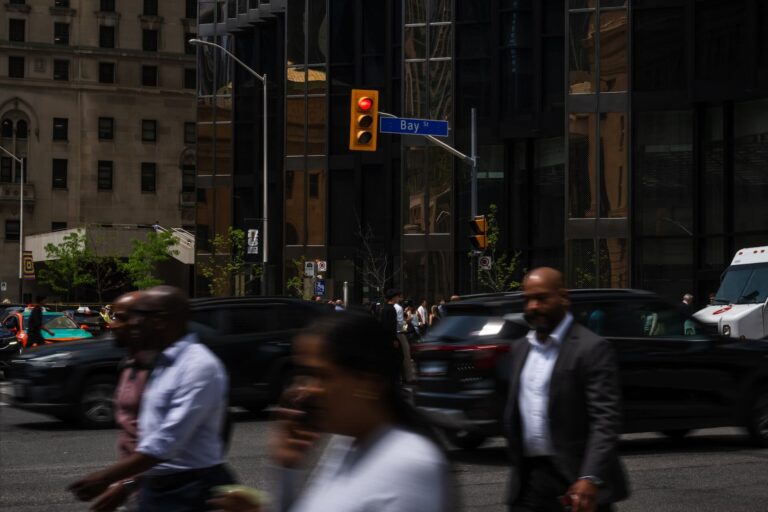
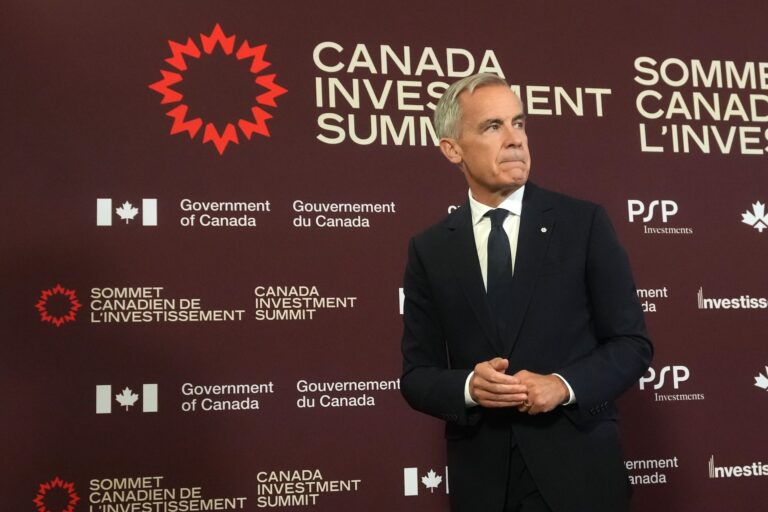
Last year, as Prime Minister Mark Carney and Finance Minister François-Philippe Champagne prepared a budget that would lean heavily on the willingness of investors to underwrite Canadian spending, the Bank of Canada surveyed Bay Street to get a sense of market conditions.
The central bank does this every year to help it execute its responsibilities as the government’s bond auctioneer. Its 2025 vibe check of creditors probably was more anticipated than usual. The previous half-decade featured a global pandemic, war and the worst bout of inflation in decades. Then, Donald Trump returned to the White House determined to upend the global trading order, bully the Federal Reserve into lowering interest rates and borrow like there was no tomorrow. The place investors are told to go when things get rocky had become the primary source of volatility.
Related Articles


So it must have been a relief at Finance when the Bank of Canada’s survey results showed that “overall, market participants viewed the Canadian bond market as functioning effectively despite periodic volatility in global bond markets.” Those sterling credit ratings and a relatively narrow budget deficit were helping the country weather the storm. Still, there was a hint of disquiet. The survey uncovered that “elevated issuance from all levels of government was leading to some challenges for Canadian dealers with respect to balance sheet capacity,” according to the highlights included in the Finance Department’s latest debt management strategy.
In other words, appetite for Canadian debt remained, but the market was starting to feel full. No wonder. Global debt owed by governments, companies and households increased US$26.4 trillion in the first three quarters of 2025 to a record US$346 trillion, according to the Institute of International Finance.
Mature markets led the way, adding debt worth US$17 trillion. The biggest issuers were a who’s who of legacy powers: the U.S., the U.K., France and Germany. When countries such as these are flooding the market with that amount of debt, there isn’t anywhere for a country like Canada to hide. Its AAA credit rating is a decent shield, but it’s not an anchor. All that supply is pushing rates higher as creditors demand greater compensation for lending countries money. Canada’s borrowing costs are comparatively low, but rising all the same.
Former Bank of Canada governor Stephen Poloz warned this day would come. Growing debt is one of five “tectonic” forces he thinks will shape the trajectory of the global economy over the decades ahead. In his 2022 book The Next Age of Uncertainty, Poloz described government borrowing as a “force in overdrive.”
Our instinct will be to fight it. When interim parliamentary budget officer Jason Jacques blurts out during committee testimony that Canada’s budget deficit is “stupifying,” he’s making an assessment that is part economics and part moral judgment. We’ve been told since childhood that debt is bad, even though debt is what finances the welfare state and is the only reason most families own a home. “Debt is crucial to the functioning of the economy,” Poloz wrote.
It could become even more crucial. Economist David McWilliams, the author of the international bestseller Money: A Story of Humanity, said on his podcast last year that he thinks government budgets will increasingly become less about raising revenue, and more about using tax policy to guide behaviour. The reweighting is possible because capital markets have become so deep that it’s relatively easy for governments to borrow at reasonable rates. Yes, Canada’s borrowing costs are creeping higher, but they are still lower than when balanced-budget-true-believer Stephen Harper was prime minister.
That’s why Carney can get away with borrowing heavily and cutting taxes simultaneously. The budget forecasts that revenue from corporate income taxes will effectively stall over the next five years, compared with annual average growth of 7.7 per cent between 1983 and the most recent fiscal year. Projected revenue from personal income taxes and consumption taxes follows a similar pattern. McWilliams might be onto something. A lesson Carney appears to have drawn from his predecessor is that Canadian society’s willingness to accept higher taxes has been maxed out. Switzerland is considering a temporary value-added tax to pay for increased military spending. That’s probably the responsible thing for a country to do, but it’s hard to imagine a Canadian government making a similar proposal when trimming the scope of the GST has become an answer to every political problem.
The reason countries such as Canada can ramp up their borrowing is because an ever richer planet creates new creditors. Hedge funds now purchase between 40 per cent and 50 per cent of Canadian bonds at auction, compared with almost nothing 15 years ago. That introduces a new source of risk, but it also brings competition for bonds that puts downward pressure on rates, which move in the opposite direction of the purchase price.
Also, asset-price inflation over the past couple of decades has made a lot of people and institutions rich, leaving investors with excess cash. The flip side of higher rates is that stable governments and cash-rich companies will have little difficulty finding people to lend them money, Shayan Hussain, a managing director at JPMorgan Asset Management, said in an interview. “How much has the stock market appreciated? How much has housing appreciated?” Hussain asked rhetorically. “There’s a lot of wealth.”
There are limits to how much any other entity should borrow. “The bond vigilantes are still there; it just depends on the issuer, the leash that you have,” Hussain warned. Canada has some leash and we might as well take as much as creditors will give us, assuming the debt is used to reorient the economy. Maybe instead of fearing debt, we could talk about ways to harness its power.
Kevin Carmichael is The Logic’s economics columnist and editor-at-large. He has spent more than two decades covering economics, business and finance for outlets including Bloomberg News, The Globe and Mail and the Financial Post, where he also served as editor-in-chief.