The 1950s are often remembered as a time of plenty, the era when many assume President Donald Trump thinks America was last great. For Canada, at least, the data suggests otherwise. The country suffered five recessions between 1947 and 1961, according to the C.D. Howe Institute’s business cycle council, as a trade-dependent economy struggled to find its footing in a radically changed global order.
Skip to content


Commentary
Carmichael: What Mark Carney must do next
The hard times have already begun. There isn’t a moment to waste
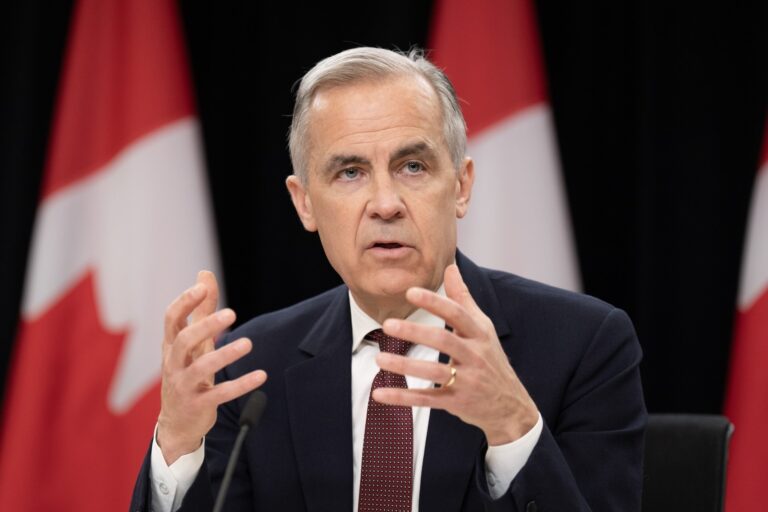
Prime Minister Mark Carney at a news conference in Ottawa on Friday, May 2. He has managed crises before, but what Canada now faces is different. Photo: The Canadian Press/Adrian Wyld
The 1950s are often remembered as a time of plenty, the era when many assume President Donald Trump thinks America was last great. For Canada, at least, the data suggests otherwise. The country suffered five recessions between 1947 and 1961, according to the C.D. Howe Institute’s business cycle council, as a trade-dependent economy struggled to find its footing in a radically changed global order.
Sound familiar? The Mark Carney years could be similarly volatile. “You’ve got a huge headwind coming,” said Romel Mostafa, director of Ivey Business School’s Lawrence National Centre for Policy and Management in London, Ont.
The International Monetary Fund’s updated outlook assumes the highest effective tariff rate on U.S. imports since the first part of the 20th century and retaliation from those with whom Trump has picked fights will slow global economic growth “significantly.” Uncertainty about Trump’s intentions will freeze investment, and the inflationary impulse caused by higher prices could limit the U.S. Federal Reserve’s ability to soothe anxious executives and investors with lower interest rates.
Canada would struggle in any scenario that involved the U.S. pulling global demand lower, given its dependence on trade with America and the influence of commodity prices on profits and investment. But this headwind is even bigger. Pierre-Olivier Gourinchas, the IMF’s economic counsellor and director of research, said the economic system that’s been in place since the end of the Second World War is being reset. However imperfect, the previous system was wired for efficiency. Whatever replaces it won’t be. The transition can only be painful.
Related Articles


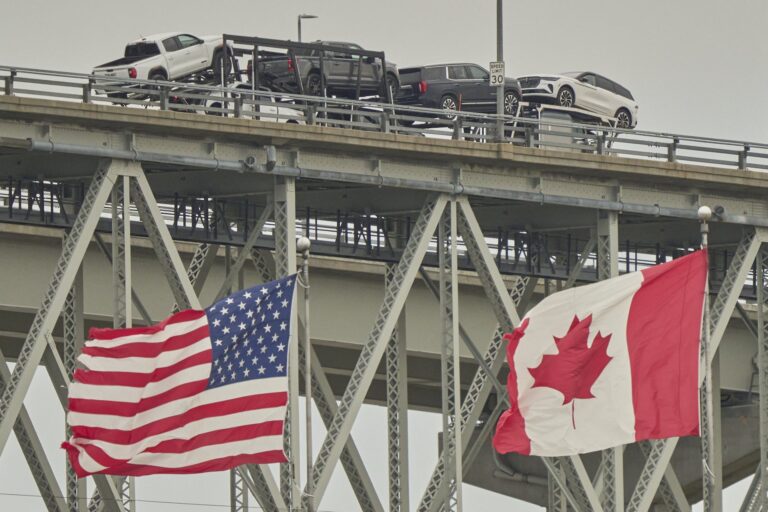
Jim Estill, chief executive of Guelph, Ont.-based Danby Appliances, a maker of apartment-sized refrigerators, dishwashers and the like, is optimistic about Canada’s eventual trajectory, but he reckons the adjustment to a fraught relationship with the U.S. from the friendly one we’ve enjoyed for decades will make the next few years “very hard.”
The hard times have already begun. Deloitte predicts Canada’s gross domestic product will contract in the second and third quarters, which would satisfy the most basic definition of a recession. The economy ended 2024 with some momentum, but that’s already begun to fade. GDP, measured by industrial output, decreased 0.2 per cent in February, according to Statistics Canada, which advised that preliminary data suggests the economy was struggling to climb out of that hole in March.
Payroll employment decreased by 49,000 positions in February, wiping out 61 per cent of the gains over the previous two months, Statistics Canada reported on April 24. Restaurants, retailers and factories—the industries that would be the first to feel the effects of a decline in trade and confidence—posted some of the biggest declines. The GDP report showed output from spending on repairs dropped 0.8 per cent, implying a chill on renovations.
This is the state of play with which Carney must contend as prime minister. He has stared down his share of crises. He was at Goldman Sachs when terrorists destroyed the Twin Towers in the heart of Wall Street. He was Bank of Canada governor during the Great Recession, and Bank of England governor during Brexit and the early days of the COVID-19 pandemic.
Those events were like fires—scary, but you knew what to do: aim the hose at the inferno until the flames subside.
What Canada is facing is different. To start, there will be no adrenaline rush. Like a storm descending on a tropical island, we can see trouble coming. That’s both good and bad. Trump’s yo-yo economics foreshadow misery, but there is a window in which to prepare for what’s coming. An encouraging number of leaders are choosing to use it.
And not just at the international level. Mostafa, for one, is a member of the London Economic Response Team, which Mayor Josh Morgan created to seek ways to offset the heavy blow that southern Ontario will absorb from the automobile tariffs. “We’re bracing for it,” said Mostafa.
Trump’s constant threats of annexation show that any trade agreement will be precarious. That’s helpful information. During the first Trump presidency, Ottawa adopted an all-hands-on-deck strategy to preserve a North American trade agreement. No need to commit so many resources this time. Nothing Trump promises is a guarantee, so Canada will need to create other options.
At the same time, the reprieve from the “Liberation Day” tariffs has given decision makers more time to assess what that new foundation could be. “For Canada, this breathing room is particularly valuable,” Sébastien Mc Mahon, chief strategist at iA Global Asset Management, said in his latest monthly assessment of the economy and markets.
“In practical terms, it means fewer inflationary pressures imported through the price of goods, especially in critical sectors, such as food, autos, and machinery,” which means the Bank of Canada won’t have to “overreact” by flipping back to inflation-fighting mode, Mc Mahon wrote.
The productivity crisis has weakened Canada’s economic immune system, which will make it that much harder to push through a historic headwind. But we have reserves from which to draw energy. Statistics Canada data shows that corporate net income was 7.3 per cent of revenue in the fourth quarter, a wider profit margin than the 6.3 per cent average since the start of 2010. Companies have some cushion, and maybe even some room to manoeuvre, if they choose to use it. They’ll likely need coaxing to make bets amid such extreme uncertainty and weak demand.
Bank of Canada governor Tiff Macklem probably will cut interest rates, but it’s unlikely he will be as aggressive as he was during the COVID-19 crisis. The tariffs will put upward pressure on inflation even as they put downward pressure on growth and the wounds from the post-pandemic inflation fight are still tender.
That means Canada’s near-term prospects will be determined by the extent to which Ottawa, the provinces and municipalities make good on their many promises to get serious about economic growth. They all will have learned a lot about supporting vulnerable households and businesses during the pandemic.
Elevated levels of debt and higher interest rates will make big spending programs riskier. S&P Global Ratings already has lowered Quebec’s credit rating, and this week Fitch warned the federal government about getting carried away with deficit spending. Creditors generally like Canada, but that doesn’t mean they won’t adjust their risk premiums to match a growing debt load.
Not all spending is the same, though. Carney, in particular, has insisted that his spending will emphasize investment, especially the type that lures private capital off the sidelines. The theory is sound and circumstances should keep policymakers focused on execution.
Lots could go wrong, and we should anticipate some pain, but instead of defending what we have, the response to this crisis will be about creating something new. That’s kind of exciting.
Kevin Carmichael is The Logic’s economics columnist and editor-at-large. He has spent more than two decades covering economics, business and finance for outlets including Bloomberg News, The Globe and Mail and the Financial Post, where he also served as editor-in-chief.



Loading...
Thanks for sharing!
You have shared 5 articles this month and reached the maximum amount of shares available.
CloseThis account has reached its share limit.
If you would like to purchase a sharing license please contact The Logic support at [email protected].
CloseGift the full article!
You have gifted 0 article(s) this month and have 5 remaining.
Recipients will be able to read the full text of the article after submitting their email address. They will not have access to other articles or subscriber benefits.
Photo: The Canadian Press/Adrian Wyld
Most Popular This Week



In-depth, agenda-setting reporting
Great journalism delivered straight to your inbox.
The Big Read
Beacon is building an AI empire by fixing Main Street’s software
Briefing
Inovia raises US$200M for new VC fund as it eyes AI’s impact
43% of eligible Albertans voted ahead of Monday’s referendum
AI chip company Tenstorrent raises US$1.5B, valuing it at US$6.2B
Best business newsletter in Canada
Get up to speed in minutes with insights and analysis on the most important stories of the day, every weekday.
Exclusive events
See the bigger picture with reporters and industry experts in subscriber-exclusive events.
Membership in The Logic Council
Membership provides access to our popular Slack channel, participation in subscriber surveys and invitations to exclusive events with our journalists and special guests.







