Listen Now
0:00
It’s the heuristic at the core of modern globalization. Classical economist David Ricardo explained his theory of comparative advantage by showing why 19th century England should buy all its wine from Portugal, and why the Portuguese should acquiesce and buy all their cloth from British textile mills. Put that way, free trade made perfect sense. Mercantilism’s days were numbered.
Take another look at Ricardo’s sketch of how trade benefits everyone. What do you see? One empire on good terms with another, for a start. That implies no serious power imbalance.
Related Articles

You also have value-added products going each way. Ricardo would have lost his southern European audience if he’d suggested that the Portuguese would have been better off exporting their grapes to London, and then buying imported wine from England. Put that way, free trade makes little sense at all for Portugal. It’s no longer a win-win proposition.
Canada, to a large degree, has followed this perverted version of comparative advantage. Writing about the union of Upper and Lower Canada in 1841, historian J.M.S. Careless said the country “lived essentially by producing wood and grain,” not furniture and confections. It would be an exaggeration to suggest the economy hasn’t changed since then, but how much of one?
We assemble automobiles for American and Japanese companies and we supply those companies with parts. We make private jets. But the list of value-added Canadian exports thins quickly. Most of the country’s oil goes to the U.S. for refining. We’re a decade behind on liquefied natural gas. Even our most obvious comparative advantages are underdeveloped. “We’re like the third-largest grower of mustard seed, but we don’t make mustard,” Myles Gooding, a retail industry consultant based in Prince Edward County, Ont., said by way of example of how Canada has failed to maximize the value of its agricultural production.
“We don’t really produce a lot of stuff. That’s one of the things I noticed when I emigrated here from the mighty U.S. It’s like, ‘Wow. You grow all this stuff, and pull stuff out of the ground, but we don’t make anything.’ Why is that?”
Gooding was asking a rhetorical question, but here’s my answer. It has a few more layers than the ones you’ve heard before.
Prime Minister Mark Carney likes to note that we mapped a path to the Pacific Ocean before the Americans left St. Louis, Mo. That allusion gives Canada a swashbuckling character that it never really had. The country we know today was mostly created by Loyalist farmers who were content to grow stuff for the Crown—protected from competition by the preferential tariffs that inspired early economists such as Ricardo and Adam Smith to make the case for free trade.
The decline of the British Empire might have shocked Canada into creating an economy based on manufacturing and technology. That’s what Finland did to survive alongside the Soviet Union after the Second World War. But the hegemon next door to Canada was far more benign. The pivot from being a node in one empire to become a node in another was easy. There were already tracks running north-south. They would become mental ruts, narrowing the idea of what the Canadian economy could be. Continental free trade amplified the gravitational pull of the world’s most voracious consumers. That’s why we ship high-quality, low-cost wheat to the U.S. and import Barilla pasta, complete with bilingual labels.
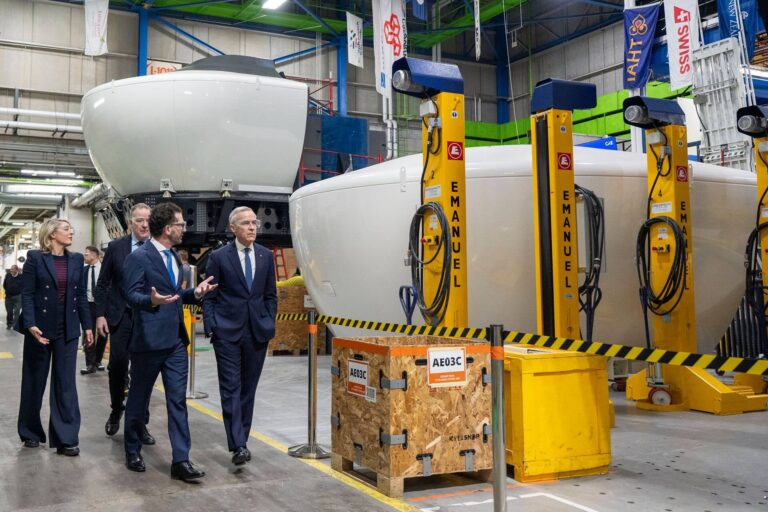
It was a big week for economic news. The Canada-U.S.-Mexico Agreement entered a period of perpetual review. The federal government, Alberta and British Columbia struck agreements that almost certainly will result in a new oil pipeline to the West Coast. But for me, the most important recent development is Carney’s food security strategy.
The North American trade agreement is distracting because of Corporate Canada’s one-way bet on the U.S. market. The pipeline is significant because the royalties and taxes it generates will help Alberta, B.C. and the federal government finance the reorientation of the economy and provide health services to an aging society without going broke. But Carney’s bet on the food industry is the one that promises the biggest return on investment.
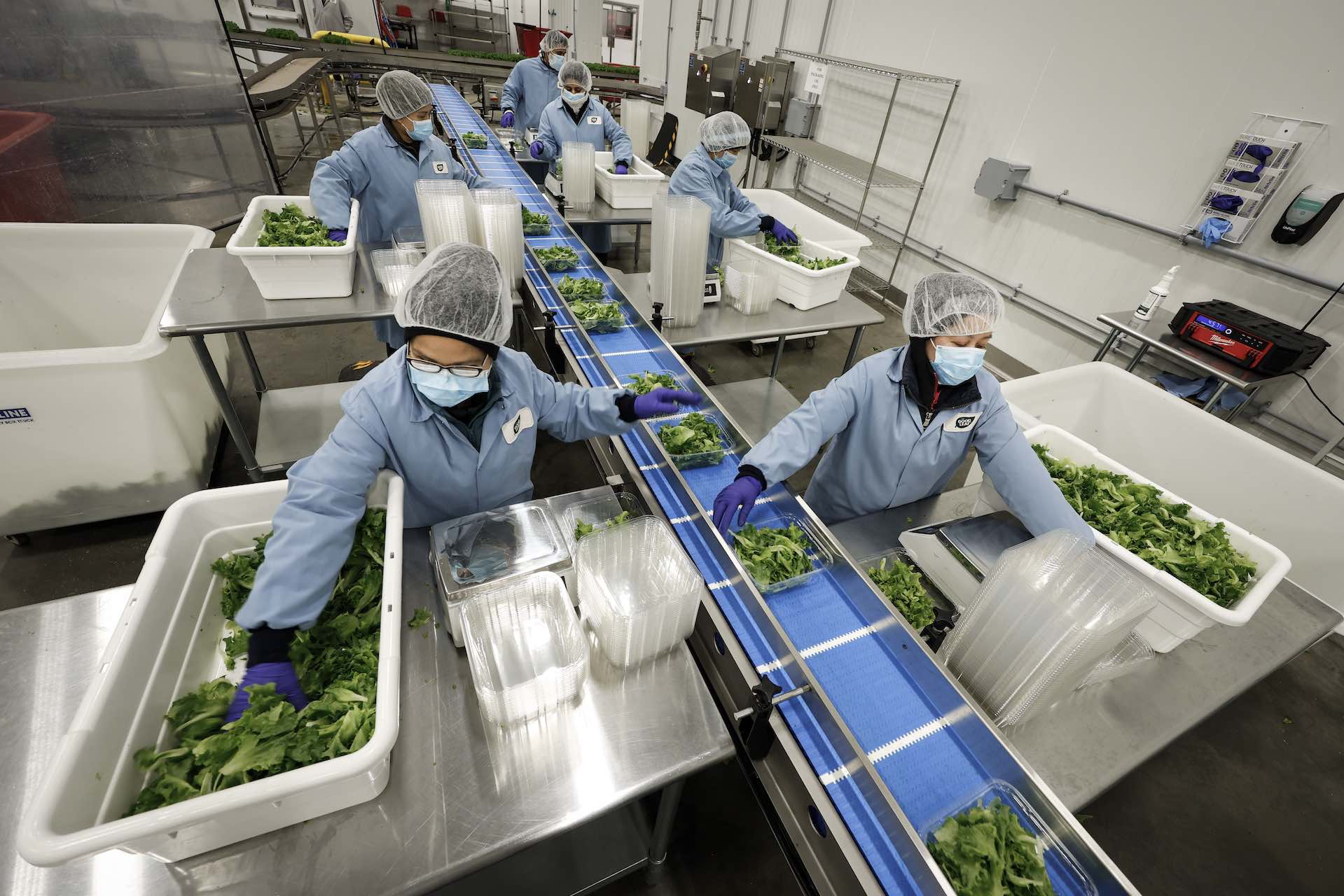
Canada’s proximity to the U.S. will remain an advantage no matter the tariff. The runway for oil is probably longer than many thought a decade ago, but climate change and the world’s dash for electricity will limit demand eventually. Demand for food, though? The slope of that curve is straight up and to the right. “I like the magnitude of it,” said Jon Lomow, co-founder and former chief executive of indoor lettuce producer Fieldless Farms. “We’ve never seen anything like this before, as far as I know.”
Early last year, Lomow wrote a policy memo for Build Canada that proposed setting a goal of meeting 85 per cent of the country’s nutritional needs from domestic production by 2035—and 95 per cent by 2045. It wasn’t science fiction. A country that can now produce strawberries year round doesn’t need to import Florida oranges as a source of Vitamin C. That’s on its way to becoming a choice.
Carney’s plan includes a key performance indicator of giving Canadians the option of fulfilling at least 75 per cent of the daily recommendations of Canada’s Food Guide with domestic sources by 2032. To achieve that, the government says it will channel hundreds of millions of dollars from various economic development funds to the food industry, and create a new $1-billion fund for “high-potential” projects that will be run at arms length from the government by Farm Credit Canada.
There are elements of the plan worthy of critique. Lomow, for one, wonders if the money earmarked for food terminals would be better spent on greenhouses, vertical farms and research on lab-grown food. But he acknowledges that it’s not the time to let perfect be the enemy of good. Canada’s food industry needed a shock big enough to disrupt centuries-old patterns. This might be it. We’ve given ourselves a chance to swap wine for cloth someday.
Kevin Carmichael is The Logic’s economics columnist and editor-at-large. He has spent more than two decades covering economics, business and finance for outlets including Bloomberg News, The Globe and Mail and the Financial Post, where he also served as editor-in-chief.