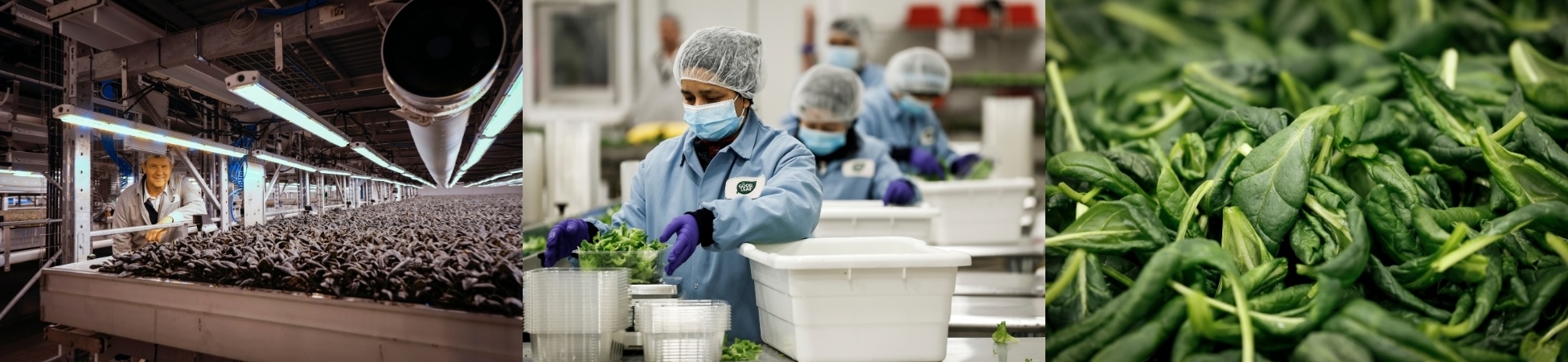
CALGARY — Inside a nondescript Calgary warehouse, shielded from the February blizzard outside, 10-foot-wide trays of spinach, arugula, pea shoots and other greens rest under red and blue neon lights. Automated robots collect the trays from ceiling-high stacks, then lower them onto a conveyor for packaging.
The $70-million facility, built by Guelph, Ont.-based GoodLeaf Farms, represents the latest in so-called vertical farming. First conceived as a way to grow produce with minimal land requirements, even in cold climates, the model is getting renewed attention in Canada as trade tensions with the U.S. highlight this country’s heavy reliance on other nations for certain foods.
Talking Points
- Vertical farming methods have been around for some time, but changing consumer habits are giving the industry momentum
- Donald Trump’s trade threats against Canada have provided a further boost, underscoring the country’s dependence on other countries for fresh produce
“Over the last couple months, with the U.S. administration change and their plans for protecting the ‘four walls’ of the U.S., they’ve just heightened everybody’s awareness of where we’re at,” GoodLeaf CEO Andy O’Brien said during a tour of the facility.
Canada’s frigid climate makes it heavily dependent on trade for fair-weather crops like vegetables and fruits. In 2024, the country ran a $3.2-billion vegetable and melon trade deficit, with around half of those imports coming from U.S. states like California and Arizona.
The disparity is especially glaring for leafy greens that grow above ground: Canada imported almost four times the amount of lettuce it produced in 2023, according to Agriculture and Agri-Food Canada. The country’s trade imbalance with the U.S. for lettuce, both fresh and chilled, hit $454 million last year.
To deep-pocketed interests, that gap is starting to look like an opportunity. GoodLeaf has raised at least $215 million from major backers, Pitchbook data shows, including McCain Foods and Power Sustainable, an investment firm controlled by Canada’s billionaire Desmarais family. With its facility in Calgary, and others in Montreal and Guelph, the company aims to bring its model to commercial viability.
From left to right: CEO Andy O'Brien at GoodLeaf’s vertical farm in Calgary; workers at the facility preparing lettuce; and package-ready spinach. Photo: Jeff McIntosh for The Logic
Vertical farming, the practice of growing crops in dense arrangements and controlled environments, has been strained in recent years as startups in the space grapple with rising costs and other setbacks. Yet changing consumer habits have encouraged the best-funded ones to hang in, and their prospects have been bolstered in recent months by dwindling trust in the U.S. as a trading partner and ally.
So far, U.S. President Donald Trump has not directly threatened trade measures on food products. However, the blanket 25 per cent tariffs he ordered on Canadian goods—since delayed until March 4—would raise input costs across the supply chain and diminish Canadians’ buying power by devaluing the loonie. In the event of an all-out trade war, there is risk of escalating retaliation between the two countries that would directly drive up food prices.
While Canada has long been aware of its vulnerability—“food security issues weren’t created yesterday,” O’Brien said—the situation has sharpened consumers’ focus on where their food comes from. Canada’s major grocery chains, which already stock GoodLeaf’s packaged greens, are buying into the trend, O’Brien said.
“The Sobeys of the world, the Costcos of the world, Loblaws, Save-On-Foods—they’ve been extremely supportive of wanting to have locally supplied products.”
Despite that enthusiasm, the vertical farming sector faces steep hurdles before it can replace significant volumes of Canadian imports.
Vertical farms are energy intensive, and require a lot of upfront capital to build. GoodLeaf’s Calgary operation uses about 18.34 kilowatt hours of electricity for every pound of produce, and recycles around 52,000 litres of water per day. (It draws humidity from the growing room using massive fans, then re-condenses it into liquid and re-treats the water with fertilizers like phosphorus and potassium.) The facility retains the majority of the water it uses, taking about 4,000 litres per day from the city’s supply.
Higher costs raise the prices on the produce. GoodLeaf’s products sell for two to three times those of its California-based competitors. At its current capacity, the facility will take more than 10 years to recoup its cost.
Alesandros Glaros, a researcher at the University of the Fraser Valley’s Food and Agriculture Institute, said the vertical farming industry “hit a bit of a bubble” in the last five years as startups in the industry failed to meet investor expectations.
Investment in agricultural food tech has cratered, and several major vertical farming companies in the U.S. have filed for bankruptcy or shut down over the last two years, including Bowery Farming, AppHarvest and AeroFarms.
Even so, Glaros said the business is “absolutely going to play a role” in replacing imported produce, as companies continue to narrow price gaps through innovation and improved operations.
“It doesn’t require a major lift to do so,” he said, adding, “I think it’s a no-brainer.”
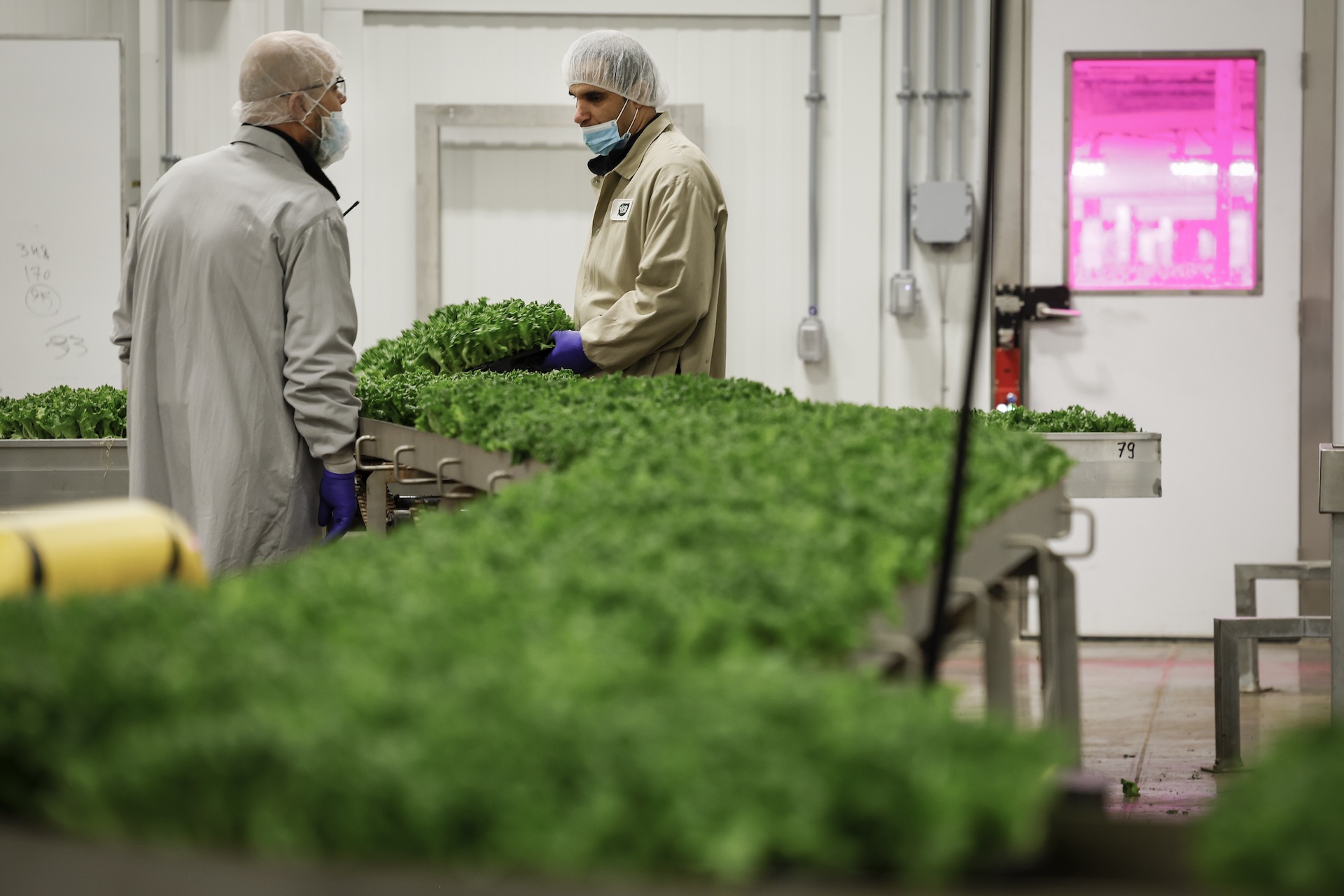
Getting there would require major scaling up. GoodLeaf’s 115,000-square-foot Calgary facility was designed so that the company can build a duplicate growing operation of equal size onto the existing building. At GoodLeaf’s sprawling Montreal operation, it has capacity to build another 17 iterations of its current capacity.
There is room at GoodLeaf's Calgary site to double the facility's growing capacity. Photo: Jeff McIntosh for The Logic
Improvements in LED lighting have made vertical farms more efficient in recent years, Glaros said. Another area of improvement is seed genetics: plants that aren’t exposed to the wind, insects and temperature swings of the great outdoors don’t have to be as hardy as traditional ones, and researchers are getting better at developing fine-tuned seed varieties that thrive indoors.
GoodLeaf is among the biggest vertical farming companies in Canada, but smaller firms like Ottawa’s Growcer and QuantoTech Solutions of Port Coquitlam, B.C., are also exploring more efficient ways to produce crops indoors.
Lisa Ashton, RBC’s agriculture policy lead, said one of the greatest challenges for vertical farmers is securing access to water and cheap power—electricity, in particular, is among the industry’s biggest costs.
“Controlled environment agriculture, especially greenhouses in Canada, have a lot of potential,” Ashton said. “They just have some key production barriers to overcome.”
As for GoodLeaf, CEO O’Brien said his biggest challenge is communicating the company’s benefits to consumers.
GoodLeaf’s spinach, lettuce and other greens have a 21-day shelf life, he said, and offer more nutritional value than conventionally grown greens. Unlike typical crops, the company doesn’t use pesticides due to the controlled indoor environment.
The question is whether buyers think those attributes are worth the cost.
Either way, should a U.S. trade war trickle down into various food sources, it would only make the company more competitive with foreign players, O’Brien said: “It won’t hurt us.”