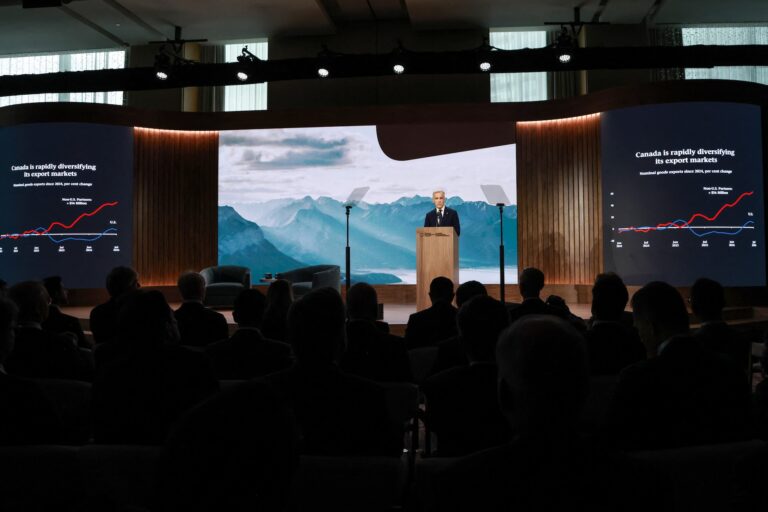
Private company Ispace expected to carry out the first commercial landing on the moon but lost contact with its lander moments before touchdown. Attempts to reconnect would continue, said Ispace’s stricken CEO Takeshi Hakamada at the end of a livestream that turned abruptly from triumphant to stunned, but “we have to assume that we could not complete the landing on the lunar surface.” (The Logic)
Skip to content

Private company Ispace expected to carry out the first commercial landing on the moon but lost contact with its lander moments before touchdown. Attempts to reconnect would continue, said Ispace’s stricken CEO Takeshi Hakamada at the end of a livestream that turned abruptly from triumphant to stunned, but “we have to assume that we could not complete the landing on the lunar surface.” (The Logic)
Talking point: Launched in December on a slow, low-energy course for the moon, the lander was carrying two rovers. One was equipped with technology from Ottawa’s Mission Control Space Services meant to help rovers understand their surroundings and operate more independently from controllers on Earth. “We know the risks involved and are continuing to push the boundaries of innovation and advancing humanity’s understanding of the cosmos,” Mission Control’s communications manager Candice Kinney told The Logic. The Hakuto-R vehicle also had cameras from Canada’s Canadensys aboard, which transmitted test images during the approach to the moon. Hakamada said Ispace did get data from the lander on the way down, which will aid future planned missions.



Loading...
Thanks for sharing!
You have shared 5 articles this month and reached the maximum amount of shares available.
CloseThis account has reached its share limit.
If you would like to purchase a sharing license please contact The Logic support at [email protected].
CloseGift the full article!
You have gifted 0 article(s) this month and have 5 remaining.
Recipients will be able to read the full text of the article after submitting their email address. They will not have access to other articles or subscriber benefits.
Most Popular This Week


In-depth, agenda-setting reporting
Great journalism delivered straight to your inbox.
News
Canada’s landmark ESG case heads to a final decision
Briefing
Matthew Proud-led SPAC threatens to pull out of merger with UniUni
Ottawa awards Mitacs $162M to create AI-focused work placements
Ontario puts $30M into Vector Institute for AI adoption
Best business newsletter in Canada
Get up to speed in minutes with insights and analysis on the most important stories of the day, every weekday.
Exclusive events
See the bigger picture with reporters and industry experts in subscriber-exclusive events.
Membership in The Logic Council
Membership provides access to our popular Slack channel, participation in subscriber surveys and invitations to exclusive events with our journalists and special guests.