Canada’s tech startups are among the companies that would suffer from a 25 per cent tariff on all Canadian products imported to the U.S., industry leaders warn. While the severity of the pain depends on the details of president-elect Donald Trump’s proposal, the threat alone may cast a chill on investment and push talent south of the border.
Skip to content


News
VCs are on edge as Trump’s tariffs spook Canada’s startups
Industry leaders expect startup investment to slow and talent to move south in the face of a 25 per cent import tariff
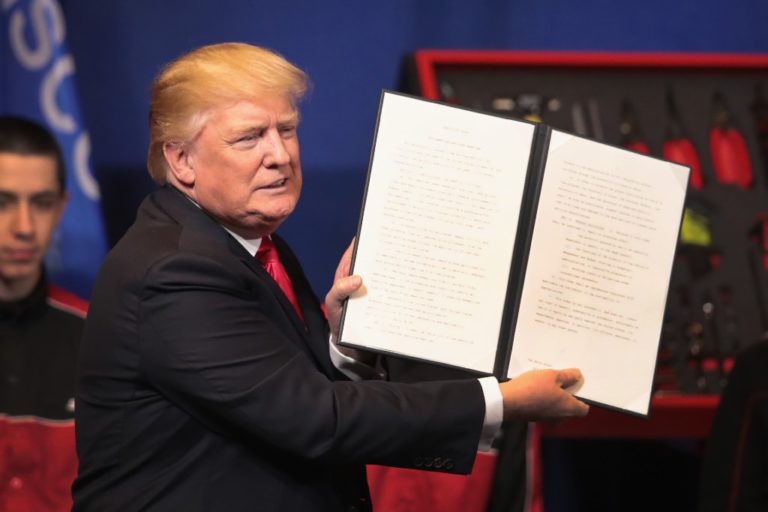
Several investors said tariffs could force some Canadian portfolio firms to relocate to the U.S. Photo: AP Photo/Alex Brandon
Canada’s tech startups are among the companies that would suffer from a 25 per cent tariff on all Canadian products imported to the U.S., industry leaders warn. While the severity of the pain depends on the details of president-elect Donald Trump’s proposal, the threat alone may cast a chill on investment and push talent south of the border.
“Any new tariff would significantly impact Canadian businesses and have a ripple effect on investment, including VC,” Kim Furlong, CEO of the Canadian Venture Capital and Private Equity Association, said in an email.
Talking Points
- Investors, founders and industry advisors say a 25 per cent tariff on all Canadian products into the U.S. will disrupt Canada’s startup and tech ecosystem
- While the impact will depend on details of president-elect Donald Trump’s proposal, it could cast a chill on investment and prompt top talent and startups to move south of the border
Most investors, founders and industry advisors who spoke to The Logic said they’re trying to remain calm amid a lack of detail on how the tariffs will apply, or whether they’ll even be enacted. But they’re still considering scenarios in which Trump keeps his word.
In that case, Canada’s hardware tech companies have the most to lose, said Senia Rapisarda, managing director of HarbourVest in Toronto. Those companies tend to have more trouble raising capital than those that build and sell software, she said, because they typically require more time and money than software companies before they generate returns for investors. With steep tariffs looming, Rapisarda said investors, herself included, are less likely to back these companies. “The margin will be too squeezed,” she said.
Thomas Park, a venture capital advisor and investor, previously at BDC Capital, pointed to companies in cleantech and chip manufacturing as particularly vulnerable if the tariffs are enacted. That’s not just because many of them ultimately ship products to the U.S., but because those products often use components from China as well, which Trump said would be subject to additional tariffs.
Related Articles

Because a large share of Canada’s venture-backed startups and scaling companies operate in the software as a services space, the industry may be insulated from tariffs—assuming the rule only applies to physical goods.
Daniel Ujczo, an international trade lawyer with Thompson Hine, said software, if sold as a good or hard copy, “likely would be subject to tariffs. Software sold as a service, however, “would likely be exempt under existing global exemptions on duties for digital trade,” Ujczo said.
Tariffs on digital sales may be reconsidered when Canada, Mexico and the U.S. renegotiate the USMCA trade deal in 2026, said Ujczo. U.S. officials and business leaders have raised concerns about Canada’s digital services tax, as well as its AI legislation and cultural requirements for digital content creators, Ujczo noted. “These could be considered de facto tariffs on U.S. technology companies and likely will be a focus of discussion,” he said.
Regardless of what Trump’s tariff policy looks like, several investors said they expect some portfolio firms to relocate to the U.S., as conditions for starting and growing companies in Canada becomes more challenging, they said.
In April, the federal government announced a tax increase on the share of capital gains it collects from asset sales. Ottawa expects the move to add $19.3 billion to the government’s revenue over five years. But investors slammed the policy, saying the lower returns on domestic investments would drive their money, and the Canadian companies that want it, to the U.S.
Many of Canada’s venture investors have also been struggling to raise capital, after years of muted returns on their investments and general economic uncertainty.
“It’s another nail in the coffin,” Rapisarda said of Trump’s proposed import tariff. She agreed that companies may opt to move to the U.S.—if the country’s immigration policies allow—to make themselves more attractive to buyers and investors south of the border.
Patrick Lor, managing partner at Panache Ventures, said the drop in the value of the loonie—which reached a four-year low Tuesday and is expected to remain low during Trump’s presidency—may be the biggest impact on Canada’s innovation sector, by weakening purchasing power for companies and their employees, and curbing their ability to hire and retain top talent.
Investors said funding won’t stop completely. Park said he expects investors to focus on early-stage deal-making amid tariff uncertainty. Those companies typically aren’t selling internationally yet, and are small and nimble enough to relocate if they have to, he said. Rapisarda said investors may write deal terms that protect them from the increased risk of losses.
Benjamin Bergen, president of the Council of Canadian Innovators, said it’s hard to know how to respond without knowing exactly what Trump’s plan for enacting the tariffs will be. But he said Canada’s government and industries should use this moment to engage with each other and determine the country’s economic priorities, “not just for the next four years, but the next number of decades.”
He said efforts should focus on making Canadian companies competitive in sectors that will be indispensable in the future—areas like AI, quantum computing and building semiconductors. “Now is not the time for panic,” said Bergen. “Now’s the time to organize and strategize.”



Loading...
Thanks for sharing!
You have shared 5 articles this month and reached the maximum amount of shares available.
CloseThis account has reached its share limit.
If you would like to purchase a sharing license please contact The Logic support at [email protected].
CloseGift the full article!
You have gifted 0 article(s) this month and have 5 remaining.
Recipients will be able to read the full text of the article after submitting their email address. They will not have access to other articles or subscriber benefits.
Photo: AP Photo/Alex Brandon
Most Popular This Week




In-depth, agenda-setting reporting
Great journalism delivered straight to your inbox.
Commentary
Carmichael: Canada’s biggest companies aren’t wired for growth. That’s a problem for us all
Briefing
Stellantis considering selling Ontario factory, union says
Intellectual property from failed New Brunswick nuclear developer sold to Ontario’s Nuclea Energy
Drone maker Volatus reports revenue dip as it struggles with its supply chains
Best business newsletter in Canada
Get up to speed in minutes with insights and analysis on the most important stories of the day, every weekday.
Exclusive events
See the bigger picture with reporters and industry experts in subscriber-exclusive events.
Membership in The Logic Council
Membership provides access to our popular Slack channel, participation in subscriber surveys and invitations to exclusive events with our journalists and special guests.