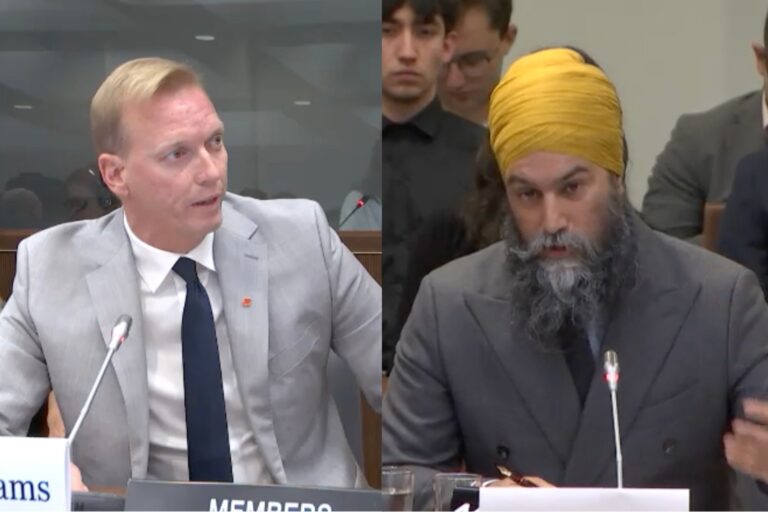
OTTAWA — NDP Leader Jagmeet Singh ended his party’s confidence-and-supply agreement with the federal Liberals on Wednesday, accusing Prime Minister Justin Trudeau’s government of being “too weak, too selfish and too beholden to corporate interests to fight for people.”
Here’s what you need to know.
Does this mean a federal election? No. Singh’s announcement said the New Democrats are willing to vote against the governing party, not that they’re planning to do that as soon as they can. The Liberals can also seek votes from the Bloc Québécois or Conservatives in an effort to hold on until the legally fixed election date of Oct. 20, 2025.
But losing the NDP’s guaranteed support on confidence matters (and trailing in every recent poll) will likely make the Liberals think tactically about what legislation they want to advance or dare other parties to block.
Related Articles
Key legislation: The Liberals have a stack of bills affecting business, the economy and government services that could fall off their priority list if they focus on social programs to avoid defeat.
- Bill C-26, revamping federal cybersecurity regulation and barring China’s Huawei and ZTE from Canadian telecom networks.
- Bill C-27, which would replace Canada’s decades-old private-sector privacy law and establish a new law governing AI. Innovation Minister François-Philippe Champagne introduced the legislation in June 2022, and proposed significant changes late last year.
- Bill C-63, the Online Harms Act, meant to combat everything from hate to illegal pornography on the internet.
- Bill C-72, intended to improve sharing of health data among provinces and between different vendors’ electronic systems.
- Bill S-6, which would update a host of outdated regulations.
- A bill to come, which would put into law the Liberal government’s proposed changes and carve-outs to the way capital gains are taxed. While the increase in the inclusion rate took effect in June, the Liberals must still table their legislation.
- A second bill to advance open banking is due this fall.
Trudeau’s take: At a school in Newfoundland, the Prime Minister showed how he plans to position the Liberals. He briefly mentioned foreign investment in Canada as a Liberal success, but he emphasized the school food program he’d gone to the East Coast to play up, as well as pharmacare, dental care and housing as elements of an agenda of “delivering for Canadians.” Conservative Leader Pierre Poilievre would cut those programs, Trudeau charged.
Why Singh did it: Singh said Trudeau has caved too often to “corporate greed” and won’t be able to stop Pierre Poilievre’s Conservatives in the next federal election. New Democrats were especially aggrieved by the Liberals’ back-to-work orders for rail workers last month.
Practically, running against a governing party you’ve been supporting is hard. Poilievre doesn’t want to make it any easier. Breaking with the Liberals gives the New Democrats time to try to differentiate themselves.
What’s next: After making his announcement in writing and with a video Wednesday, Singh is to speak publicly in Toronto on Thursday. The House of Commons sits again on Sept. 16.
With files from Murad Hemmadi