MONTREAL—As a general rule, Quebec has an aversion to most things British, the English language very much included. Yet when it comes to gin, which is essentially the English language in beverage form, Quebecers are gluttons. In 2019, the province became the country’s biggest gin retailer, with the Société des alcools du Québec (SAQ), the state-run liquor monopoly, selling 3.2 million litres of the stuff—a 55 per cent increase from a decade before. Quebec gin was having its moment.
Skip to content
Commentary: Quebec Ink
Quebec’s gin bubble has burst
A government-supported push into microdistilling is headed for a five-alarm hangover
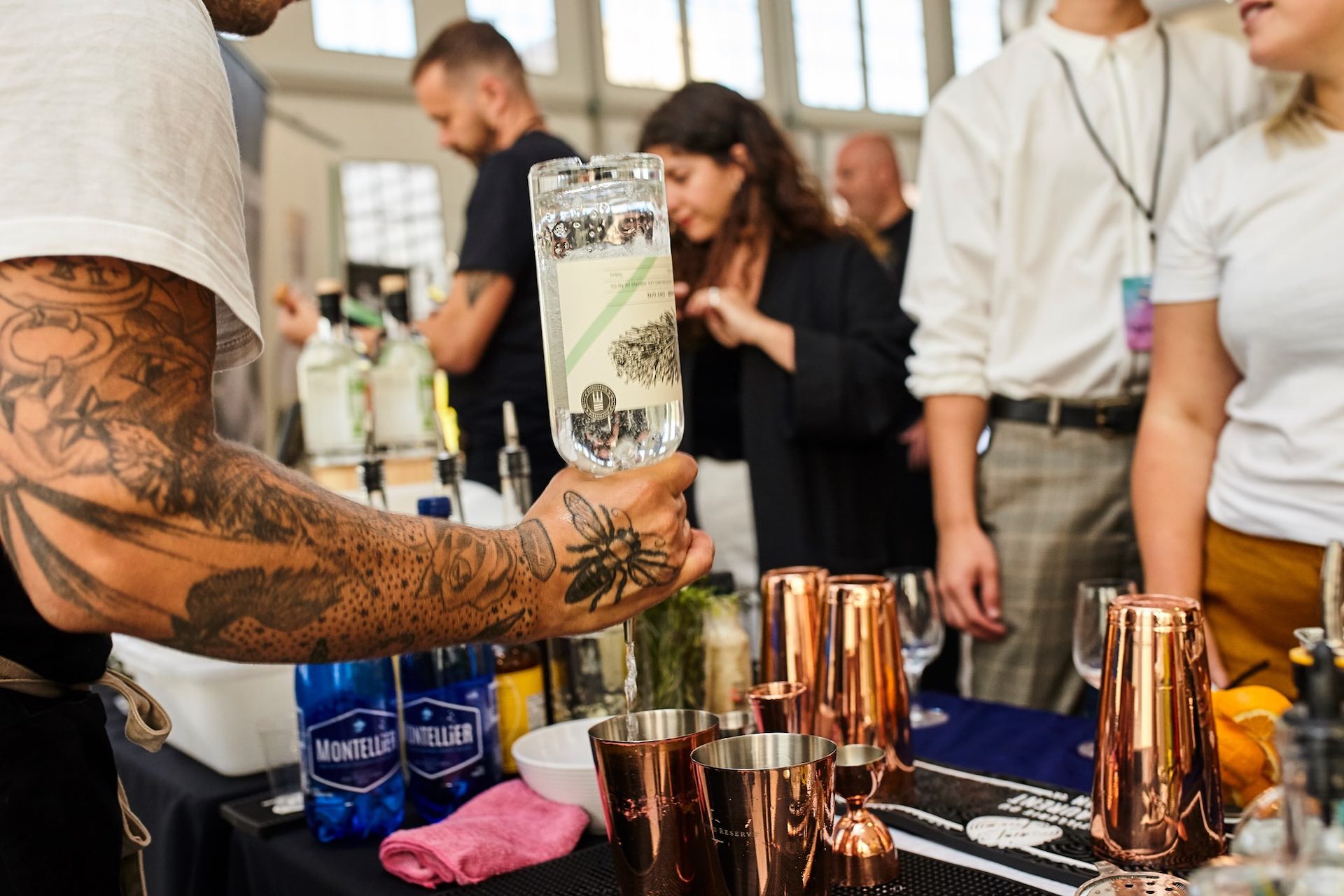
There are 280 made-in-Quebec gins, but the market doesn't have room for all of them. Photo: Facebook/Quebec Distillery Association
MONTREAL—As a general rule, Quebec has an aversion to most things British, the English language very much included. Yet when it comes to gin, which is essentially the English language in beverage form, Quebecers are gluttons. In 2019, the province became the country’s biggest gin retailer, with the Société des alcools du Québec (SAQ), the state-run liquor monopoly, selling 3.2 million litres of the stuff—a 55 per cent increase from a decade before. Quebec gin was having its moment.
That moment is quickly passing. Last year, the SAQ laid the blame for a decrease in made-in-Quebec products at the feet of gin producers. The Quebec gin market, the SAQ’s 2023 annual report noted drily, “appears to have reached maturity.” Behind this bit of cold corpo-speak is an industry in tatters. Two thirds of Quebec microdistilleries, many of which produce gin, are in a “financially precarious position”, according to Joël Pelletier, president of the province’s microdistillery association.
This includes Distillerie du St. Laurent, which Pelletier co-founded in 2014 and produces one of Quebec’s most popular gins. Last year, the renowned Rimouski-based distiller filed for bankruptcy protection. Among its creditors is Investissement Québec, the investment arm of the provincial government, which is owed $3.8 million. Ditto Farm Credit Canada, the federal lender.
Related Articles
St. Laurent is still producing, and Pelletier says he is optimistic about the company restructuring. But its struggles underscore an unfortunate truth: Quebec’s gin bubble has burst.
Many of the reasons behind gin’s troubled times—fickle tastes, flooded markets, the end of free money—will sound familiar to anyone in the tech industry. But consider first the weird little miracle of how the late queen’s favourite tipple became big enough to bubble in the hinterlands of French Canada.
According to the lore, the love affair began with Dutch distillery de Kuyper, whose signature product, Genièvre Geneva gin, was bottled in Montreal. “Kuyper”, as it’s known around here, was cheap and, unlike one popular Montreal beer brand, didn’t pose risk of death upon the imbiber. As such, de Kuyper became a favourite of a certain generation of Québécois men, who sometimes boiled it down with maple syrup to sweeten it, or added honey and lemon to fight off a cold. “The generation of our grandparents ensured that there was a fertile territory for gin,” Pelletier told me.
In 2010, Quebec cider maker Domaine Pinnacle began producing a gin infused with botanicals harvested from the Ungava Peninsula in the province’s north. The resulting concoction is comparatively expensive and looks like pee, but won the Best in Show award at the 2013 World Spirits Competition. Quebec’s collective whistle was wetted anew.
By 2019, there were over 350 different gins crowding SAQ shelves. Today, drinkers have a choice of 280 made-in-Quebec gins. The spirit is, in a way, the perfect booze for the entrepreneurial type. Since it doesn’t have to be aged, the barrier to market entry is far lower than, say, whisky. And because it needs only alcohol and juniper berries to be called gin, it can be infused with any number of botanicals from Quebec’s terroir—mushrooms, sunflowers, even dandelions.
With gin sales increasing exponentially as recently as 2021, there was room for everyone, and the SAQ was happy to oblige. “The vast majority of innovations in gins presented to us by Quebec distillers find a place on our shelves,” SAQ spokesperson Geneviève Cormier told me via email.
Then came the crash, triggered in large part by softening of demand but also by investors’ reduced appetite for risk as interest rates went up. “Everything that is gin, vineyard and cider, it’s off,” Martin McNicoll, a whisky producer in Quebec’s Eastern Townships, told me. “It’s a perfect storm. They have trouble selling, and investors have turned off the tap.”
“Are there too many distilleries in Quebec? Probably,” Pelletier told me. “There has been an enormous injection of capital in different regions of Quebec, notably in beer and spirits, without necessarily checking whether market saturation would follow as a result.”
Apart from deepening this saturation, Pelletier says, the SAQ’s policy of giving shelf space to producers large and small has crowded out other more successful brands. Pelletier estimates Distillerie du St. Laurent’s sales points have decreased by 60 per cent since 2015 as a result. “The market must regulate, not the government,” he told me. (The SAQ’s Cormier said some gin producers are now withdrawing their lower-performing products.)
Then there’s Quebecers themselves, who seem to be moving on from their gin-infused fever dream. The new shiny libation? Tequila, whose sales grew nearly 45 per cent over the last year. There’s a Quebec-made tequila, launched last year, made with water drawn from the Cherry River in the Eastern Townships and blue agave syrup from Jalisco, Mexico. They say there’s no hangover from good tequila. The same can’t be said for Quebec’s gin producers, who are only starting to feel the pain.
Martin Patriquin is The Logic’s Quebec correspondent. He joined in 2019 after 10 years as Quebec bureau chief for Maclean’s. A National Magazine Award and SABEW winner, he has written for The New York Times, The Guardian, The Walrus, Vice, BuzzFeed and The Globe and Mail, among others. He is also a panelist on CBC’s “Power & Politics.”



Loading...
Thanks for sharing!
You have shared 5 articles this month and reached the maximum amount of shares available.
CloseThis account has reached its share limit.
If you would like to purchase a sharing license please contact The Logic support at [email protected].
CloseGift the full article!
You have gifted 0 article(s) this month and have 5 remaining.
Recipients will be able to read the full text of the article after submitting their email address. They will not have access to other articles or subscriber benefits.
Photo: Facebook/Quebec Distillery Association
Most Popular This Week




In-depth, agenda-setting reporting
Great journalism delivered straight to your inbox.
News
Ottawa tries to deliver on Carney’s promise to build faster
Briefing
AMD to acquire Radical Ventures-backed World Labs in US$8.2B deal
Stelco to idle part of Hamilton steel plant for firm’s ‘survival’ amid U.S. tariffs
Last-mile delivery company UniUni is seeking new private funding as its SPAC deal falters
Best business newsletter in Canada
Get up to speed in minutes with insights and analysis on the most important stories of the day, every weekday.
Exclusive events
See the bigger picture with reporters and industry experts in subscriber-exclusive events.
Membership in The Logic Council
Membership provides access to our popular Slack channel, participation in subscriber surveys and invitations to exclusive events with our journalists and special guests.