Listen Now
0:00
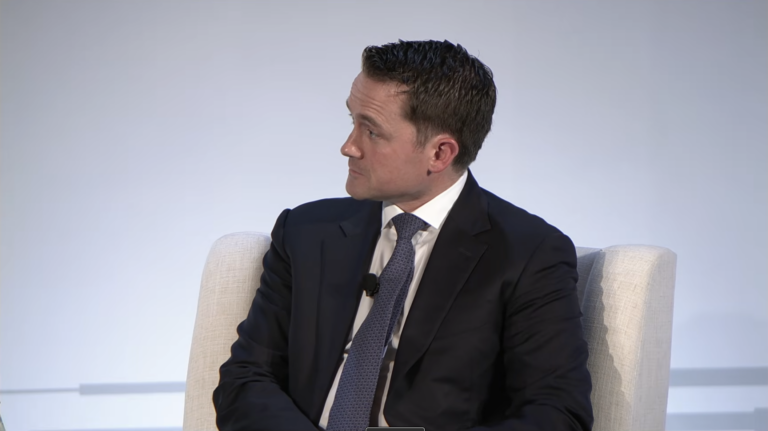
OTTAWA — Semiconductor company Ranovus is launching a venture investment arm to boost the sector in Canada by investing in the company’s own supply chains. CEO Hamid Arabzadeh has an early target in mind: the celebrated photonics fabricator set to be spun out of the National Research Council.
“One of our first investments is going to be in that facility, and we’re looking, actually, to purchase it,” Arabzadeh told The Logic in an interview after announcing Ranovus’s broader investment plans.
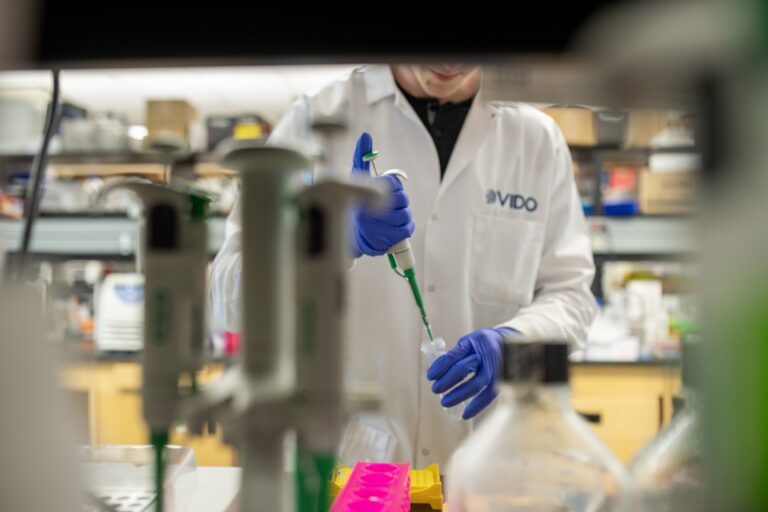
The Canadian Photonics Fabrication Centre (CPFC), on the federal science agency’s campus in eastern Ottawa, makes compound semiconductors that can transmit information using lasers and fibre optics. These move data faster and with less energy than traditional semiconductors that use electrical charges.
Related Articles


Ranovus makes chips with those components. They’re increasingly in demand for AI-oriented data centres, among other uses.
The CPFC is one of just three facilities in the world—and the only one in North America—that makes these chips for outside customers.
The Canadian government plans to spin the CPFC out of the National Research Council, responding to calls from industry leaders, including Arabzadeh. They’ve argued that the CPFC could be the core of a next-generation semiconductor industry as significant as Taiwan’s is today if it has the right management and enough new investment.
Buying a foundry is “a major, major undertaking,” Arabzadeh acknowledged. But, he said, Ranovus has previously invested in the CPFC to increase its capabilities and bought over 100 million lasers made there. Now that the federal government is looking to privatize the facility, he thinks Ranovus executives are well placed to oversee it.
“We have big backers,” he said. “The valuation of [Ranovus] at the moment is about $1.5 billion to $1.75 billion, so we are in a very good spot to maintain Canadian ownership as we raise hundreds of millions of dollars for various projects we have.”
The CPFC might be the biggest quarry Ranovus pursues with its new venture arm, but Arabzadeh said it won’t be the only one. The company is most interested in helping its own suppliers grow and become more innovative, resilient and diverse.
“We’re hoping we can allocate more capital based on opportunities we would have to create ourselves,” Arabzadeh said.
Cutting-edge Canadian semiconductor companies have been gobbled up lately; Arabzadeh pointed to Toronto’s Untether AI, taken apart by AMD last year in a deal that left little but financial rubble behind, and Ottawa’s Hyperlume, acquired by Credo. In both cases, the new owners are California-based.
The idea is to keep more of those Canadian startups alive, funded by Ranovus money and guided by Ranovus executives with Silicon Valley connections—some of them former founders themselves—on the startups’ boards. “It’s almost like co-founding and co-funding the companies,” Arabzadeh said.
He also hopes that if more venture capital is available, some former founders will be tempted back into entrepreneurship.
“We have to pull in the serial entrepreneurs who are in multinational companies—ex-Nortel people who are in Ciena, Ericsson, Nokia—really motivate them to come out and do things,” he said.