Skip to content

Canada's Business and Tech Newsroom

  • Professional Subscription
  • Partnerships & Advertising
  • Licensing & Syndication
Log In Subscribe
Welcome,
  • My Account
  • Log Out
  • Business
  • Tech
  • National
  • The Big Read
  • Briefings
  • Commentary
Search
Log In Subscribe
Welcome,
  • My Account
  • Log Out
News

Panel decries Canada’s chaotic way of funding world-class science

Listen Now
0:00
News

Panel decries Canada’s chaotic way of funding world-class science

An expert panel warns that haphazard funding is holding back Canada’s leading research facilities, and urges Ottawa to give them a shared agenda

By David Reevely
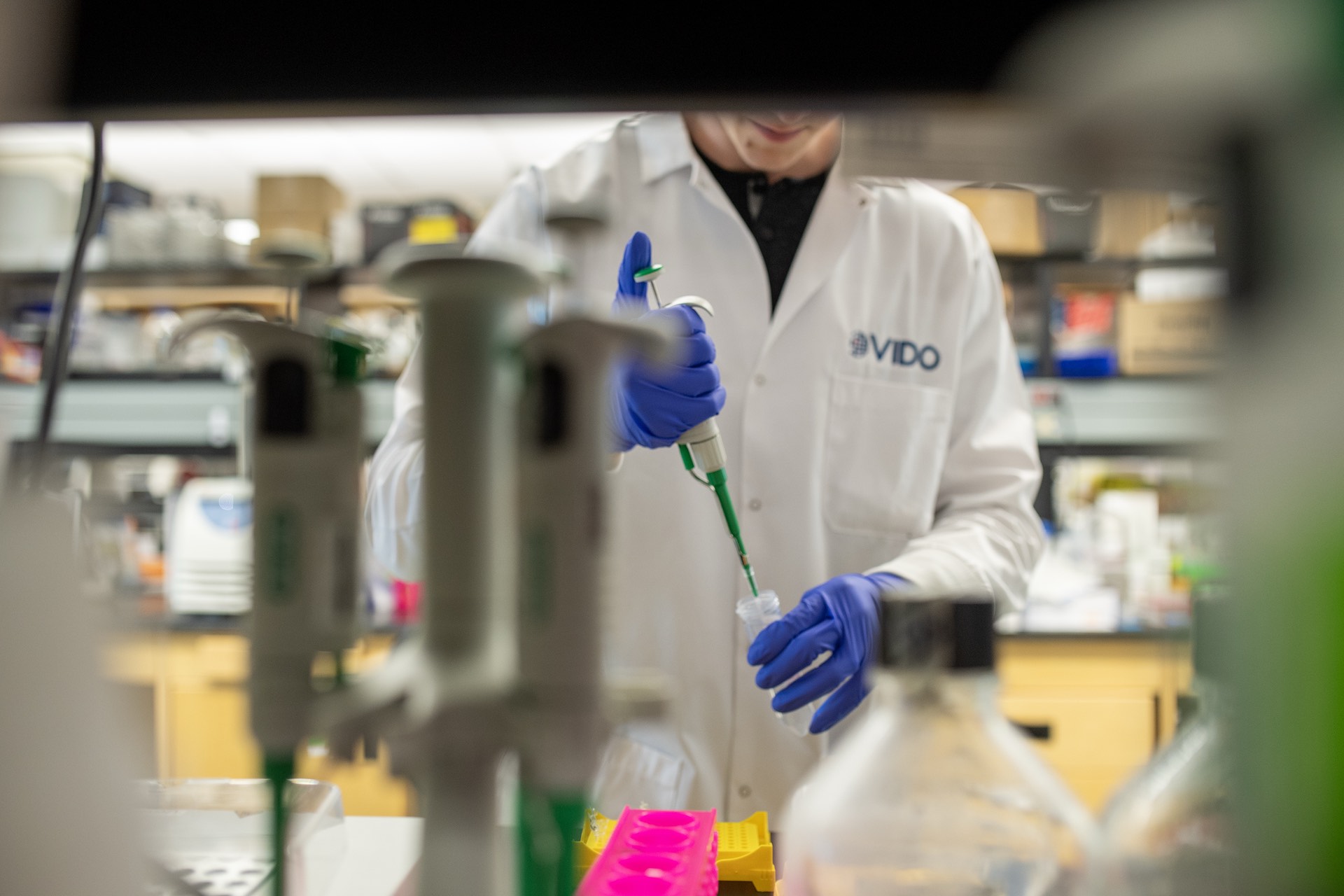
A shot taken through laboratory equipment of a researcher injecting liquid into a tube. The worker is wearing blue, latex gloves, and is a white lab coat with the VIDO logo on it.
The VIDO infectious disease centre at the University of Saskatchewan counts among the leading science facilities affected by Canada’s patchwork approach to funding. Photo: The Canadian Press/Liam Richards
Oct 20, 2026
A A
A Small A Medium A Large
Share

Gift

Share

Listen Now
0:00

OTTAWA — Canada has some world-class science research sites but it’s not using them properly or preparing them for the future, according to a new report, commissioned by the federal government itself.

The report warns that a decades-long habit of “muddling through” is not good enough.

“I do no research anymore,” laments a manager at one of those sites, quoted in an appendix to the report by the Council of Canadian Academies. “My time is all related to positioning the lab for continued success, which includes funding. I’m in Ottawa every month.” 

Talking Points

  • A government-commissioned expert panel says Canada’s major research facilities follow no national agenda and face constant financial cliffs
  • Panel chair Janet King says Canada will fall behind as global science competition intensifies unless it co-ordinates better

This is fixable, Janet King, a former senior federal public servant who chaired the panel that produced the report, told The Logic in an interview. It’ll be hard, but the need is urgent.

“Science is changing fast and hard,” she said. International competition is fiercer and fractured alliances hurt co-operation we used to be able to count on. Artificial intelligence and digital tools are affecting all sorts of research.

“In this era of increasing pressures, of competition for Canada, if we do not take some action on optimizing our national research infrastructure, we’ll fall behind,” King said.

Related Articles
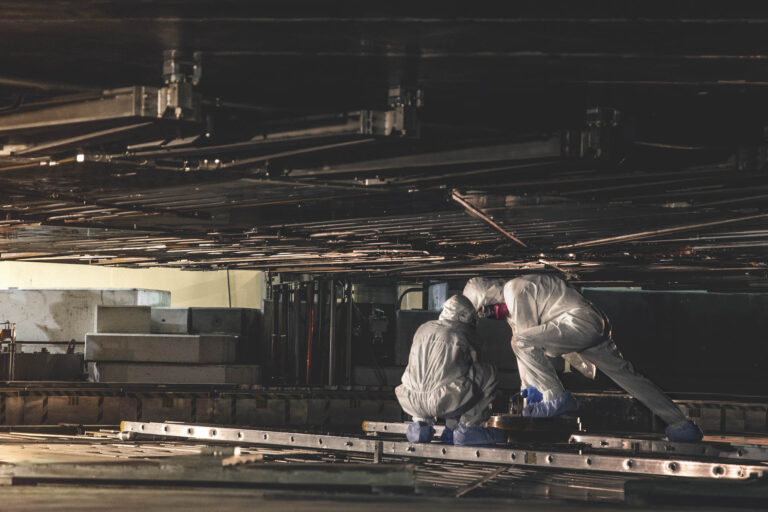
Two workers wearing white coveralls with hoods, masks and blue booties crouch while performing work in the narrow confines of a dark, metal-lined chamber.

Canada’s world-leading labs warn of second-class status without funding overhaul

By David Reevely and Murad Hemmadi
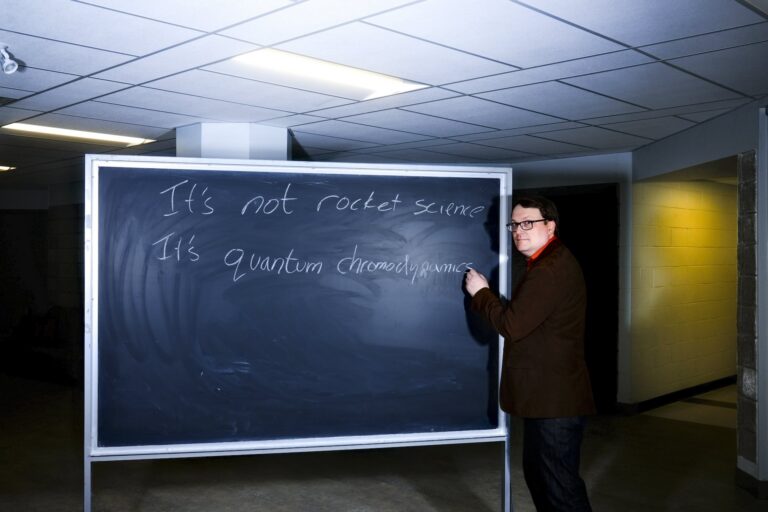
A man stands at a chalkboard while looking at the camera. He has apparently written "It's not rocket science; it's quantum chromodynamics."

The professor trying to make Canada a supercomputer superpower

By Murad Hemmadi

The federal government sought this advice from the council, an Ottawa-based not-for-profit that convenes experts to weigh in on issues of public interest. The organization turned to King (holder of a geological science PhD and a former federal associate deputy minister who spent much of her career working on issues in the North), university research executives and leaders of some of Canada’s premier science facilities for the work.

A few of the crown jewels: SNOLAB, two kilometres underground in an Ontario mineshaft, where scientists can study the very slightest of subatomic particles without background noise. The Arctic research icebreaker CCGS Amundsen. The VIDO infectious diseases centre at the University of Saskatchewan that fights human and animal contagions. A set of remote radars called SuperDARN—part of an international network—that help predict solar storms that can wipe out communications.

Together, says the panel report released Tuesday morning, these are “enablers of the broader research ecosystem that is critical to Canada’s well-being and position in the world,” and the country should treat them like a portfolio of assets that deserves some long-term planning.

What Canada has instead is critical science infrastructure that runs on “uncertain and fragile funding arrangements” that make thinking beyond the next budget cliff impossible. There’s no plan for maintaining and improving these facilities, or even closing them when they’re someday obsolete.

A group of people in blue coveralls and orange hardhats look at equipment within a tunnel whose sides, ceiling and floor are glossy and white.
Researchers at SNOLAB study subatomic particles deep in a nickel mine under Sudbury, Ont. Photo: Snolab/Facebook

If you’re trying to run a world-class science facility, the result is a mess: “Many funding programs are not effectively connected, co-ordination is often ad hoc and funding structures are dispersed across multiple programs and levels of government,” the report says. 

This patchwork yields perverse results, says another facility manager (or possibly the same one) in the appendix: “I talk to many researchers who have equipment which is still useful, but they have to replace it with expensive new equipment because there is no funding for maintenance.”

“We do not advocate for a single point of control anywhere,” King stressed in the interview. Nor is there one single country with a model to copy. “We’re looking for stronger co-ordination. We’re looking for stronger information to inform and guide decision-making. We’re looking for deeper awareness of what’s possible and what could be effective. Not one set of rules.”

Ideally there’d be a national science strategy that links strategic and economic goals to research that could help the country reach them, it says. Canada doesn’t have one. It has a collection of strategies that have scientific parts to them—such as for artificial intelligence, critical minerals, nuclear energy and quantum technologies—but aren’t linked. Everything suffers from a “lack of clear national intentions.”

The Canada Foundation for Innovation, a federal agency, is a big up-front funder, paying for up to 40 per cent of a research site’s infrastructure costs. The report credits the agency with working on something resembling a long-term plan—including for funding—that draws on the various sector strategies, but it covers only six sites. Plus, the work is incomplete and not public. 

Meanwhile, foreign governments and scientists don’t understand what we’re doing, says the report: “Canadian decision-making is perceived as opaque and unco-ordinated… Partners lack clarity about Canada’s research priorities, which limits Canada’s voice and participation in international [research], as well as the resultant benefits.”

The current arrangements do have an upside, King acknowledged: “There’s no one point of failure,” she said. “There’s a certain resilience and flexibility and responsiveness” in what Canada has.

Gift the full article

For instance, when the federal Department of Fisheries and Oceans cut support, in the early 2010s, for the Experimental Lakes Area in northwestern Ontario, the Ontario and Manitoba governments stepped in to fund its unique freshwater-lake research. They turned it over to the International Institute for Sustainable Development, which runs it to this day.

Still, King said, “bottom-up brilliance and messiness, with occasional super-wins,” aren’t as effective as some planning would be.

“Canada has built a suite of research infrastructures that are commendable and are endeavouring to support our national interests,” she said. “I think the panel’s findings are that Canada can do so much better.” 

#economy #National #research

Sponsored Content

The road to risk-smart regulation

By Deborah Aarts

Why cybersecurity needs to match pace with AI

By Jessica Aftimus Rosa

How to shift your workforce from AI experimentation to adoption

By Jessica Aftimus Rosa
Paid promotional content

Loading...

Thanks for sharing!

You have shared 5 articles this month and reached the maximum amount of shares available.

Close
This account has reached its share limit.

If you would like to purchase a sharing license please contact The Logic support at [email protected].

Close
Want to share this article?

Upgrade to all-access now

Close
Gift the full article!

You have gifted 0 article(s) this month and have 5 remaining.

Copy link and gift
Copy Link
Email to a friend
Send Email
Gift on Social Media

Recipients will be able to read the full text of the article after submitting their email address. They will not have access to other articles or subscriber benefits.

A shot taken through laboratory equipment of a researcher injecting liquid into a tube. The worker is wearing blue, latex gloves, and is a white lab coat with the VIDO logo on it.

Photo: The Canadian Press/Liam Richards

A group of people in blue coveralls and orange hardhats look at equipment within a tunnel whose sides, ceiling and floor are glossy and white.

Researchers at SNOLAB study subatomic particles deep in a nickel mine under Sudbury, Ont.

Most Popular This Week

A side shot of Annie Andrews passing a cluster of supporters with a hand outstretched and a joyful look on her face.
News

What the Democrats’ midterm sweep means for Canadian business

By Joanna Smith
An image of Prime Minister Mark Carney, standing in front of a microphone and speaking. He is wearing a blue suit and tie, while looking away from the camera. He is standing in front of a dark background. The Cohere logo is visible in the background.
News

Conservatives challenge Ottawa to justify its $1.6B Cohere investment

By Catherine McIntyre
U.S. President Donald Trump and Canadian Prime Minister Mark Carney in suits, sitting and talking in the Oval Office with gold decor.
News

Canadians have given up on the old America. They feel fine about it

By David Reevely
A logo that reads AI in blue lettering against a light yellow background.
News

BDC launches programs to test Canadian AI tools in small businesses

By Catherine McIntyre

In-depth, agenda-setting reporting

Great journalism delivered straight to your inbox.

A new condo construction site is seen in downtown Toronto on Thursday, May 25, 2023.
News

Big banks and developers urge Ottawa to halt private capital’s retreat from housing

By Chaimae Chouiekh

Briefing

Ex-Cohere engineers and Blue J executive raise US$6M to launch new firm

By Anita Balakrishnan   |   Nov 10, 2026 | 3:27 PM ET

CN confirms work with Strathcona on northern B.C. crude-by-rail project

By Meghan Potkins   |   Nov 10, 2026 | 3:10 PM ET

Canada and Cohere sign AI safety pledge with Anthropic, OpenAI and other industry giants

By Catherine McIntyre   |   Nov 10, 2026 | 3:03 PM ET

Best business newsletter in Canada

Get up to speed in minutes with insights and analysis on the most important stories of the day, every weekday.

Exclusive events

See the bigger picture with reporters and industry experts in subscriber-exclusive events.

Membership in The Logic Council

Membership provides access to our popular Slack channel, participation in subscriber surveys and invitations to exclusive events with our journalists and special guests.

Recent Popular Stories

News

Wealthsimple launches AI assistant as Canada’s big banks block third-party agents

By Chaimae Chouiekh   |   Nov 5, 2026
News

Former Ciena employee claims she was fired for reporting sexual assault by executive

By Catherine McIntyre   |   Nov 3, 2026
An exterior of a five-storey office building with two Canadian flags out front. Above the entrance is a four-storey window with Ciena's logotype written sideways.
Commentary

Carmichael: Carney and Champagne’s budget sends the bond market a message

By Kevin Carmichael   |   Nov 5, 2026
An image of Mark Carney against a light and dark background.
News

Ottawa extends open banking principles to other sectors—but continues to delay original framework

By Claire Brownell   |   Nov 5, 2026
News

Canada is buying military gear for a world where ‘pretty much everything’ changed

By David Reevely   |   Nov 2, 2026
Three people, wearing business clothing and red poppy pins, sit on chairs on a stage. The person in the middle is speaking. A blue background is visible behind them.
News

Conservatives challenge Ottawa to justify its $1.6B Cohere investment

By Catherine McIntyre   |   Nov 2, 2026
An image of Prime Minister Mark Carney, standing in front of a microphone and speaking. He is wearing a blue suit and tie, while looking away from the camera. He is standing in front of a dark background. The Cohere logo is visible in the background.

Canada's most influential executives and policymakers are reading The Logic

  • CPP Investments
  • Sun Life Financial
  • C100
  • Amazon
  • Telus
  • Mastercard
  • bdc
  • Shopify
  • Rogers
  • RBC
  • General Motors
  • MaRS
  • Government of Canada
  • Uber
  • Loblaw Companies Limited
logic-logo

Canada's Business and Tech Newsroom

100% human-crafted journalism

Newsroom

  • News Tips
  • AI Policy
  • Editorial Disclosures
  • Story Pitches

Company

  • About Us
  • Terms of Service
  • Privacy Statement
  • Corporate Information

Contact

  • Contact Us
  • Advertise
  • FAQs
  • Work at The Logic

© 2026 The Logic Inc. All Rights Reserved.

Trusted by leaders

Error

Account creation failed.

Please email us at [email protected].

Create Account

[wppb-register form_name=”cozmo-registration-form-for-modal”]

I do have an account
Login
or

[wppb-login]

I don’t have an account