Listen Now
0:00
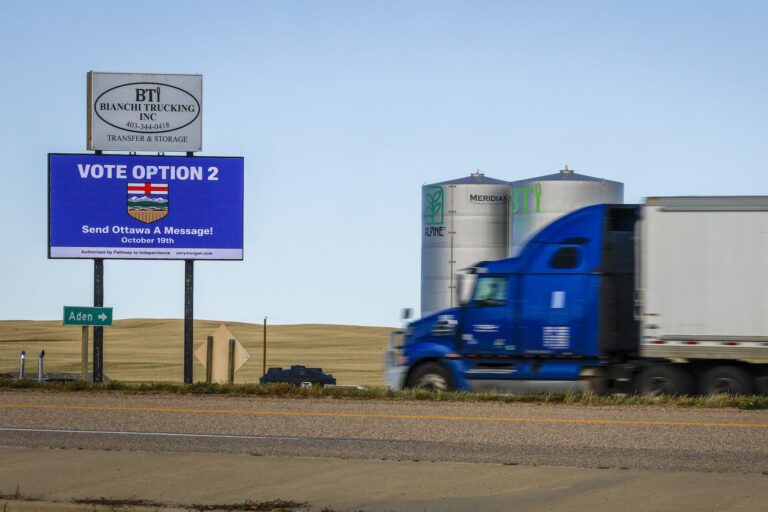
CALGARY — Alberta’s decisive rejection of separation was greeted with relief Tuesday by some business leaders, even as financial markets largely shrugged off the result showing that, at the latest count, just over 75 per cent of voters favoured remaining in Canada.
While the outcome was more or less expected, Calgary Chamber of Commerce CEO Deborah Yedlin said she was “relieved.” Even among the roughly one-quarter of voters who cast ballots for separation, she said, some were likely only seeking to “send a message” to Ottawa and the rest of Canada, rather than expressing genuine support for independence.
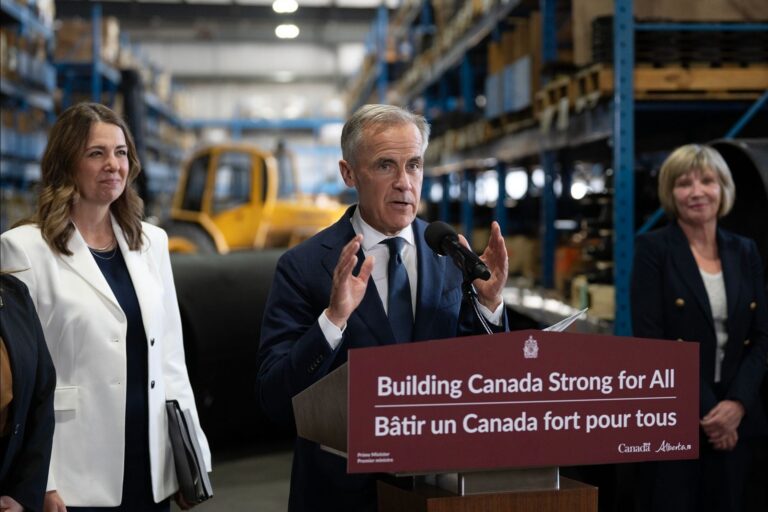
Yedlin attributed the result partly to the discernible shift in Alberta’s economic relationship with Ottawa over the last 14 months, as Prime Minister Mark Carney backed a proposed new oil pipeline to the West Coast and streamlined approvals for major projects. Still, she cautioned that the grievances propelling Alberta’s separatist movement have not disappeared.
Related Articles
“It’s always been there,” Yedlin said, adding former conservative premiers like Peter Lougheed and Ralph Klein also dealt with separatist rancour. “It’s just never been given the oxygen that it got.”
Back to business: Adam Legge, president of the Business Council of Alberta—whose membership includes CEOs and executives from the province’s largest publicly traded energy companies, including Cenovus Energy, Enbridge and Canadian Natural Resources Limited—said much of the corporate sector had already discounted the prospect of separation. Major companies continued to pursue investment opportunities during the four-month referendum campaign, he noted, pointing to projects like Meta’s new Alberta data centre and the proposed Pacific Link oil pipeline. That helps explain the muted reaction to the referendum from financial markets, he added.
“It’s been a distraction. It’s been a costly endeavour for the province, particularly when we’re facing the challenges with the United States,” Legge said. “A lot of time has been spent on this. Too much time.”
Calm waters for the loonie: The Canadian dollar opened Tuesday at 70.88 U.S. cents, unchanged from the previous day’s close, before rising to 71.29 in intraday trading.
But currency analysts are attributing the gain largely to expectations of a Bank of Canada interest-rate increase on Oct. 28.
There was no evidence investors had priced a risk of Alberta separating into the loonie ahead of the vote, said Karl Schamotta, chief market strategist at global payments firm Corpay. “Currency markets trade probabilities, not tail risks,” he said, adding, “so there is nothing to unwind today.
“A big night for Canadian sovereignty, but a non-event for the Canadian dollar.”
Similarly, bond markets appeared to regard Alberta separating as a low-probability outcome, said Charles St-Arnaud, chief economist for Servus Credit Union. There’s been no discernible referendum-related movement in Alberta bond yields or spreads, he said.
“When you look at the spread versus Ontario or versus Quebec, there was no real concern even yesterday or going into last week,” he said.
The other nine: Results on the referendum’s other nine questions were trending in favour of Premier Danielle Smith, who is seeking a strong mandate from voters to press Ottawa for changes on immigration and the division of powers between federal and provincial governments, among other issues. The five proposals for Alberta-specific rules affecting newcomers—from limiting their access to public services to proof-of-citizenship requirements for voting—were all tilting at least 54 per cent “yes” partway through ballot counts Tuesday.
There are concerns, however, among businesses about the potential economic impact of those ideas, Yedlin said.
Alberta will need workers from abroad and elsewhere in Canada if a number of major projects in the province advance—including expanded oilsands production to fill the proposed new Pacific Link oil pipeline, and the Oil Sands Alliance’s promised buildout of a major carbon capture project. “We can’t do it with the labour we have,” Yedlin said. “We have to make sure that we have the people here in the province to work on the projects that we know are going to be starting, and we can’t be seen as a jurisdiction that doesn’t welcome people.”
Alberta’s cabinet was scheduled to meet just hours after voters had rejected independence. In a post on X, Smith said she would address the referendum results and “where our province goes from here” in a televised address Tuesday evening.