Skip to content

Canada's Business and Tech Newsroom

  • Professional Subscription
  • Partnerships & Advertising
  • Licensing & Syndication
Log In Subscribe
Welcome,
  • My Account
  • Log Out
  • Business
  • Tech
  • National
  • The Big Read
  • Briefings
  • Commentary
Search
Log In Subscribe
Welcome,
  • My Account
  • Log Out
Commentary

Carmichael: America’s wobbly bonds are Canada’s advantage in the trade war. Here’s why

Listen Now
0:00
Commentary

Carmichael: America’s wobbly bonds are Canada’s advantage in the trade war. Here’s why

Canada’s debt looks safe next to the increasingly unstable market in U.S. Treasury bills. That buys Ottawa much-needed fiscal room.

By Kevin Carmichael
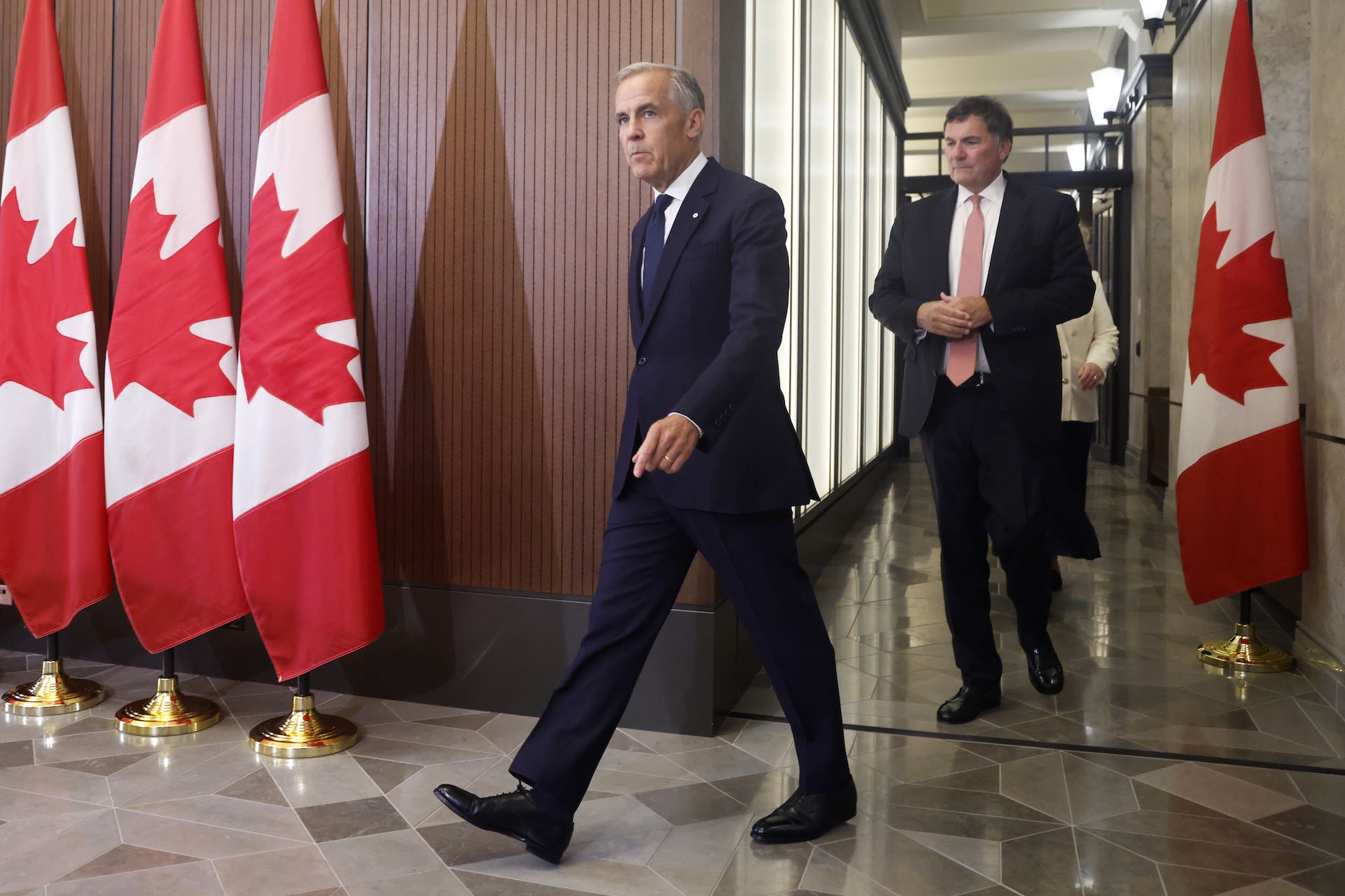
A photo of Mark Carney on his way into a news conference, trailed by Dominic LeBlanc. There is a row of Canadian flags on stands behind the lectern Carney is approaching.
Prime Minister Mark Carney comments about the bond market at his press conference suggest he sees opportunity for Canada. Photo: The Canadian Press/Patrick Doyle
Aug 24, 2026 | 6:45 AM ET
A A
A Small A Medium A Large
Share

Gift

Share

Listen Now
0:00

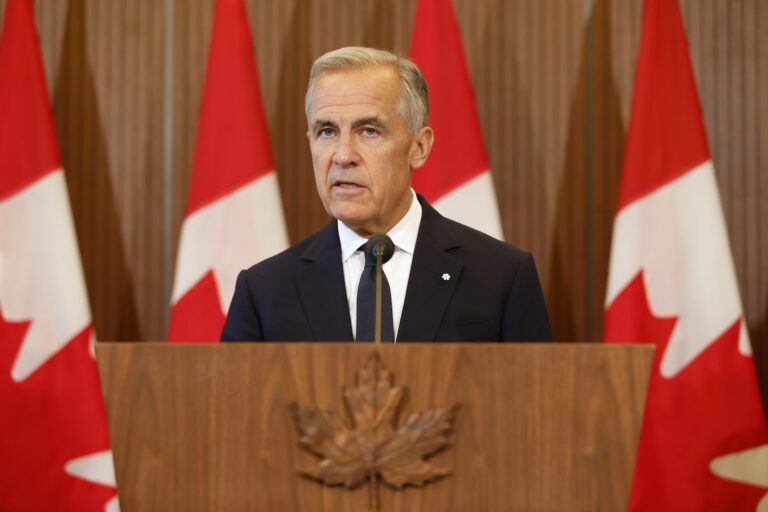
Prime Minister Mark Carney said many interesting and important things at his press conference on Saturday. Of those, the most interesting and important was tangential to the matter at hand.

“I will say to Canadians at home, as someone who has been in and around financial markets for a long period of time, what I’m about to say doesn’t make sense, but it’s the way the world works,” Carney said. “Markets sometimes ignore [the] fundamentals. And then all of a sudden they focus on them. And when they focus on them, if you don’t have your house in order, it’s too late. We have our house in order.” 

Let’s take one step back. Near the end of the press conference, Greg Quinn of Market News asked Carney if he ended trade talks with the U.S. because President Donald Trump looks vulnerable. Quinn offered some examples: the president’s unpopularity, elevated inflation and “recent instability in the U.S. bond market.”

Related Articles

A close-up of a worker machine-sewing seams into an olive-green parka.

Canada’s businesses brace for the impact of new tariffs as hopes for a deal vanish for now

By Anita Balakrishnan and Murad Hemmadi
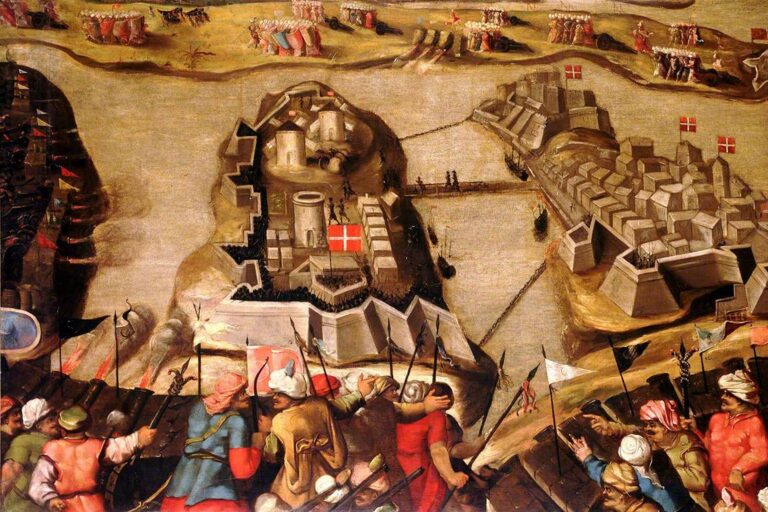
A painting depicting a sandy battlefield. Men wearing turbans stand behind a tall barrier, overlooking enemy camps and soldiers below.

Carmichael: Carney the prime minister still manages risk like a central banker

By Kevin Carmichael

Carney’s answer to the specific question was short: “No.” But he picked up on the observation about the bond market. The former investment banker and longtime central banker clearly sees an opportunity there. “We recognized right from the start that we need to continue to maintain the strongest fiscal position in the G7,” Carney said. “We are entering a phase where fiscal strength, discipline, focus is going to be very important. It’s going to be scrutinized.” 

The biggest economic story in Canada last week was Carney’s decision to escalate the trade war with MAGA America. The biggest economic story everywhere else was the surge in U.S. borrowing costs. The yield on 30-year bonds shot past five per cent, climbing to the highest in two decades. 

“Given the scale of the U.S. Treasury market, this is a matter of global concern,” economic historian Adam Tooze said over the weekend. “What is the worst thing that could happen? A large-scale selloff and a collapse of the Treasury market as a functioning institution.” 

Tooze wasn’t making a prediction, per se. His purpose simply was to remind his readers that when the global financial market falls apart, it really falls apart. He sees parallels to the spring of 2020, when the COVID-19 pandemic triggered a historic rush for cash, which caused borrowing costs to spike and stock markets to collapse. “At the time, the world’s population had other things on its mind,” wrote Tooze, the author of Shutdown: How Covid Shook the World’s Economy, among other books. “But the Treasury market meltdown remains the most underrated shock in modern financial history.”

Canadians will have things other than bond markets on their minds this week, if the immediate reaction to the weekend’s events is a guide. Carney said he’d wait until after Labour Day to complete his retaliatory tariff list, and it looks like we’ll need those two weeks to find consensus on how we feel about all of this. 

Former Ontario premier and federal Liberal cabinet minister Bob Rae, who most recently was Canada’s ambassador to the United Nations, reacted to the news that trade talks had failed by calling Trump Canada’s “George III,” the British monarch who inspired the American Revolution. “We cannot succumb to tyranny,” he wrote on Substack. 

Rae probably would have little trouble rounding up a party to toss Starbucks tea and coffee into Lake Ontario. But he doesn’t speak for everyone. Alberta Premier Danielle Smith said on her bi-weekly radio show that while she agreed with the decision to end talks as a negotiating tactic, she had deep reservations about retaliatory tariffs. “We shouldn’t be cheering if our farmers have to [pay] 50 per cent more for all the equipment that they need to produce our food,” Smith said. “That’s not success for us.” 

So, there’s a range of views about how to proceed. Prediction: Bond markets will narrow the parameters of the conversation. They explain why retaliation probably won’t force the Trump administration to relent on tariffs—and why there will be limits to any federal and provincial relief packages. They also hint at a way for Canada to come out of this stronger. 

The most important determinants of a bond’s price are inflation and default risk. Both explain why U.S. yields are rising. Creditors could stomach the Trump administration’s profligacy so long as it looked like inflation was under control. Trump’s inability to end the Iran war has caused inflation expectations to rise—and the compensation creditors demand to hold fixed-rate assets along with them. The rapidity with which that repricing has occurred is probably explained by the extent to which hedge funds have become important buyers of sovereign debt. They aren’t buy-and-hold investors. 

Earlier this month, The Budget Lab, a research group backed by Yale University, estimated that tariffs would raise revenue of US$1.9 trillion over the next 10 years. No government under pressure from bond vigilantes is going to forego a revenue stream that large. The Trump administration has targeted Canada and Mexico because of its dominant position—but also because a regime that sees tariffs as a way to pay its bills will naturally target its largest sources of imports. 

Because the U.S. dollar and debt underpin global commerce, when U.S. borrowing costs rise, so do those of almost everyone else. The interest rate on Canadian 30-year bonds ended last week at around 4.15 per cent, compared with about 3.75 per cent at the end of June. The federal government and all the provinces are running substantial deficits. The cost of financing a trade war spiked, and they had nothing to do with it. 

On Saturday, I said a lot about how Canada was ill-prepared for an economic siege. That doesn’t mean we can’t survive one. If investors thought we were toast, the gap between Canadian and U.S. borrowing costs would be narrower. It’s an advantage on which we can build. 

Preserving that advantage doesn’t mean austerity—far from it. The political debate about fiscal policy ping-pongs between balanced budgets and let-’er-rip spending programs. The real-world constraint is making sure you look better than the other guys. With the U.S. running a deficit of around six per cent of gross domestic product, and the U.K. at around four per cent, the world’s two most recent global financial superpowers have created a lot of room for new havens. 

Canada’s deficit-to-GDP ratio is about two per cent, better than the rest of the G7. The next best are each at around three per cent. That defines Carney’s room to maneuver: roughly $30 billion, or one per cent of Canada’s $3.3-trillion GDP. 

That isn’t enough to offset the damage facing the automobile, steel and forestry industries, never mind Carney’s pledge to backstop smaller businesses. Former prime minister Justin Trudeau’s government spent some $230 billion on various COVID-19 relief programs. There won’t be money for everyone this time.

Gift the full article

Finance Minister François-Philippe Champagne’s assignment this fall could be looking for some nice-to-have programs he could cut, or maybe even some new ways to raise revenue.

There’s no other way. This is war. There will be sacrifices. 

A note to readers: I’m taking some time off. I’ll be back in September. I’m sure there will be more to say then.

Kevin Carmichael is The Logic’s economics columnist and editor-at-large. He has spent more than two decades covering economics, business and finance for outlets including Bloomberg News, The Globe and Mail and the Financial Post, where he also served as editor-in-chief. 

#bonds #Canada-U.S. trade #commentary #economy #Mark Carney #tariffs

Sponsored Content

The real-world economic offshoots of sovereign AI

By Deborah Aarts
Illustration of a plane flying above a mailbox

Increasing healthcare access across Canada

By Deborah Aarts

What it takes to lead a frontier firm

By Deborah Aarts
Paid promotional content

Loading...

Thanks for sharing!

You have shared 5 articles this month and reached the maximum amount of shares available.

Close
This account has reached its share limit.

If you would like to purchase a sharing license please contact The Logic support at [email protected].

Close
Want to share this article?

Upgrade to all-access now

Close
Gift the full article!

You have gifted 0 article(s) this month and have 5 remaining.

Copy link and gift
Copy Link
Email to a friend
Send Email
Gift on Social Media

Recipients will be able to read the full text of the article after submitting their email address. They will not have access to other articles or subscriber benefits.

A photo of Mark Carney on his way into a news conference, trailed by Dominic LeBlanc. There is a row of Canadian flags on stands behind the lectern Carney is approaching.

Photo: The Canadian Press/Patrick Doyle

Most Popular This Week

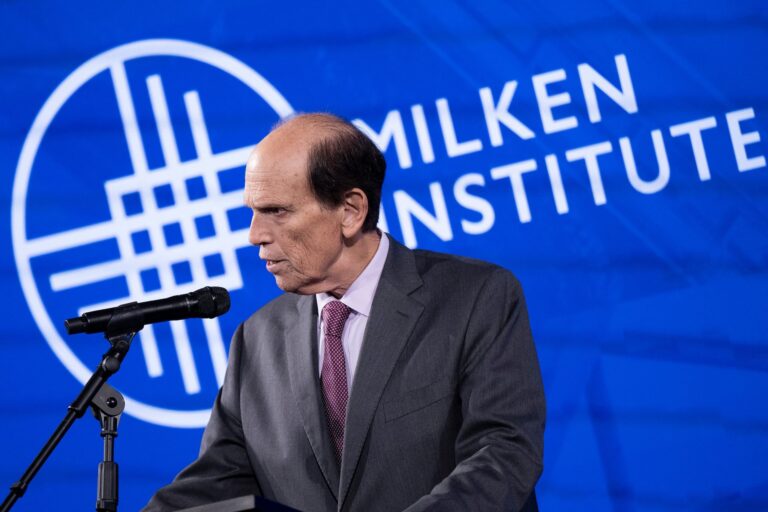
An image of a man in a dark suit and purple tie standing and speaking at a microphone. The man has a serious facial expression. A blue banner that reads "Milken Institute" is in the background.
News

Investor demand is what’s bringing the Milken Institute to Canada

By Chaimae Chouiekh
Janice Charette and Dominic LeBlanc walking toward the camera next to a white pavilion that bears the logo of the 2026 G7 meeting in France.
News

Canada ‘can’t even talk about anything else’ if Trump makes good on latest tariff threat

By Joanna Smith
A man walks across a large greenhouse with large glass ceilings. He is walking on a white path through rows of green lettuce growing on the ground.
News

Canadian businesses were bracing for a wave of retirees. Then along came AI

By Anita Balakrishnan
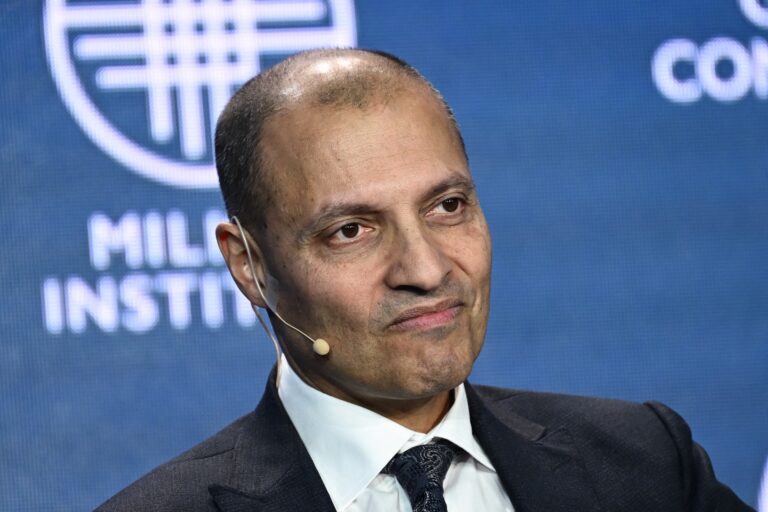
An image of a man wearing a dark suit jacket and tie. He is wearing a mic and looking slightly away from the camera.
News

Brookfield and Cohere execs among high-profile guests at CVCA summit

By Catherine McIntyre

In-depth, agenda-setting reporting

Great journalism delivered straight to your inbox.

A head-on shot of Mark Carney at a lectern embossed with a maple leaf carved from wood. There is a row of Canadian flags behind him, and he's looking at the camera with a serious expression.
News

How Mark Carney plans to wage trade war against the United States

By Laura Osman and Murad Hemmadi

Briefing

Roots to go private in deal led by Marquee Brands

By Catherine McIntyre   |   Aug 21, 2026

Negotiations once again down to the wire as tariff countdown ticks toward midnight

By Laura Osman   |   Aug 21, 2026

Domtar shutters B.C. pulp mill over reduced demand and poor prices

By Laura Osman   |   Aug 21, 2026

Best business newsletter in Canada

Get up to speed in minutes with insights and analysis on the most important stories of the day, every weekday.

Exclusive events

See the bigger picture with reporters and industry experts in subscriber-exclusive events.

Membership in The Logic Council

Membership provides access to our popular Slack channel, participation in subscriber surveys and invitations to exclusive events with our journalists and special guests.

Recent Popular Stories

Commentary

Carmichael: Canada’s biggest companies aren’t wired for growth. That’s a problem for us all

By Kevin Carmichael   |   Aug 15, 2026
An image of the Canadian flag against two tall buildings with glass windows in the background.
Exclusive

Star researcher Sanja Fidler raises over US$90M for world model startup

By Murad Hemmadi   |   Aug 19, 2026
A woman wearing a ponytail and a black leather jacket stands on a stage. She looks slightly away from the camera. She wears a microphone and appears to be speaking to an audience.
News

Canada ‘can’t even talk about anything else’ if Trump makes good on latest tariff threat

By Joanna Smith   |   Aug 14, 2026
Janice Charette and Dominic LeBlanc walking toward the camera next to a white pavilion that bears the logo of the 2026 G7 meeting in France.
News

Anthropic wants to add ‘gigawatts’ of AI compute in Canada

By Murad Hemmadi   |   Aug 19, 2026
An image of a man with glasses, wearing a dark blue suit and light blue collared shirt. The man looks slightly away from the camera and a microphone is visible in the foreground. A blue background that reads World Economic Forum is visible in the background.
News

Negotiators work on fine print of deal that would spare Canada new U.S. tariffs

By Joanna Smith   |   Aug 19, 2026
A shot taken through a crowd of reporters and boom mics showing Mark Carney seated beside Donald Trump in yellow chairs in the Oval Office. Seated before them on sofas are senior members of the leaders' respecting cabinets.
News

U.S. private equity is buying Canada’s biggest payments processor. Some people are worried about sovereignty

By Claire Brownell   |   Aug 12, 2026
In this photo illustration the Moneris logo is seen displayed on a smartphone.

Canada's most influential executives and policymakers are reading The Logic

  • CPP Investments
  • Sun Life Financial
  • C100
  • Amazon
  • Telus
  • Mastercard
  • bdc
  • Shopify
  • Rogers
  • RBC
  • General Motors
  • MaRS
  • Government of Canada
  • Uber
  • Loblaw Companies Limited
logic-logo

Canada's Business and Tech Newsroom

100% human-crafted journalism

Newsroom

  • News Tips
  • AI Policy
  • Editorial Disclosures
  • Story Pitches

Company

  • About Us
  • Terms of Service
  • Privacy Statement
  • Corporate Information

Contact

  • Contact Us
  • Advertise
  • FAQs
  • Work at The Logic

© 2026 The Logic Inc. All Rights Reserved.

Trusted by leaders

Error

Account creation failed.

Please email us at [email protected].

Create Account

[wppb-register form_name=”cozmo-registration-form-for-modal”]

I do have an account
Login
or

[wppb-login]

I don’t have an account