
Listen Now
0:00
OTTAWA — The people building Canada’s billion-dollar space robot arm found out it won’t have a home at the same time everybody else did: When NASA administrator Jared Isaacman announced that the United States is “pausing” plans for a space station orbiting the moon.
The Lunar Gateway was to be the staging area for human missions to the surface. In their separate offices in November 2020, amid the COVID-19 pandemic and at the end of the first Trump administration, the heads of the Canadian and United States space agencies signed a treaty to build it together.
Talking Points
- The billion-dollar Canadarm3 bought Jeremy Hansen his ticket around the moon, but it was meant for a lunar space station that NASA just decided to skip
- Like the country as a whole, Canada’s space sector is inextricably tied to the United States, but is hoping to find other partners and customers
The U.S. government under President Donald Trump has ranged from unpredictable to belligerent, even with its formerly close allies. But in space, as with trade and defence, those allies are lashed to America by decades of deliberate intertwining of plans and capacities.
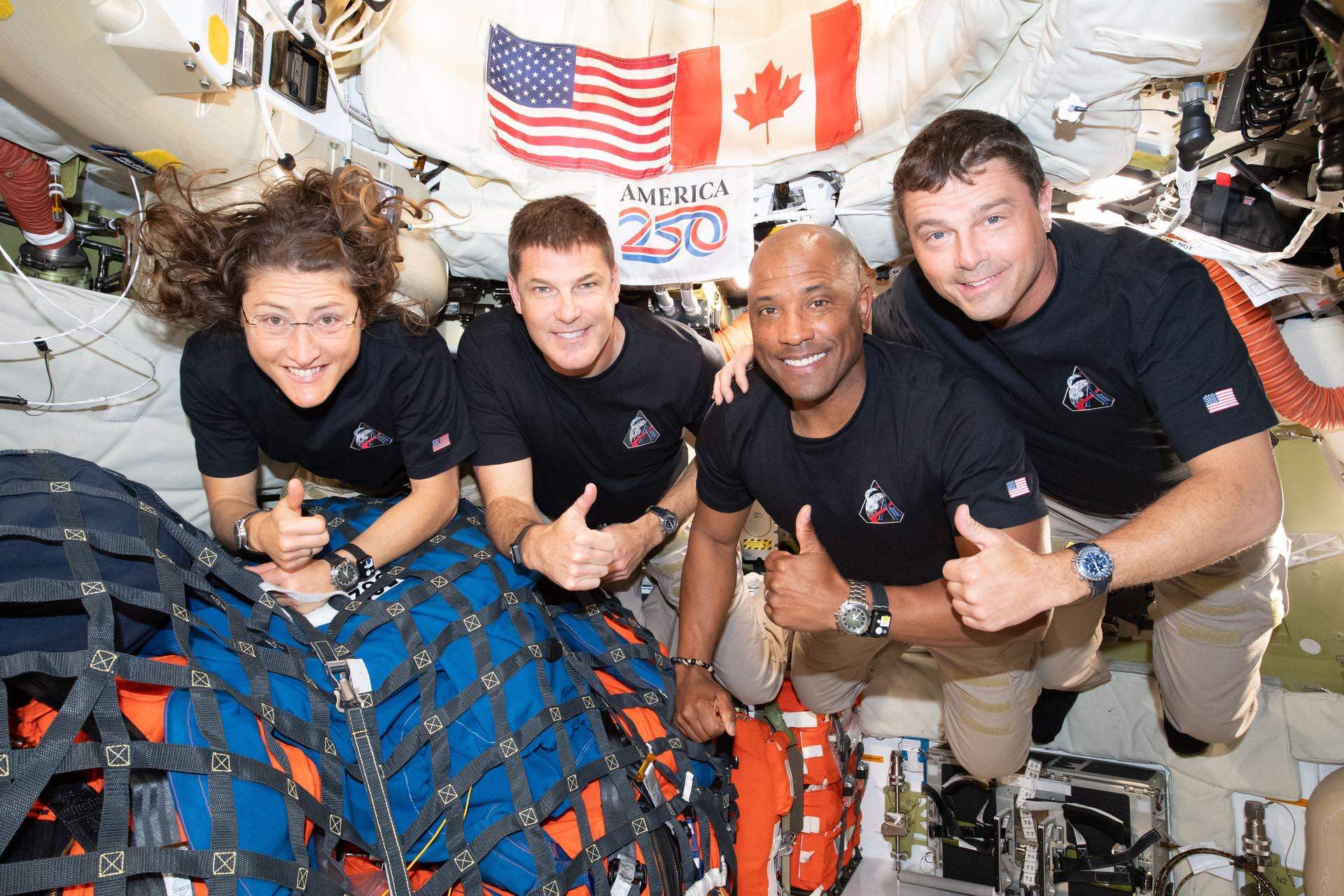
MDA Space has been working on a third-generation Canadarm manipulator for the Lunar Gateway since shortly after the plan to build the station was announced. The Canadarm3 is Canada’s central contribution to the Artemis moonshot program, the thing that bought Canadian astronaut Jeremy Hansen his seat on the Artemis II mission around the moon. He and three American astronauts are due to splash down back on Earth shortly after 8 p.m. EDT on Friday.
Related Articles
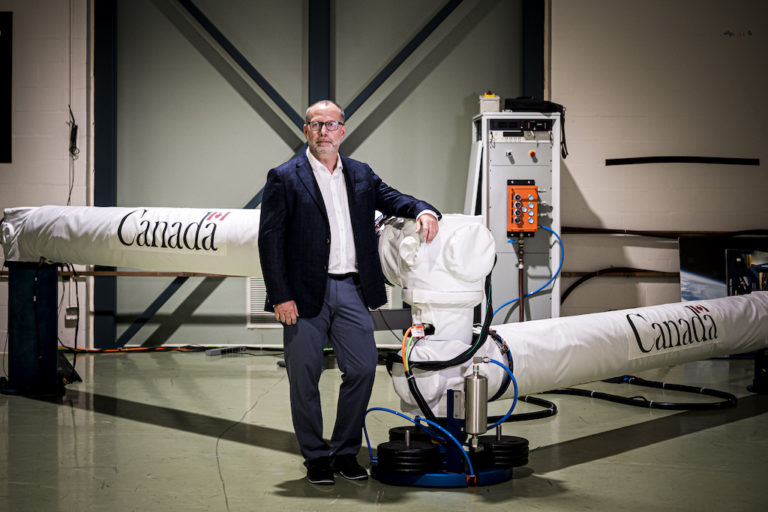
NASA is not building the Gateway station, Isaacman declared in a speech in Washington, D.C. on March 24. It’s skipping that and going straight to a moonbase.
Canada’s national contribution to a multi-country effort to put humans back on the moon for the first time since the 1970s had abruptly lost its main purpose.
The move wasn’t a complete surprise: the White House proposed cancelling the space station in a budget submission last spring that included deep cuts to NASA’s budget. But Congress rejected those cuts earlier this year.
On the day of, nobody knew what Isaacman was going to do, says Mike Greenley, MDA Space’s CEO.
“No one disagrees with the goal of going to the moon. How you get there and what architecture you bring—sometimes that changes along the way.”
“There were actually very strong rumours in each direction—strong rumours that absolutely we weren’t going to talk about that, and then absolutely we were going to talk about that,” Greenley says. “Everyone had to wait until the actual announcement.”
Lisa Campbell, the president of the Canadian Space Agency, says she knew what was coming.
“I was at the Washington event, but I had spoken with [Isaacman] before then, so I was well aware of their plans,” she says. “No one disagrees with the goal of going to the moon. We all agree with that. How you get there and what architecture you bring—sometimes that changes along the way.”
The Lunar Gateway figured into the Canadian Space Agency’s to-do lists as late as March 13, when the agency published its official plan for the year. To save money, the same plan cancelled a Canadian lunar rover mission, which was supposed to land on the moon in 2029, though work on a separate utility rover is continuing. Then, on March 16, the federal government put $200 million into a lease on a launch pad at Maritime Launch Services’ in-the-works spaceport in Nova Scotia.
So in just a few weeks, the United States took away the Canadarm3’s destination, Canada cancelled its own lunar mission, domestic space-launch capacity got a big boost, and the Artemis II mission took off from Cape Canaveral.
It’s been a hectic time, says Brian Gallant, the CEO of the industry association Space Canada, amounting to a reorientation of the country’s space priorities. But the change is an evolution, he says, not a reset.
“The core priorities remain the same: space supports Canada’s sovereignty, including in the North; enables connectivity for rural and remote communities; underpins climate monitoring and environmental protection; and contributes to economic resilience,” he says.
Historically, the Canadian space sector has usually had one major project underway at a time, Greenley says—something like a Canadarm or a major new satellite—plus a number of relatively little ones.
That’s not the state of the industry in 2026. “We’re in a period where we have multiple billion-dollar-or-more–sized programmes in Earth observation, in space-based communication, in space-based infrastructure, occurring at the same time,” he says. Beyond that, investments in space-based military capabilities are just starting to rev up.
For MDA, the Lunar Gateway pause isn’t a calamity, Greenley says. His company’s contract for the Canadarm3 is with the Canadian Space Agency, not NASA, and it’s plowing ahead.
With the arm’s preliminary design done, the company now plans to give the arm a whole new purpose in the lunar environment.
“As we now finalize the design of those robotics, instead of finalizing them for the orbiting Gateway, we can finalize them for surface activity on the moon and work through that,” he says.
That means allowing for gravity, with an arm that can support its own weight on the moon in addition to whatever it’s asked to move around. “Your motor joints and the like are going to be different, but that’s all very adaptable,” Greenley says.
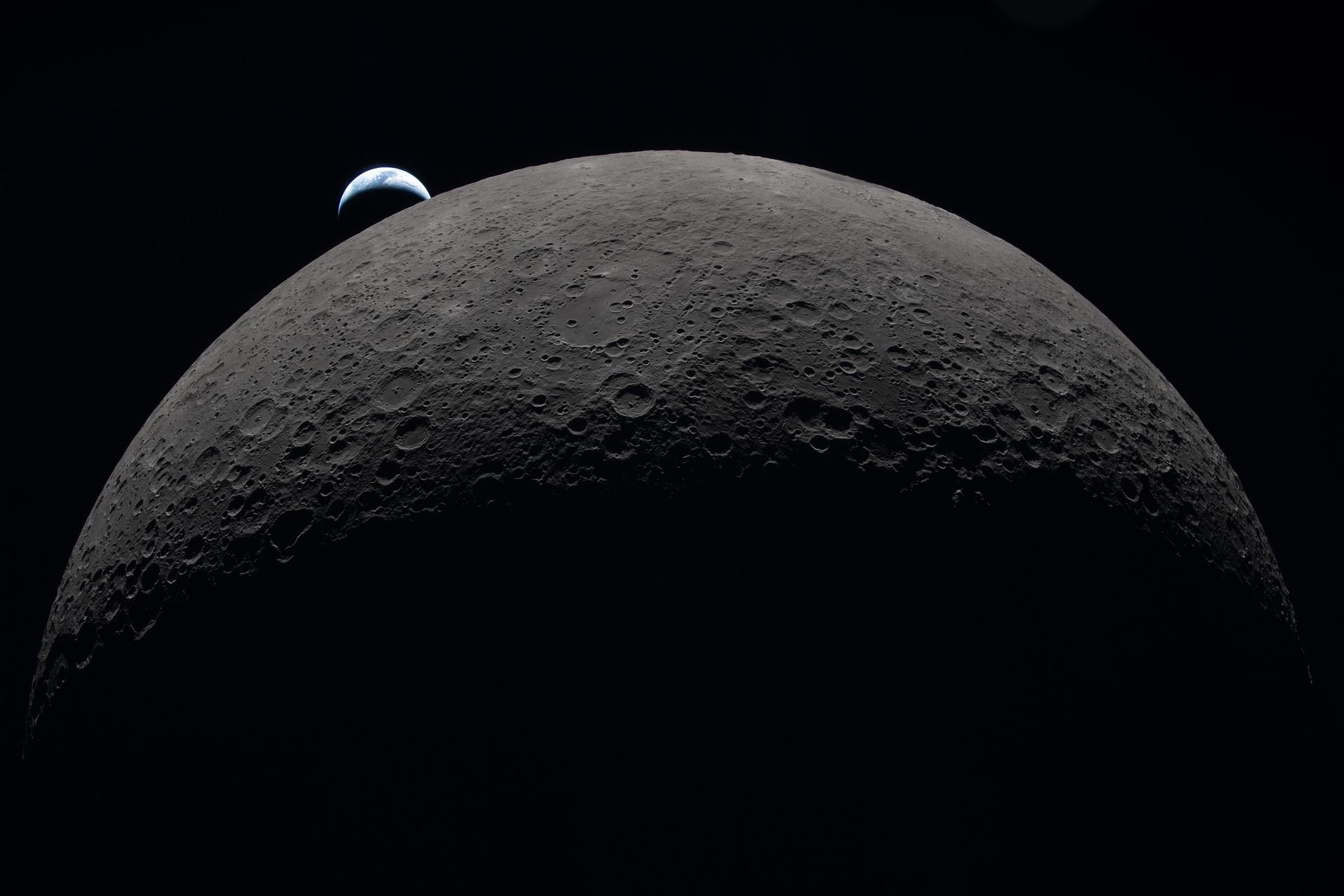
Unlike previous versions, the Canadarm3 has been designed to be remote-controlled from hundreds of thousands of kilometres away—far enough that even signals travelling at the speed of light have a noticeable lag—and that problem isn’t meaningfully different on the moon versus in orbit around it. Moon dust—fine, sharp specks of rock—will be a bigger issue on the surface than on a space station, but MDA already expected the Canadarm3 would have to deal with some of the stuff floating off craft coming up to dock, Greenley says.
Besides that, the premise of the Canadarm3 contract has always been that MDA’s technology could and would be adapted for other customers.
The company has a market for Canadarm3-based robotics in commercial space stations, systems for cleaning up space junk, spacecraft for servicing satellites and private rover vehicles, Greenley says.
Pausing the Lunar Gateway also doesn’t mean it will never happen, he says. Maybe the U.S.-led lunar coalition will build a base, or bases, first, and then a waystation in orbit to help serve astronauts on the surface.
The United States spends far more on space than Canada does, says Gallant—per capita, not just in raw dollars—and that makes it a vital partner and customer even if “Canadians hold very negative feelings towards the U.S. right now, and for good reason.”
He slips into phrasing that could come from a trade speech by Prime Minister Mark Carney, talking about canola or aluminum: “We should absolutely work to ensure the relationship serves Canadian interests all while diversifying our partnerships globally to reduce overreliance on the U.S. market. These principles apply to space, as well. Perhaps even more so.”
Canada is doing so even as Hansen and NASA astronauts have ridden together around the moon, living symbols of the two countries’ co-operation, says Campbell. A huge increase in Canada’s contribution to the European Space Agency is part of the diversification; Carney talked about space co-operation with the leaders of India, Australia and Norway during recent visits.
“Space is so difficult, no country can go it alone,” Campbell says. “You need help. You want the industrial contributions of others, because it’s what makes us stronger.”














